
Commentary
Last Thursday, I got a phone call from emergency responders in Tilden, Texas, about two and a half hours south of our ranch. They had encountered an elderly woman who they thought might be hallucinating, confused, or under the influence of something.
She told them she was driving from Colorado to a ranch in Texas where she was going to sleep in a tent and learn about gold, cryptocurrency, homesteading, butchering chickens, homeopathy, and other alternative healing modalities.
I can understand why they thought she was hallucinating.
They called me to ask if any of this was true.
Yes, I told them. All of it.
We were hosting a festival called Exit & Build at Sovereignty Ranch that weekend. Hundreds of people were coming to learn about alternative currencies, growing their own food, homesteading, health, and how to become less dependent on centralized systems. Everything this woman had told them was exactly what was happening at my ranch.
She had also told them she’d paid $1,300 to attend and camp. They asked if that was true, too.
I told them it sounded possible. I wasn’t the event organizer. I was just providing the venue.
I checked the registration list, and sure enough, there she was. Laura Powers. She had a ticket and a glamping tent waiting for her.
The EMTs told me she was 93 years old and weighed less than 100 pounds. They said her blood sugar was low, and they wanted her to eat something or drink some juice. She refused, telling them that what they were offering her was poison. They wanted to take her to the hospital. She refused that, too.
I explained that many of the people coming to this festival were skeptical of government institutions, hospitals, and conventional medicine. Her reaction wasn’t necessarily surprising given the crowd we were hosting.
At one point, Laura called me herself.
“These people will make you think that I’m sick or crazy, but I am not. I am awake.”
She was determined to get to the ranch.
The EMTs initially told me they were going to let her continue driving. Then another female EMT called and said they simply didn’t feel comfortable letting this elderly woman drive another two and a half hours alone.
They had considered coordinating transportation from county to county to get her to us, but there were several counties between Tilden and the ranch, and the logistics were complicated.
I remember thinking, what exactly am I supposed to do? I’m running a festival with hundreds of people, managing lodging, food, staff, and a thousand other things. I don’t know this woman. I’ve never met her. I’m just providing the venue.
But there was a woman in her 90s sitting at a fire station trying to get to my ranch.
So I asked two of my employees, Gaby and Joey, if they would drive down and get her. We needed two people because someone would have to drive her car back.
They agreed.
When Laura finally arrived that evening, I understood why the EMTs had been so concerned.
She was tiny, probably less than 90 pounds, with a brace on her wrist and a cut on her chin. She shuffled when she walked, and the uneven terrain of the ranch was nearly impossible for her to navigate without help.
She was a little confused about some things, but she knew where she was and why she had come.
And she had come prepared.
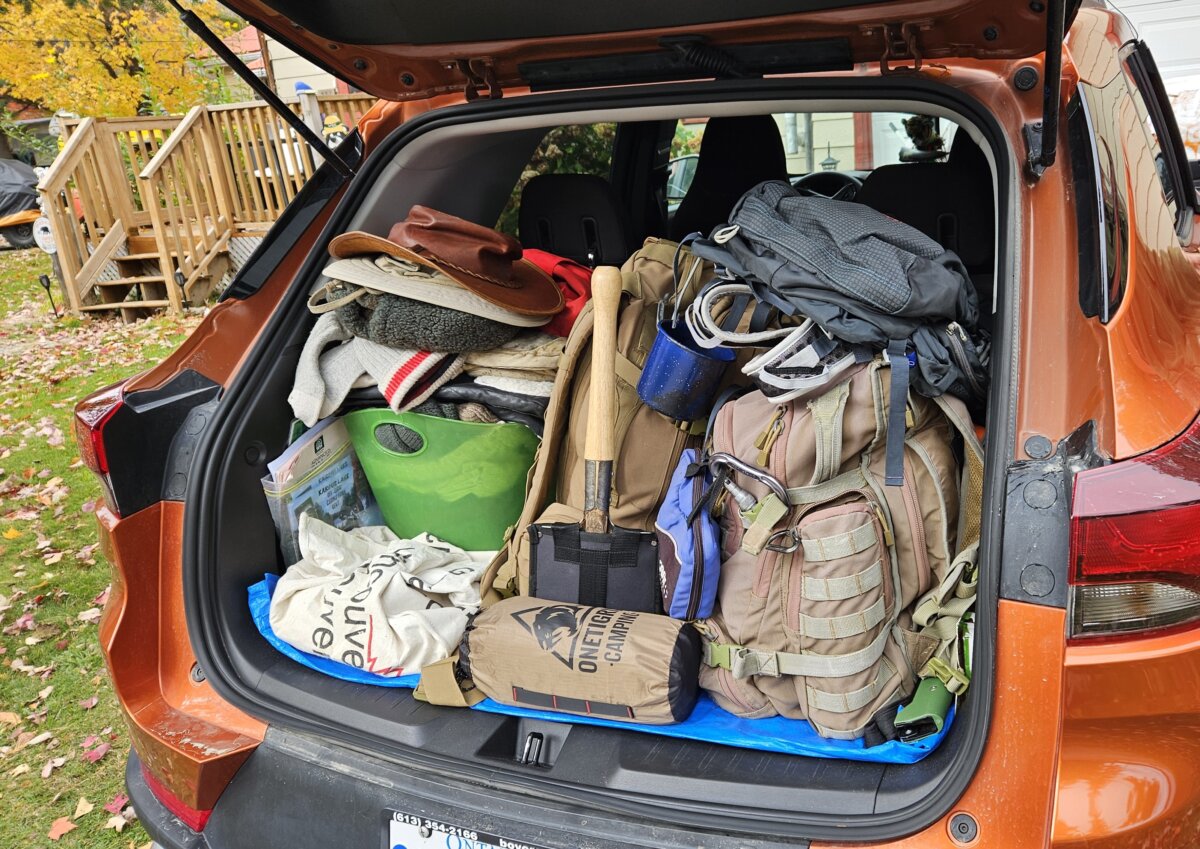
Her car was packed with food, multiple flashlights, and even a jar to pee in if she couldn’t make it to a bathroom. After watching Laura try to walk across the ranch, I realized she knew exactly what challenges she might face.
I drove her car to her tent and unloaded everything. I upgraded her accommodations to a tent with Wi-Fi because I wanted her to be able to call me if she needed something. We got her water and helped her use the restaurant bathroom. Just getting her checked in, credentialed, and through the necessary paperwork took almost 45 minutes.
Eventually, I got her settled and told her to call me in the morning. I would come get her and drive her to the bathroom.
And then the rain came.
Not a little rain. Torrential downpours that turned our ranch into a muddy mess. Tents leaked, the creek rose, people were cold and wet, and the entire festival became a lesson in what happens when the comforts we take for granted disappear.
We had people who couldn’t carry their own luggage to their campsites. People who struggled with the mud, the distance between activities, and the physical demands of being outdoors. My team and I spent days solving one problem after another, working from early morning until well after midnight.
And through all of this was Laura.
The woman who had been considered too frail to drive the last two and a half hours to the ranch seemed to handle the weekend better than many of the younger guests.
Our team took turns shuttling her from place to place. We helped her navigate the mud and get to the activities she had traveled so far to attend.
And she enjoyed herself.
At some point, we learned that Laura was actually 89 years old, not 93 as I had originally been told.
Near the end of my talk from the main stage, I acknowledged her. I told the audience about the phone call from the EMTs, how they had thought she was hallucinating because the things she described sounded so improbable.
Imagine being an EMT in a small Texas town and hearing an elderly woman tell you she’s driving across the country to sleep in a tent and learn about gold, cryptocurrency, butchering chickens, and homeopathy.
It does sound crazy.
Except it was all true.
By the final night of the festival, I was sick beyond belief. I had been running a fever, throwing up, and pushing myself through days of rain, mud, and one problem after another. I was exhausted, and honestly, I was barely holding myself together.
I walked into our brewery conference center, where Mike Winner was DJing, and there was Laura, dancing with John Bush, the organizer of Exit & Build.
Dancing.
This tiny, frail, 89-year-old woman, who had been stopped by emergency responders on her way to the ranch, who could barely shuffle across our uneven ground, who had needed help getting to the bathroom, was dancing.
And she was having the time of her life.
I couldn’t help but think about what would have happened if she had listened to everyone who thought she was too old, too frail, or too incapable of making this trip. She would have missed all of it.
Of course, Laura needed help. A lot of help. My team had taken turns driving her around the ranch, helping her get to activities, and making sure she had what she needed. But she had also been brave enough to get in her car in Colorado and drive all the way to Texas because there were still things she wanted to learn and experiences she wanted to have.
After the festival, we brought her to a hotel in Kerrville, where she planned to rest for a few days before beginning the long drive home.
I’ve been thinking about how we’ve confused independence with freedom. We want to be self-sufficient. We don’t want to need anybody. But the truth is, humans have never really lived that way.
For most of human history, we survived because we belonged to families and communities where different people brought different abilities. The strong carried things, the skilled built things, the experienced taught things, and those who needed help received it.
We had come together to talk about exiting systems and becoming more self-reliant. But the rain, the mud, and an 89-year-old woman from Colorado taught us something else.
If we’re going to become less dependent on institutions, we’re going to have to become more dependent on each other.
And I keep coming back to that image of Laura dancing.
She didn’t wait until she was younger, stronger, or more capable. She knew she would need help, packed her car anyway, and came.
Laura needed us to make that weekend possible. But watching her dance, I realized she had given us something, too.
She reminded us that being alive and truly living are not necessarily the same thing.
Views expressed in this article are the opinions of the author and do not necessarily reflect the views of The Epoch Times.