Commentary
I remember when people sat around the dinner table and wondered about things.
Someone would ask a question. How far away is the moon? Why do birds migrate? How did people build those enormous cathedrals hundreds of years ago?
Someone would have a theory. Someone else would remember something he had read. Another person would disagree, and before you knew it, an entire conversation would unfold around a question nobody at the table actually knew the answer to.
Sometimes, we would spend the whole evening talking about something and never arrive at an answer, and that was part of the magic.
Today, someone asks a question, somebody pulls out his phone, asks Google or ChatGPT, and within seconds we have an answer. Conversation over. Mystery solved. On to the next thing. But I’ve been wondering lately what we’re losing in that exchange.
I have four children, and I feel like they ask me hundreds of questions a day. Why is the sky blue? How does that work? Why did that happen? Where does this come from?
Sometimes, I know the answer. Sometimes, I have a theory. And sometimes, I simply say, “I don’t know.”
My children are not particularly satisfied with that answer.
“Look it up, Mom.”
“Ask ChatGPT.”
“Find a YouTube video.”
They want to know, and they want to know right now. And I understand that impulse. I have a computer in my pocket that can answer almost anything I can think to ask. Why wouldn’t I use it?
But increasingly, I find myself resisting. Not because I don’t want my children to learn, but because I wonder whether something important is happening in the space between asking a question and finding the answer.
What if the inquiry itself is where some of the most important work happens?
When we don’t know something, our minds begin searching. We imagine possibilities. We connect things we’ve experienced with things we’ve heard. We remember conversations, observations, and stories. We consider explanations, reject some, entertain others, and sometimes arrive at an entirely new understanding. What happens to that process when we eliminate it?
We know that our brains change in response to how we use them. Researchers studying London taxi drivers discovered that learning to navigate the city’s extraordinarily complicated streets was associated with measurable changes in the hippocampus, a region of the brain involved in memory and navigation. The drivers who successfully completed years of intensive training developed increased gray matter in part of their hippocampus.
Think about that. The work of learning actually changed their brains. Now, I’m not suggesting that scientists have demonstrated that using ChatGPT shrinks the part of our brain responsible for wonder. But I am asking whether outsourcing more and more of our thinking has consequences.
If the brain adapts to what we repeatedly ask it to do, what happens when we stop asking it to imagine, investigate, remember, and wonder? And what happens when an entire society begins doing that?
I think about the difference between information and imagination. When people used to sit around the dinner table trying to answer a question, they weren’t just exchanging facts. They were sharing experiences. One person knew something about mechanics, another remembered a story from his grandfather, and somebody had traveled somewhere and seen something unusual. We needed one another to piece together our understanding of the world.
Now, we have outsourced so much of that process to a machine, and I wonder whether we’re losing something about human connection along with our curiosity.
Before I became a farmer, I thought that I understood food. I had spent years as a chef, built restaurants, studied ingredients, and developed very strong opinions about what human beings should and shouldn’t eat. I had answers. Lots of them.
And then I bought a farm in California.
Suddenly, the natural world began asking me questions I didn’t know how to answer. Why did certain plants thrive while others died? Why did animals behave differently than I expected? Why did the soil seem alive in one place and nearly dead in another? Some of the things I had been taught didn’t match what I was observing.
The most transformative education of my life didn’t come from somebody giving me better answers. It came from discovering how much I didn’t know. And the more time I spent observing nature, the more extraordinary it became.
A cow turning grass into milk. A seed containing everything it needs to become an enormous tree. The invisible world beneath our feet, where billions of organisms participate in the creation of life. We can explain the biological processes behind these things, but explaining them doesn’t make them any less miraculous. Or at least it shouldn’t.
Somewhere along the way, I think that we developed a strange relationship with knowledge. We seem to believe that once something can be explained, it no longer deserves our awe. But why?
Does knowing how a baby develops in its mother’s womb make a child’s arrival any less miraculous? Does understanding photosynthesis make a tree less extraordinary? Does knowing water’s chemistry diminish the wonder of rain falling from the sky?
I would argue the opposite. The more I experience the natural world, the more convinced I become that wonder is one of the pathways through which we encounter God.
And perhaps that is what troubles me most about our increasingly automated relationship with knowledge. I wonder whether we are losing more than curiosity. I wonder whether we are losing gratitude.
Because gratitude requires us to recognize that something extraordinary has been given to us. When food simply comes from a grocery store, we lose our appreciation for the soil, the rain, the farmer, the animal, and the thousands of relationships that made that meal possible. When electricity simply comes from an outlet, we stop thinking about the extraordinary forces that make our modern lives possible.
When everything becomes explainable, predictable, and available on demand, do we begin taking the miracle of being alive for granted? And if we lose our capacity for wonder, does our capacity for gratitude begin to disappear with it?
I don’t know. But I think that these are questions worth sitting with.
I use artificial intelligence for research. I recognize it as an extraordinary tool. But I am increasingly concerned about the difference between having access to knowledge and actually developing understanding.
A machine can explain how a calf is born, but it cannot give you the experience of standing in a pasture watching that calf take its first breath. It can describe the smell of rain hitting dry soil, but it cannot give you the gratitude of standing in that rain after months of drought. And it can organize thousands of years of human writing about God, but it cannot experience a relationship with him.
Explanation is not experience. Information is not wisdom. Having an answer is not the same as understanding.
I don’t want my children to grow up believing that every question has an answer waiting inside a screen. I want them to wonder. I want them to argue around the dinner table, imagine possibilities, make observations, change their minds, and sometimes go to bed without knowing.
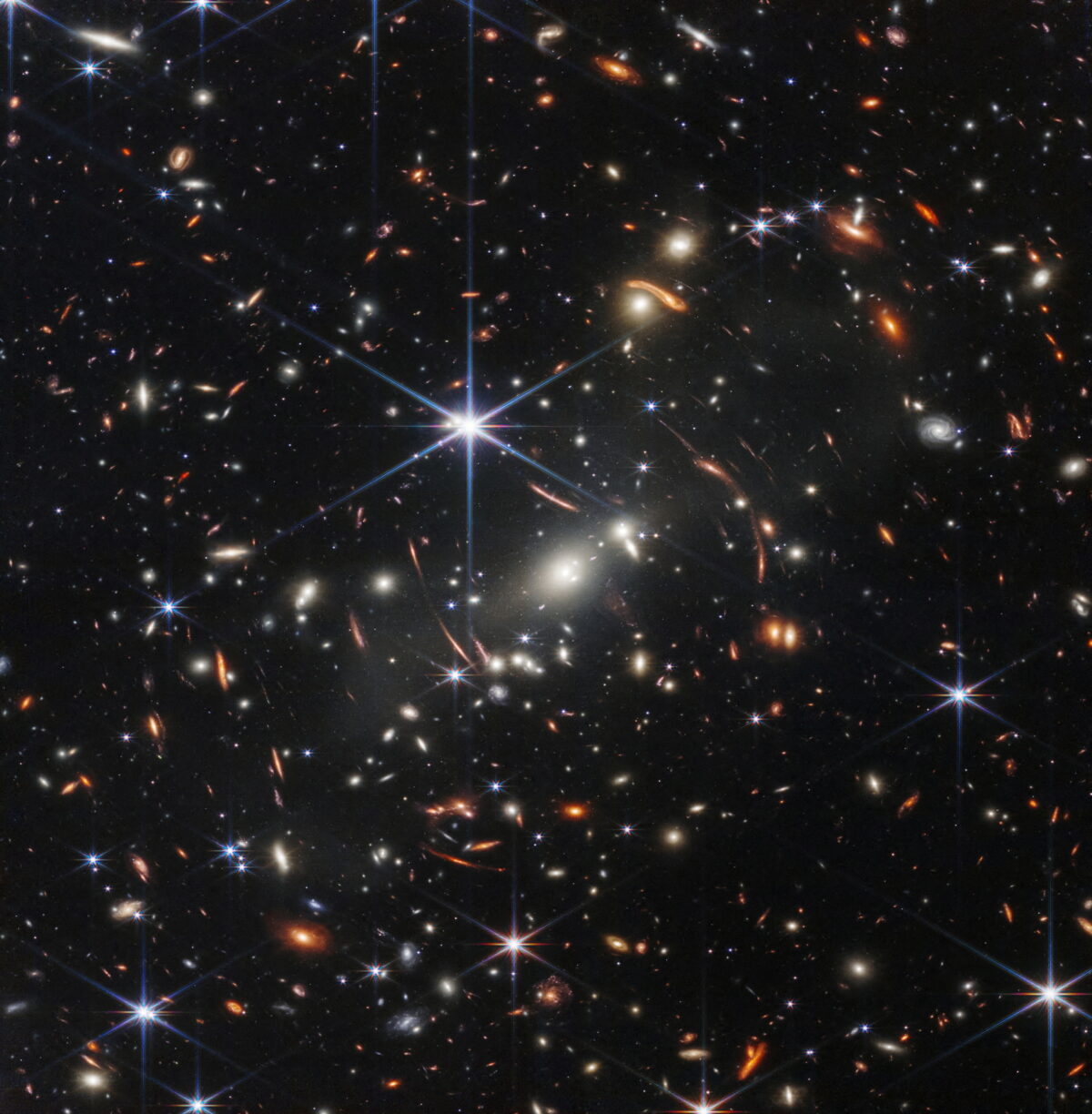
I want them to look at the stars and contemplate their place in God’s creation. I want them to recognize that they were created in his image and that their lives have meaning and purpose. And I want them to experience the gratitude that comes from recognizing how extraordinary it is that we are here at all.
Because maybe wonder isn’t something we outgrow as we become educated. Maybe wonder is what education was supposed to deepen.
And maybe the greatest danger of having all the answers at our fingertips isn’t that we will stop thinking. It’s that we will stop asking questions that don’t have easy answers.
What happens to a society that no longer wonders? What happens to our imagination, our relationships, our gratitude, and ultimately our connection with God?
I don’t know.
And for once, I don’t think that I want to look it up.
Views expressed in this article are the opinions of the author and do not necessarily reflect the views of The Epoch Times.