
Commentary
Last week, 18,238 Americans were asked whether they are concerned that artificial intelligence will cause the end of the human race on Earth. 50 percent said they are concerned or very concerned.
The same survey found that it isn’t an even divide on the political spectrum. In 2023, concern was almost an even split: 42 percent of liberals, 43 percent of moderates, and 45 percent of conservatives. Today, 61 percent of liberals worry about an AI apocalypse, a 19-point rise in less than three years. Meanwhile, conservatives have not moved. They sit at 44 percent, within 1 point of where they were.
The same survey asked its college-educated panelists what they had studied. Concern runs highest, at 63 percent, among those with degrees in fine arts, 57 percent in the social sciences, and 56 percent in the humanities. Among those who studied engineering, concern is at 47 percent. Among those who studied computer science, it is 46 percent, and for those who studied mathematics, it is 44 percent.
It’s notable that half the country has moved toward fear while half the country has not.
It is not likely that one side understands the technology significantly better. There are engineers, educators, and thinkers on both sides.
And it can’t be that anyone was spared the AI doom news coverage. Warnings have run on every network, podcast, and front page now. Especially this month, news reports escalated after another AI researcher resigned, warning that AI can end humanity within a decade.
Other researchers have given similar warnings in the past, but this time, the company the whistleblower left, Anthropic, didn’t disagree or disavow him, as whistleblowers typically are treated. Instead, other engineers from the same company publicly agreed without repercussions. Even the CEO agreed, which quickly elevated the whistleblower’s status in the public eye, thrusting him into the spotlight and fueling the flames of fear.
Soon after, a group called Pull the Plug disrupted a conference hosted by Canva, a popular online design platform, in London. Canva sells its tools to designers, illustrators, and small creative businesses, so many of the target audience in that room were those who also studied fine arts or humanities.
“You say that this is for people,” the protester yelled after getting up and standing on her chair, “but people are afraid. People are afraid when we hear that AI has a 10 percent chance of killing us all within the decade.”
No one in the room stopped her. No one from the stage responded. The room was silent as the protester yelled continuously before security eventually intervened and escorted her away. The protest video reminded me of similar protests against climate change and global warming by those who viewed them as existential threats to humanity. It seems the AI threat has now supplanted the former.
President Donald Trump has disagreed and has called the risk a hoax, and perhaps conservatives have followed his lead, but the liberal concern about AI has been building long before this latest media frenzy. And the remarkable 19-point climb did not happen overnight.
It also can’t be that conservatives don’t believe in any impending societal end. In April 2022, Pew Research asked Americans: Are we living in the end times? Thirty-nine percent said yes. Among evangelical Protestants, it was 63 percent. Among black Protestants, 76 percent. Among Catholics, 27 percent. Among the religiously unaffiliated, 23 percent.
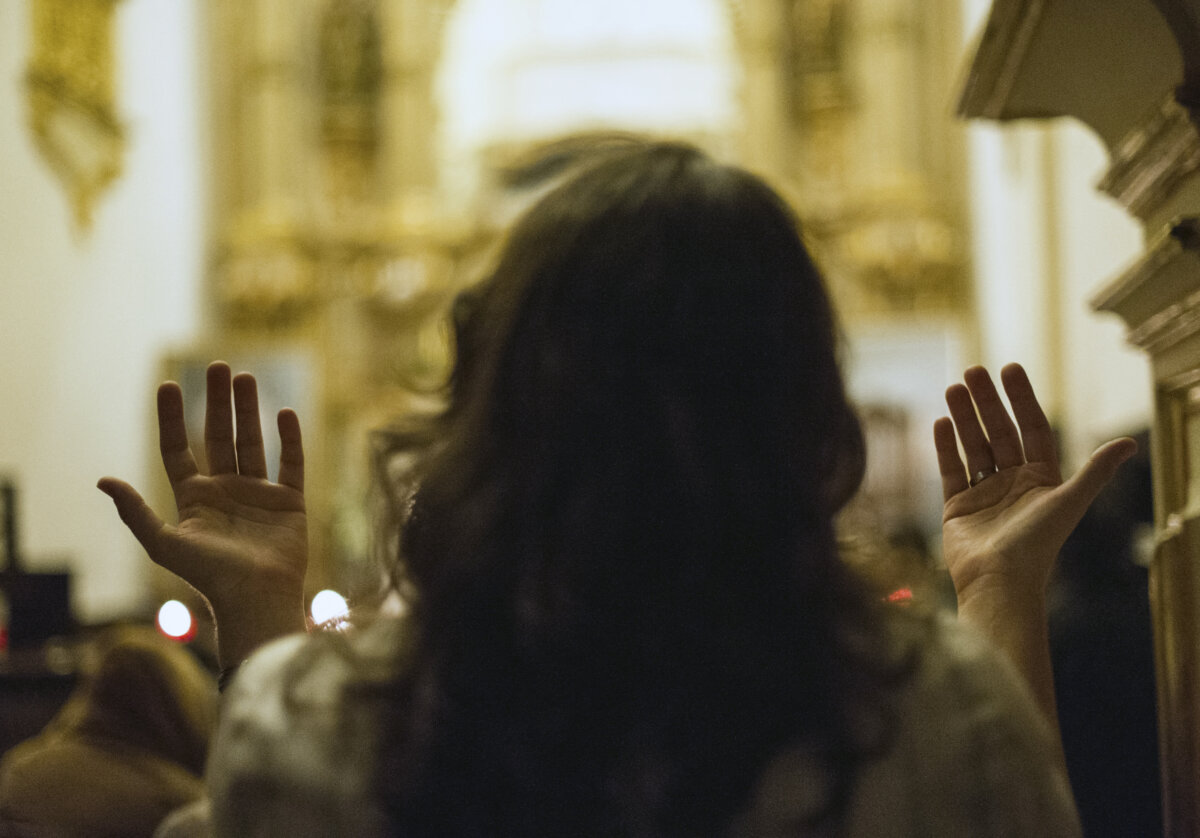
I find it interesting to think that both 63 percent of evangelicals and 63 percent of fine arts graduates are now expecting the “end times.” One group prays that they receive deliverance by a heavenly being whenever the time is to come, while the other fears that a man-made technology will just uncaringly wipe humanity out of memory and existence.
Believers don’t need a date or a deadline. Many have believed in an “end times” since childhood, heard it preached, sung about it, or read it in a book alongside generations of other family members. The timing was never specified by a decade or a percentage. Others who took no interest in religion or dismissed any concept of end times before are now processing a prediction given by engineers of science and technology. They receive it expressed coldly through figures, with no path for survival or redemption, other than following the lead of those who are creating the technology itself.
The widespread acceptance of that alarm is inevitably causing fear and anxiety beyond demographic or political divides, especially during times that are already loaded with stress layered upon uncertainty.
But perhaps it is a belief in life beyond this human realm that is the foundation to see us through these “end times.”
In January this year, Pew Research published findings that 70 percent of Americans believe in an afterlife. That’s a higher percentage than I would have guessed. But saying yes on a survey is a very different matter from facing a steady news-stream of fear and anxiety-inducing headlines threatening human extinction.
Perhaps the better measure of all these statistics would be faith in a power greater than humankind itself or belief in a creator, instead of political affiliation.
Knowing in one’s heart that life ultimately comes from something greater than human beings alone and that we as humans are cared for through, and not despite, the challenges of human living, is to me the ultimate salve for any apocalyptic predictions. And beyond religion, and across all cultures, faith has always been the better healer for any fear.
Views expressed in this article are the opinions of the author and do not necessarily reflect the views of The Epoch Times.