Commentary
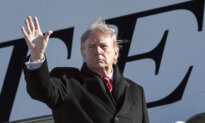
Great hope seems to be pinned on the first trilateral summit being held this week between Chinese leader Xi Jinping—the host at a state villa near the Shenzhen summit of the Asia-Pacific Economic Cooperation (APEC) organization—and U.S. President Donald Trump and Russian President Vladimir Putin.
But is it just a Potemkin village, a meaningless ritualized showcase?
The so-called “new Yalta” summit of great-power leaders in Shenzhen, China, on Nov. 19, 2026, may be seen in hindsight as a last gathering of the retiring school of men who represent the post-Cold War era rather than the emerging new era.
So what does this tell us about the future global balance? A slowing world dynamic, mired in dysfunction? Or a world that needs an explosion of action—a conflict, perhaps—to generate new economic, scientific, and strategic momentum?
The meeting—admittedly unprecedented in recent history—between the leaders of the United Sates, Russia, and the People’s Republic of China (PRC) on the sidelines of the APEC summit in Shenzhen was being hailed as “a new Yalta.”
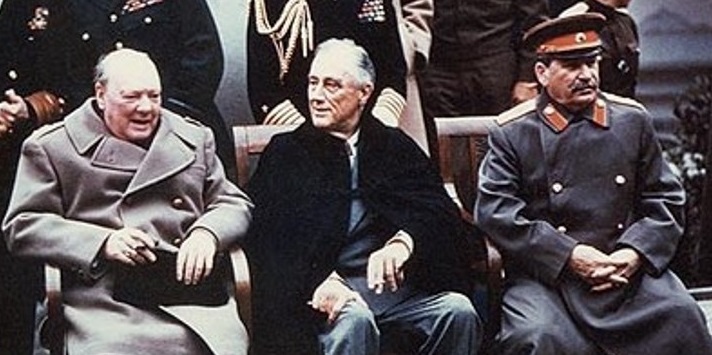
It would, its proponents say, be akin to the meeting in Yalta, in the Russian Crimea, on Feb. 4 to 11, 1945, of Soviet leader Joseph Stalin, British leader Winston Churchill, and U.S. leader Franklin D. Roosevelt.
But the Shenzhen summit will not be seen as a new Yalta.
Even “the old Yalta” was a tragicomedy of betrayal, distrust, and the realization that the Allies of World War II were, in fact, always mutual enemies—or “frenemies”—attempting to figure out how to gain advantage in a new world in which Nazi Germany and imperial Japan were no longer the immediate, overt enemies.
This time, there is not even the pretense of an alliance between the three current leaders.
There is neither a pretense of a common foe to be slain nor a new world to be built.
The 33rd APEC Economic Leaders’ Meeting is being held in Shenzhen, Guangdong Province, in the PRC from Nov. 18 to 19, 2026, and it will, apart from the tripartite summit, be a juggling match to accommodate both the PRC and the Republic of China (Taiwan) without diplomatic disaster. Juggling the presence of Japan at Shenzhen will also be a diplomatic challenge for the Chinese regime as host of this year’s APEC. Many leaders from 21 APEC member economies were scheduled to attend.
The sideline tripartite “summit” is, like the 1945 Yalta gathering in the Russian Crimea, occurring at the end of a period of protracted indirect warfare, and, as with the 1945 event, comes at a time when the world was to a large degree in ruins from direct conflict. But then the U.S. was emerging as the truly great global power. Now, while the U.S. remains the primary global power, the scenario facing the three leaders is one of declining control, and the ruin is mainly in the area of economic exhaustion.
It is as though the “rules-based world order” has already become far less binding and relevant in governing the behavior of states, and that the reversion takes us back to that significant period when the League of Nations demonstrated that it had no real power at all. That occurred with the Italian invasion of Ethiopia from 1935 to 1936, and it opened the floodgates to behavior that ultimately moved the world toward World War II.
Today, again, the U.N. and other related bodies that have attempted to create an international set of laws and transnational governance—without any popular mandate for it—have collapsed, and most states are sensing an opportunity to do what they wish, regardless of consequences. This is where the post-post-Cold War period is immensely less stable than the post-World War II period.
Indeed, there was never a plan, or hope, for the Shenzhen side meeting by Xi, Mr. Putin, and President Trump to discuss anything monumental or far-reaching. It was never, as “Yalta One” was, intended to be a meeting to divide up the postwar world. The meeting on the margins of APEC 2026 was designed for limited discussion of pre-agreed and relatively minor matters.
The U.S. and European media concerned themselves with the fact that President Trump was too weakened by the Nov. 3, 2026, midterm congressional election losses to bestride the APEC stage as the unstoppable leader he had portrayed himself to be just six months earlier. Inside Beijing, the civil war within the Chinese Communist Party (CCP) and the collapsing PRC economy had already positioned Xi as a caged and embattled leader, who was hoping for breathing space to recover the strength to win a fourth term as general secretary of the CCP. And Mr. Putin was still some way from freeing himself from the difficult war not just with Ukraine but against Western sanctions that would ultimately stultify his era in power.
And all three leaders were faced with the immediate difficulty of their own advancing age and accompanying health concerns, tearing at the monuments or legacies they were attempting to build. Therein lies a major concern: that one of the three could attempt some rash maneuver to achieve a coup de main—a massive stroke that could change his fortune and his departing legacy.
President Trump and Xi would also hold a separate bilateral meeting during the APEC gathering, touted as their third in 2026, but each of these bilateral meetings has been largely symbolic to show “business as usual” images, with little time for any substantive discussion. The basic intent seemed to be to ensure that the civil war within the CCP was disguised and softened to avoid panic over a Chinese economic collapse. Indeed, it was designed to ensure that there was no panic in the markets that could cause a sudden collapse.
If there is any success in the trilateral “Yalta Two,” then it would be this: to ensure a dampening of fears in the global marketplace. But it is doing little to allay the concerns of an increasingly unstable European Union, where economic and political decline are being blamed on Chinese economic competition. And, unlike Yalta One, there is no Western European leader—even one as ailing as Churchill was in 1945—to argue its case.
Views expressed in this article are the opinions of the author and do not necessarily reflect the views of The Epoch Times.