The New School Where Teens Will Learn Classics—and Build Airplanes | Ian Rowe
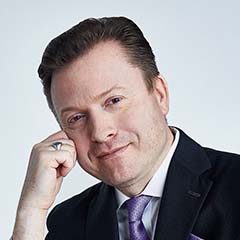
[RUSH TRANSCRIPT BELOW]Ian Rowe is a charter school founder who believes hard work and accountability—and rejecting victimhood—are the secrets to a good education.
His school Vertex Partnership Academies just celebrated its first graduating class, with students moving on to college, the military, and futures that once felt out of reach in an area where only 7 percent of kids typically graduate college-ready.
His newest project, Westchester Aerospace and Virtues Academy (WAVA), pairs a classical education with a surprising real-world specialty: aviation and aerospace training.
Students will study great books and Western civilization while also learning air traffic control, piloting, aircraft maintenance, airport management, and related trades. The school will sit right next to Westchester County Airport in New York, so students can watch planes and hear real air traffic control, making technical training part of everyday school life.
So why aerospace—in an age when AI is upending every industry?
“While artificial intelligence is going to affect every industry … there will always be a need for some kind of aircraft to transport people from one location to the other,” Rowe says.
“The best defense against the worst excesses of artificial intelligence is to ensure that our students are steeped in the other form of AI—and that is ancient intelligence … virtue, moral formation, character development.”
Views expressed in this video are opinions of the host and the guest, and do not necessarily reflect the views of The Epoch Times.
RUSH TRANSCRIPT
Jan Jekielek:
Ian Rowe, such a pleasure to have you back on American Thought Leaders.
Ian Rowe:
It is so fantastic to see you again, and triumphant.
Mr. Jekielek:
Well, triumphant. So, three years ago, when we last interviewed, you were at Vertex Partnership Academies. You had founded this amazing school in its first year, and you were being sued. It was a rough moment. Okay, what happened?
Mr. Rowe:
So, we run schools in the Soundview section of the Bronx, which is an area in which only 7 per cent of kids that graduate from high school graduate ready for college, meaning that they are not able to do reading nor math at a level that will allow them to compete on an equal footing. And we wanted to found this great international baccalaureate school founded on the cardinal virtues. And for that good deed, the teachers’ union sued to attempt to prevent us from opening. But as I say, we were triumphant. When we last met, we were in the midst of that battle, but we were victorious.
I’m very excited to share that we just had the first graduating class of Vertex Partnership Academies. These students are now able to embark upon incredible journeys in some of the best colleges and universities across the country. Some are actually going into the military. In providing an alternative pathway to what they normally would have been exposed to, we’ve destroyed that narrative and created a narrative of purpose and meaning and agency.
Mr. Jekielek:
Well, and you also have this, I guess, anti-victimhood narrative that you actually teach. Tell me about that.
Mr. Rowe:
Yes. One of the first decisions that we made at Vertex was to organize the school around the four cardinal virtues: courage, justice, temperance, and wisdom. And we didn’t pull those virtues out of nowhere. These are the cardinal virtues, the original Platonic virtues. In fact, the word cardinal comes from the Latin root, cardo, which means hinge. So all other character-based strengths emanate from these four virtues: gratitude, perseverance, determination, hope, optimism, all of those. But the first is courage.
And so each morning, our students recite what we call an I statement. And so for courage, I reject victimhood and boldly persevere, even in times of uncertainty and struggle. And it’s a goosebump moment when we hear our students say these words in unison because it’s a collective commitment. This is how we are going to operate as a school; Know that we can persevere; no one can victimize us unless we give them consent, and so we empower our students to reject victimhood.
Mr. Jekielek:
I should be doing this mantra in the mornings or something, you know. I mean, this is very good, right? Yes, because we’re so, you know, we’re awash. I’m going to talk about schools in just a moment, don’t worry. But we’re awash in victimhood narratives, right?
Mr. Rowe:
There is power in victimhood somehow in our society.We have come to this idea that the more oppressed we claim we are, the more marginalized we claim we are, the more attention and seemingly value you gain. And so now it’s become counter-cultural to emphasize this concept of agency, the force of your free will guided by moral discernment. Everyone has free will, but how do you exercise that free will toward the betterment of you and your community and your society? And so we just think that that’s very important. We need to reject this victim ideology, which I think, unfortunately, is very much damaging our country and also infiltrating the ideas of young people.
Mr. Jekielek:
So is this part of the reason you’re here, right? I mean, we’re here at ARC, [Alliance for Responsible Citizenship], right? This theme is the restoration of Western culture, traditional values, perhaps the cardinal virtues.
Mr. Rowe:
Yes, the theme of ARC, a three-day conference, starts with deconstruction, mindset shift, and then reconstruction. So, the message I always want to send to other leaders is don’t despair. We all see the cultural shifts that have been happening, this increase on a focus on victimhood. But the point is, we have the power to build new institutions, demonstrate that there can be a very different pathway for our young people.
Mr. Jekielek:
And this is basically, it seems like, what you do, right? Because you just built this one, the Vertex Partnership Academies. But one more thing about Vertex: how are the students selected? Are they all coming in with already kind of good grades, good home situations where they’re schooled in doing homework and basic things like that? Have those basic skills?
Mr. Rowe:
Vertex Partnership Academies, like all the schools that I lead, are what are called public charter schools. These are schools that have no admissions criteria; there’s no testing. Because we’re so heavily subscribed, it’s a lottery. We’re located in our Vertex school in Soundview, which is a very high-poverty district. Almost all of the kids are from low-income backgrounds, predominantly black and Hispanic. They are from homes that are challenged in some way, but what they all have is an aspiration to be great. So we as an institution say, if you want to be great, we will be exceptional in equipping you with the knowledge and the skills, the habits, the virtues that can help you lead the life of your own choosing.
Mr. Jekielek:
And so you’re saying a whole lot of these kids in a place where only 7 per cent are what, reading and writing at, you know, able to do that at all.
Mr. Rowe:
Yes.
Mr. Jekielek:
Many of them are going to college?
Mr. Rowe:
Yes. I think about 95 per cent of our numbers are going to college. The rest are going into the military. But the point is, if we set the bar high, our students will elevate, especially if we provide the kinds of support, structure, discipline, and accountability. So it all goes together.
Mr. Jekielek:
Isn’t that bizarrely astonishing, given the state of the school next door?
Mr. Rowe:
I have ceased to be amazed at how the things that I communicate, which I think are obvious—that organizing a school around virtue, being deliberate about moral formation, holding high expectations for academics and behavior—to me, these things are obvious and have been obvious for eons, but for some reason, we’ve lost our way. There are many other great school leaders.
My goal is not only to run a great school, but also to demonstrate what is possible if you are intentional about how to help young people recognize that they can lead self-determined lives of meaning and purpose. You don’t have to fall into the trap of what you might think society is telling you is possible because of things like your skin color or your gender or your economic class. All of those things matter far less than your inner capability to grab hold of your life and grab hold of virtue and the institutions that matter.
Mr. Jekielek:
So, are all these schools in your area scrambling to implement your curriculum now that you’ve shown this success?
Mr. Rowe:
I would love to say yes to that, but there are forces that benefit from preserving the status quo. I do believe that some of our success has inspired other leaders. I certainly know that there are teachers in other schools that have frankly left institutions that they felt were actually playing to lower expectations. Now, they see a place like Vertex Partnership Academies, and they feel uplifted that this is what’s possible.
Mr. Jekielek:
But unfortunately, you’re saying those curriculums aren’t shifting necessarily that quickly.
Mr. Rowe:
Unfortunately, not. My message always is, don’t despair. We have within our capacity to build enduring institutions that show that young people don’t have to, for example, be ashamed of their history, that are geared towards their betterment, that can allow them to lead the life that they want.
Mr. Jekielek:
So you’re not happy with just like two schools; you need to start another school? Is this—how does this work? I mean, so let me frame this, right? As we ran into each other in the hall, you’re telling me about this whole new school concept that you are working on that’s launching in 2028 that’s situated right beside Westchester Airport. Anyway, like, my wife, by the way, loves covering the airport, air traffic, and airplanes. It’s kind of one of her vices. It’s not exactly right, but she loves it. I’ve learned so much from her as she covered this beat, so I think when I tell her about this, her eyes are going to light up. But tell me what you’re doing. But first, tell me why it’s not good enough to have this success, right?
Mr. Rowe:
The need is great for great institutions. And I think we as a society, in order to shift the conversation, shift the culture, and shift belief, we need. We need more living examples of schools that are doing the kinds of things that we’re saying are really important, that are grounded in virtue, that are grounded in rigor, that are grounded in the great books, that are grounded in the underlying principles of Western civilization. We need more examples of that.
So, yes, I’m not satisfied with a few schools. We need to build more. And what I also find interesting is that when you do find a school that’s really grounded in classical education, grounded in virtue, there’s almost the assumption that that is separate from a school that might be more professional in nature, a school that might be focused on career and technical education, that these two things are at cross purposes. And so, we’re aiming to show that those two things can coexist.
We are designing Westchester Aerospace and Virtues Academy [WAVA], which will be the first school of its kind that marries this idea of a classical education where all the students read the great books, the best works that have endured the test of time, that are grounded in virtue and Western civilization. And students will now be able to have a course of study in air traffic control or becoming a pilot or aircraft maintenance or airport management—actual professions, by the way, which lead to very high-paying jobs, of really the pragmatic with the virtuous. And we think that that’s going to be very powerful.
Mr. Jekielek:
You’re building an air traffic control tower as part of your school.
Mr. Rowe:
Yes, our school will be literally very proximate to the Westchester County Airport, and will have an unobstructed view of the runway. So for that course of study, our students will be able to see literal planes landing and taking off, and they’ll be able to hear the actual language that the air traffic controllers are using to direct these planes. It’s part of this ethos where part of your education will be a real-world component.
Mr. Jekielek:
One question I had on my mind, you’ve kind of answered. So with Vertex, you said that something like 95 per cent were going to college. But for example, I’ve had Mike Rowe on the show a number of times talking about how trades have been left behind, right? So I was wondering, what if none of those students from Vertex are going to trades? We need those tradespeople. But you, you, we’ll make another school for trades. This is your approach. How do trades fit into the education in these institutions based on, you know, classical education?
Mr. Rowe:
It’s very important that we establish that college does not need to be the only immediate option after secondary or high school. So with Westchester Aerospace and Virtues Academy, there will be a much greater emphasis. We’ll have classes in carpentry, trades, electricians, all under this aviation and aerospace umbrella. Our students will literally be building, physically building airplanes. They’ll be making and fixing things, creating tactile changes, all while also being exposed to the great books and virtue.
So we anticipate that, unlike Vertex, where, yes, the vast majority of students are going on to college, with WAVA, there’ll be a much higher percentage of students going directly into the aviation industry in areas, again, like aircraft maintenance, airport sub-management. There are a lot of things that do not require a college degree to be successful, especially if the secondary education is effectively preparing you.
Mr. Jekielek:
So, unlike Vertex Partnership Academies, WAVA is a very special-oriented school. I mean, it is the only one in the country, I think you said. So, is this also going to be a local charter school, or is this bringing in students from all over the country?
Mr. Rowe:
Westchester Aerospace and Virtues Academy will also be a public charter school. It will differ from Vertex in the sense that the audience will be very different. So, Vertex serves the Soundview community of the Bronx, so almost all students are from low-income backgrounds. What we’re creating with WAVA will actually be a new type of endeavor because the goal is to make it intentionally diverse racially and socioeconomically.
The school will be located right proximate to the Westchester County Airport, but it will serve all of Westchester. So we will equally have students who are the children of wealthy executives from IBM or PepsiCo, while also serving students who live in the housing projects in Mount Vernon or New Rochelle.
There’s a great economist, Raj Chetty, who’s done fantastic research on this concept of cross-class connections and the importance of young people in particular interacting with each other across economic class, across race. It’s been found that there are great leaps in upward mobility for all kids involved, not to mention all the benefits of dialogue across differences. And so the school will actually be a new kind of public charter school in that it’s intentionally diverse racially and socioeconomically.
Mr. Jekielek:
That’s, I mean, fascinating. And it’s intentional because you believe that will help all of them.
Mr. Rowe:
I think that we sometimes lose the opportunity, even while delivering great schools.But oftentimes those schools are in neighborhoods where the makeup of the school is actually relatively homogeneous. This, we anticipate, will be very heterogeneous again, across race, across class. And we think that that will be a unique contribution to the educational experience for all the kids.
Mr. Jekielek:
Are you concerned at all that this might end up being, you might end up with a kind of a John Hughes film situation, where there are all these different factions and the rich kids and the rockers and all these?
Mr. Rowe:
Anytime you create any kind of school, there’s the possibility for cliques for sure. But I don’t really have that concern. One of the things that our experience at Vertex, because even though it’s a relatively homogeneous environment in terms of low income kids from the Bronx, there’s a lot of diversity in terms of interest, mindset. But what binds us all together is this commitment to virtue, a commitment to the type of education we’re delivering, a commitment to this idea that we’re not victims. We have control over our destiny. And I think a similar thing will happen.
Mr. Jekielek:
Because you’re pulling that whole aspect right in.
Mr. Rowe:
Yes, all of that is going to exist in WAVA as well. And we’re really excited at the opportunity to have kids together who otherwise would never interact. And I think, unfortunately, our country sometimes is too stratified by race or class. We don’t have enough opportunities, especially during the K-12 experience, that kids can really interact across differences.
Mr. Jekielek:
Why airplanes, air traffic control, this whole realm? Why that, of all things?
Mr. Rowe:
The reason we chose aviation and aerospace is that while artificial intelligence is going to affect every industry, it’s certainly going to affect aviation, aerospace as well. Unless Star Trek becomes true and we can beam me up, Scotty, there will always be a need for some kind of aircraft to transport people from one location to the other. That might be a flying car, that might be an airplane, it might be a spaceship, because we really do have to think about Elon Musk’s vision of a multi-planetary species where we’re traveling to and from the moon and Mars.
It sounds science fiction, but as Elon Musk says, he’s taking the fiction out of science fiction. And so, who are going to be the workers of the future who understand the technologies that are necessary to not only effectively navigate from New York to Washington with air traffic control, but how do we navigate from the Earth to the moon or Mars with all of these amazing technologies? For me, the reason why this school is so important is not only are we going to be having our students study advanced technology and all the possibilities; it is also grounded in virtue.
As I like to say, the best defense against the worst excesses of artificial intelligence is to ensure that our students are steeped in other forms of AI. And that is ancient intelligence. And that’s virtue, moral formation, character development. So even as our kids are exposed to all of these things that they can now do, there’s actually a moral framework. They’re guardrails around the types of decisions that they will make in their own lives.
Mr. Jekielek:
How do you decide what those guardrails are for your education setup?
Mr. Rowe:
The thing is, what’s nice about what we’ve decided, you know, our school. As it is in Vertex, it is going to be organized around the four cardinal virtues. We didn’t pull those out of thin air. Those are the original, again, Platonic virtues that have existed for eons and we know are tied to human flourishing. So those are the guardrails. We didn’t create them. We’re tapping into the wisdom of the ages.
Mr. Jekielek:
Okay. And because we’ve seen it’s tried and tested in your view.
Mr. Rowe:
In fact, WAVA is a combination of both Vertex Partnership Academies, which is our school built on the cardinal virtues, and another school called West Michigan Aviation Academy, which is an incredible school that’s been in existence for 15 years. They’re in Grand Rapids, Michigan, on the grounds of the Gerald R. Ford International Airport. They’ve already had an incredible history of developing more than 200 pilots, aircraft maintenance, and air traffic controllers. Again, we’re not starting from scratch, but our school will be this unique combination of a classical, virtues based education focused on the great books and an introduction to this whole world of aviation and aerospace.
Mr. Jekielek:
Tell me how it is that you got into creating schools, which is really what it seems you do these days.
Mr. Rowe:
My ethos is really helping young people find the pathway towards the life of their own choosing. It just so happens schools are one way to do that. But there are other parts of my world in which, you know, I’m the chairman of the board of Spence-Chapin Services, which is an incredible adoption agency where we find incredible permanent families for vulnerable children. I’m a senior fellow at the American Enterprise Institute, where I study the forces that drive upward mobility, particularly for young people. So that includes crafting legislation and policy and presenting to lawmakers across the country. And I run schools.
Schools are the most tactile interaction because when I’m at my schools and interacting with my students, I’m reminded of my own education. So when you ask what drives me to launch schools, I had a great public education, K-12, in Brooklyn, New York, and Queens. And I have always thought we have to have a public education system as the common pathway to opportunity. And so anything that I can do to help more young people have a sense of possibility in their life, that’s what I want to do.
Mr. Jekielek:
Is there any interest in replicating the schools that you’ve already created?
Mr. Rowe:
Yes. With WAVA, we are designing from the beginning with replication in mind, which will include elements that would allow someone to replicate Vertex or West Michigan Aviation Academy. So, the whole idea is that we may not have to run every single one of our schools, but we could give a really high-quality blueprint to education entrepreneurs around the country, or, frankly, around the world, that want to mimic a model that is grounded in virtue and classical education and a professional, professional industry focus like aerospace.
Mr. Jekielek:
Wow. Well, I’m going to have to wish you the best of success here.
Mr. Rowe:
We should do this again in three or four years, and I will say to you, here’s what we were able to accomplish. Because my ultimate message is always, don’t despair. We can always build. If you’re frustrated with the state of our educational system or the way things are, the way things are doesn’t have to be the way they will be. The more models we can create that reflect our values and our virtues, that’s what we should build together.
Mr. Jekielek:
And you don’t have to change everything. You can just—this is what I like so much about what you’re doing. You just, you know, you picked a few things that were achievable and you gave it a shot.
Mr. Rowe:
Yes. And that action makes others believe they can expand their horizons for what they can do that is achievable.
Mr. Jekielek:
This is like The Epoch Times with a media company. Yes.
Mr. Rowe:
You know, it’s true.
Mr. Jekielek:
Yes, absolutely. You’re making me think about that. All right, I’m inspired. A final thought as we finish, Ian?
Mr. Rowe:
When Alexis de Tocqueville was observing America and trying to understand what makes this country tick, he wrote, the greatness of America lies not in being more enlightened than any other nation, but rather in her ability to repair her faults. I have always loved that quote because it reminds us that our country, with its Bill of Rights, the Constitution, the Declaration of Independence—those are the tools of self-renewal and self-improvement that have allowed us to become better as a nation.
At our schools, we recite the preamble to the Constitution each morning. We, the people, we, the people, have the responsibility to secure the blessings of liberty. And the reason I feel that that’s so important is that it helps our young people understand that they have the tools of self-renewal and self-improvement within themselves to build the society and the communities that we want.
Mr. Jekielek:
Before we actually finish, can you give me just one example of a kid that’s done this that you can think of? I’m sure you have a few examples that come to mind.
Mr. Rowe:
We have several students. One of our students actually spent part of the summer in South Korea, living with a South Korean family and really just bringing the values that she had learned going to Vertex Partnership Academies, where we do things like recite the preamble to the Constitution and recite our courage and justice statements, like I reject victimhood. And she shared with us these incredible conversations that she had with these young people living in other parts of the world, where those kinds of ideas are sometimes shunned or rejected, and her ability to express herself. We just found it a very proud moment that she was able to carry the baton of freedom and liberty, and that was just very special.
Mr. Jekielek:
Well, Ian Rowe, it’s such a pleasure to have had you on.
Mr. Rowe:
Great to be with you.
This interview was partially edited for clarity and brevity.