How I Reversed My Near-Fatal Autoimmune Conditions | Sina McCullough
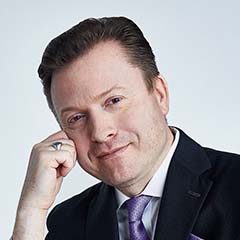
[RUSH TRANSCRIPT BELOW] Modern medicine in the West often treats chronic and autoimmune conditions as lifelong diagnoses that must be managed rather than cured. Sina McCullough—who has a doctorate in nutrition and is the author of “Hands Off My Food!”—argues that diseases are primarily a state of imbalance, driven by toxicities and deficiencies. These, she says, can often be reversed by restoring “root-level” health.
“I refuse to accept the label that disease is a lifelong sentence,” McCullough says. “When you remove the roadblocks standing in the way, the body naturally takes over and heals itself.”
McCullough does not, however, dismiss Western medicine entirely—standard diagnostic labs and emergency care remain critical tools. But can modern conventional treatments fully resolve chronic illness without addressing underlying dietary triggers, outdated food labeling, and environmental toxins?
In this episode, McCullough tells her story of how she went from near-fatal autoimmune issues to wholly restored health without conventional medicine. She answers critical questions: How do standard blood tests miss severe micronutrient deficiencies? Why are outdated, certified fool labels problematic? And what role do emotional and spiritual health play in physical diseases?
Views expressed in this video are opinions of the host and the guest, and do not necessarily reflect the views of The Epoch Times.
RUSH TRANSCRIPT
Jan Jekielek:
Sina McCullough, such a pleasure to have you on American Thought Leaders.
Sina McCullough:
Thank you so much for having me.
Mr. Jekielek:
An increasing number of people are suffering autoimmune conditions of a whole variety of sorts for a whole variety of reasons. It’s not generally known that these conditions can be reversed through things like dietary changes, and this is actually well supported in the scientific literature. You kind of lived this. Tell me what happened.
Ms. McCullough:
Yes. So, like most people, I was raised in Western medicine, and I believed that disease was not reversible, like cancer, arthritis, heart disease, diabetes. So once you get them, it’s kind of like a death sentence. You’re going to carry that label around with you for the rest of your life. But when I got debilitatingly sick, I refused to believe that I couldn’t heal.
I spent about 20 years bouncing around from one medical doctor to the next. I saw so many specialists, had so many tests done that I lost count. I mean, I had at least, like, I had several sigmoidoscopies, endoscopies, colonoscopies, breath tests, urine tests, fecal tests. I even had exploratory surgery at one point because nobody could figure out what was wrong.
Mr. Jekielek:
But what were the symptoms, just super quick?
Ms. McCullough:
So I started with severe, like some gastrointestinal issues. And I was actually born with chronic constipation, but that was my norm, so I didn’t really know any different. By the time I got into college, I was diagnosed with irritable bowel syndrome [IBS], which most of us now know that’s just the catch-all group. And what it means is that we don’t know what’s causing your problem. The first doctor I saw wanted me to take Tagamet, a prescription medication, for the rest of my life, every time I wanted to eat.
I thought, the reason why I’m having gastrointestinal issues is not because I have a deficiency in Tagamet or a medication. There’s something going on. This was in my early 20s. I told the doctor, there has to be a reason. We have to be able to fix it. His answer was, we don’t know. This is what we’re told to give you.
Mr. Jekielek:
And just, I’m going to briefly comment here, but it’s a syndrome. So, syndrome, for the benefit of everybody, is just a collection of symptoms. The cause is unknown. It’s not a disease. It’s just a collection of symptoms.
Ms. McCullough:
It’s just a collection of symptoms.
Mr. Jekielek:
So, there could be many, many causes, which in fact there are, and this is what you’re alluding to. But please continue.
Ms. McCullough:
Yes, exactly. In our system, we have to label diseases in part because they need a code so that they can bill an insurance company doctor. You’re going to get some kind of label at some point so they can bill it. But in ancient cultures, they didn’t describe these symptoms as diseases. They didn’t have that word. They actually used imbalance.
The reason I’m belaboring that point is because it makes a huge difference psychologically. And this was actually a turning point for me in my healing journey. So if somebody, if one of your friends, goes to a doctor, and they come back and they say, I just visited my doctor and they said I have cancer. How does that make you feel?
Mr. Jekielek:
I mean, you want to know which type of cancer, but in many cases, it’s, you know, I don’t know, the worst thing you’ll ever hear or something like that.
Ms. McCullough:
Yes, it’s the big C, the thing that most people are afraid of. You feel sad, you feel devastated, you’re thinking, oh my goodness, this person’s probably going to die. Now, the same friend goes to the doctor, comes back to you, and says, oh my goodness, I just saw my doctor. He says I have an imbalance. How do you feel?
Mr. Jekielek:
A lot different, a lot better, correct.
Ms. McCullough:
We’re used to imbalances. We even have homeostasis. We’re used to that. The body knows how to get back into balance. But if you label it as a disease, it’s actually a fear-based response that happens, whereas, an imbalance is not. This is a natural state. So when you are labeled as, I have this dis-ease, then it immediately shifts you into this space where this is a lifelong death sentence. It’s not going to get any better. They’re pretty much just going to be able to manage this, manage it with medications for the most part. And so that’s what I refused to settle with.
So from the very beginning, that first appointment, I said, this is not good enough. I need to find the root cause. The symptoms progressively worsened to the point where I was having, I couldn’t even leave the house sometimes because of all the gastrointestinal issues. And it was very confusing because I could eat, and I would have severe bloating within 25 minutes.
I looked like I was five months pregnant. The next week, I could eat that same food from the same company, and I had no problem at all. So it was really difficult to figure it out. Eventually, I ended up having chronic sinus infections every six weeks, I was having new sinus infections. I had had bumps on the back of my arm since I was a child, which was another symptom.
I had fog so severe at one point that I was reading books to my child, and I couldn’t even remember what I just read in a children’s book. I ended up having five miscarriages and a tumor on the sclera of my eye. No eye specialist could figure out why I was having it, but they could guarantee me that it would continue to grow over my cornea and eventually blind me. So that was very helpful.
Basically, by the end, at my rock bottom, the list of foods that I could actually eat without having any problems had dwindled to about half a sheet of paper. We’re talking about foods like apples and bananas that most people think of as healthy, and they were debilitating to me. I got to the point where I had so much pain throughout my body that I couldn’t even wrap my hand around a cup. Some days I couldn’t even lift the cup.
Mr. Jekielek:
So just all sorts of arthritis, swelling in the joints, and things like this is what you’re talking about?
Ms. McCullough:
It was interesting because the pain slowly crept up, and it would move throughout my body with seemingly no rhyme or reason. And I was an athlete for most of my life, so I was used to dealing with pain and muscle soreness. This was completely different. I couldn’t even exercise because I actually spent most of my time lying on the floor. I was too weak to basically stand up, and the pain would just move. And even if I wasn’t eating, sometimes pain would just appear suddenly, pain that would wake me up in the middle of the night. There was a point, and this was really my breaking point.
I was in bed, and every morning, before my husband would go to work, I would come downstairs, and he would basically put food and water on the coffee table and set the laptop up for me because I was listening to free online health summits, trying to figure this out, because I’d already seen all these specialists, and nobody knew what was wrong. Almost everything was negative. And the last specialist I saw told me that the symptoms had to be in my head.
So that’s when I realized the system had failed. If I had any chance of healing from this and actually surviving, we were going to have to figure it out on our own. So that’s what I actually did. I set out, scouring the scientific literature. I have a Ph.D. in nutrition, and I have a bachelor’s in neurobiology, physiology, and behavior, so I was very well-versed in the body. I taught biochemistry at UC Davis [University of California, Davis].
Mr. Jekielek:
Did you go into this because of this interest in the first place? Or, you know, it’s not a casual thing to have this knowledge base that you had, right?
Ms. McCullough:
Oh, you mean why did I start studying those areas? Actually, I went to grad school because there was a professor I wanted to study under. He was challenging the crossover concept of exercise that at lower intensities you burn fat, and as you increase in intensity, it crosses over and you burn carbohydrate. He was challenging that theory. That’s George Brooks’ theory.
I thought, well, that’s interesting. I actually wanted to study under him because I thought he was brilliant. I went to him with the idea that I think you can reverse type 2 diabetes. I think part of the way you do it is through exercise because it increases your nitric oxide production.
He said, I don’t know anything about that, but I think you’re a hidden gem. So I will take you on as one of my students to learn alongside me. This is unheard of. Professors do not do that. You usually have to fall into line.
Mr. Jekielek:
But wait, wait. Is this like before you’re experiencing all this debility and stuff? You’re just into this, and then you experience something that, you know, you’re just very naturally deeply curious and wanting to figure things out. This is like your secret weapon or something, right?
Ms. McCullough:
Yes, it is. I know that you’re the first person that’s ever interviewed me that’s caught on to this, but yes, I was always naturally inquisitive.And as I was growing up, my mother was chronically sick, starting in her 20s. And she ended up having multiple heart attacks. She had heart disease. She had strokes. She had kidney failure. She actually ended up having a kidney transplant, pancreatitis, skin cancer, you name it.
I saw the doctors giving her one medication after the next. I thought, that can’t be the answer. She’s not getting better. Not only is she not getting better, more symptoms as side effects from those medications. She was on 15 different medications, and she was going downhill. So I said, this can’t be it.
Naturally, I wanted to actually solve that. I thought, I think that they just haven’t seen the answer yet, but it has to actually be there. And someone’s got to look for it. And one of the conditions she had was type 2 diabetes. And I looked in the literature, and because I knew the biochemistry, I said, I think that is a plausible route, increased nitric oxide production. So I studied under him my first quarter in grad school, he died. So then I was on my own with no funding or anything.
Long story short, I got through it and graduated. That’s how I became well-versed in biochemistry because I had to fund my way through grad school. I had a great professor who let me be his teaching assistant for biochemistry. So I paid my way through by teaching other people biochemistry.
I think God really orchestrates things beautifully in our lives, because if I didn’t have that experience, which was obviously not an ideal experience in grad school, if I didn’t have that experience, it wouldn’t have pushed me to learn that much in biochemistry, and I wouldn’t have had the knowledge to help me save my own life.
Mr. Jekielek:
You have this arsenal, though, of curiosity, of information, of everything. But it really takes that to trigger it all to say, okay, this is not going to help me. Is that correct? You were still hoping that there would be something, right?
Ms. McCullough:
You know what? I didn’t know that there was anything outside of that system. It was what I was raised in. I wasn’t well-versed in herbals. Like, now I’m a master herbalist, but I didn’t really know about herbals. I saw what all of my family went through, and it was all Western. And yet, once that doctor basically said I had what was like a psychosomatic condition, I felt betrayed, actually. I felt like the system had abandoned me.
Here I am. I literally cannot get off the floor. Why would anybody want that for themselves? He basically was saying that I was lying. I was making this up. That to me was probably the most heartbreaking moment because I thought, wow, the system I was raised to believe in, to depend on, is telling me that I’m a liar and that I’m doing this to get attention.
Mr. Jekielek:
This also was what launched your, I don’t know, your future, I guess, right?
Ms. McCullough:
It did, because what happened was I basically handed everything over to God. So, as we’re saying, every day I’d come down, my husband would put food and water on the table, and because I had two kids at the time, I was just trying to keep them alive during the day while he was at work. And he would set the laptop up for me, and I would listen to like 40 to 60 hours of online health summits every week, trying to piece this together.
There was one particular morning when I woke up and I was too weak and in too much pain to even take the sheet off my body. That’s when I realized, we may not figure this out in time. And so I laid there crying and I basically just asked God. I told him, I’ve used every resource I can think of. I’ve used all my education. I’m trying my best.
I can’t do this alone. Please save me so that my children won’t go up without a mother. I made a promise that if he saved me for my children, that I would spend the rest of my life helping the rest of his children find their second chance. That was the birth of what I do now.
That morning, my husband had to carry me out of bed downstairs because I couldn’t walk. If you ever listen to these online summits, there are tons of speakers every day. You can’t get through all of them. I looked at the screen and I asked, which one do you want me to listen to?
God directed me to one person. I played it. Within the first five seconds, I knew this is the guy that has this missing piece of the puzzle for me. I listened to it. I called his office. He had just released a book; it became a best-selling book.
You could imagine how hard it is to get into his office to see him. Six-month wait list to see him. I said to the woman, I won’t be here in six months. And she said, we can put you on the waiting list. So I filled out all the paperwork that day.
The very next day, she called and she said, somebody canceled. We can get you in tomorrow. As soon as I got on the phone with him, I was giddy. You can imagine—in total pain. I can’t get off the floor. Every time I would try to chew food, it felt like my teeth were going to fall out. When I would breathe, like inhale, it felt like my ribs were going to break.
But I got on the phone with him and I’m laughing, joyful, and elated. He had looked at all my records and all of my tests. He said to me, I don’t think you understand how serious this condition is, because you’re laughing. I said, you don’t understand. I finally found someone who believes me. Then he said, I not only believe you, we’re going to fix this. We’re going to get you better.
It was a turning point for me. I can’t even explain how important it was to actually have somebody say to you, I believe you. And not only that, you don’t have to live like this, and you’re not going to die. Your kids will not grow up without a mother.
Mr. Jekielek:
So the suspense is killing me. So what was he offering?
Ms. McCullough:
He taught me about functional testing. I had no idea. I was using the tests just within the Western system. But there are specialty labs out there that do what are called functional tests. So, they’ll measure things. For example, if you go into a Western doctor’s office and you say, I want you to test me for micronutrient deficiencies, like a vitamin, calcium, or magnesium deficiency, they’ll do a blood draw, but it’s a snapshot of what’s in your blood at that time. It’s a very archaic and inaccurate test. Most nutrients are dynamic; they’re not just floating around in equilibrium in your blood. So, you can’t actually get a good assessment of your micronutrient status just from doing a snapshot of your blood.
There are different functional tests you can do. In one of them, they draw your blood, but then they use your white blood cells and give them one nutrient at a time, seeing how many times they can turn over or reproduce themselves. This actually measures the functional capacity of the cell. It’s totally different. In a Western doctor’s office test, I showed up with zero micronutrient deficiencies. Using this functional test, which is now considered the gold standard, I showed up with 15 micronutrient deficiencies.
I will say this was shocking because my first job out of grad school was director of research and development for a nutrition company. I formulated supplements for them. I knew the best of the best supplements. I was consuming a multivitamin and mineral every single day, and I still showed up deficient in 15 nutrients, so severely in two B vitamins that I was diagnosed as borderline for pellagra and beriberi.
These are both diseases that have been eradicated in the U.S. at least since the mid-1900s, and both of them can lead to death. We are seeing a resurgence of many of these micronutrient deficiencies. Diseases that we thought were eradicated, we’re seeing them resurge in our modern culture. So, that was one of the tests that we used to figure out I had all these micronutrient deficiencies.
We also realized that I was high in arsenic, a heavy metal, which is also surprising because arsenic is water soluble. Usually, the body can urinate it out. But when you’re chronically inflamed, what we have discovered is that oftentimes your pathways that help you detoxify from the chronic exposure of toxins slow down. So, I was not able to actually get rid of the arsenic.
Here’s one of the kickers: one of the first things I did diet-wise was go gluten-free. So, I was consuming these gluten-free processed foods for a while before I went totally whole food and all organic. Well, gluten-free foods are largely made up of rice and corn. What we are theorizing is that I got the arsenic toxicity primarily from consuming these gluten-free foods.
The other part is this is another label lie that I found out along my journey. I was consuming those foods thinking that I was totally gluten-free because they have the label on them that says gluten-free. The FDA [U.S. Food & Drug Administration] regulates the definition of what gluten is.
Come to find out, that label is outdated. It came from World War II when there was a doctor who was taking care of children who had coeliac disease. They didn’t really know it at the time. These children were wasting away. They were getting sick, and some of them were dying. Because of the war, there was actually a grain shortage, and so they were starving. These children were starving.
Something miraculous happened. Many of the children started to heal. They didn’t have symptoms anymore. Their energy level returned. And he realized, oh, it was from like the wheat and the rye. So our label today is based on the staple crops that were used at that time that the children then weren’t eating, and they got better.
Current science tells us now that all grains contain some form of gluten. There are hundreds, if not thousands, of types of gluten. And so many of us who know that we can’t have gluten or we’ve been diagnosed with a gluten sensitivity or intolerance, we’re told to go into the store and trust that certified gluten-free label.
For many of us, it’s actually making us sick because both corn and rice, for example, contain a type of gluten. So that’s one of my big messages, too. It’s really a big disservice that we do to people to hold on to that label. Kennedy and HHS [U.S. Dept. of Health & Human Services] are looking into that label, but they’re looking into it for cross-contamination. They’re not looking into it knowing that all grains actually contain a type of gluten.
Now, it doesn’t affect everybody with gluten sensitivity, but at least it affects 50 per cent of people, they’re thinking, which is large enough that we should be telling people, be cautious about this. Haven’t had success yet from going gluten-free? Try to go completely grain-free and see if that might remedy some of the symptoms.
Mr. Jekielek:
I mean, absolutely fascinating at so many levels. You’ve just, I’ve learned like 15 things just speaking with you here already.
Ms. McCullough:
One thing that I discovered during this, because I healed, and it was, you know, it was a multitude of these functional tests that we used to give me the final pieces of the puzzle. One of them was a food sensitivity test. And I’ll tell you, I was trained in how to do diet elimination reintroduction. It was part of my grad work, graduate study work. That got me down to like that short half a piece of paper of foods that were safe for me to eat.
But the problem is there are acute allergies, like IgE allergies. These are the ones we think of as peanut allergy, where you’re having anaphylaxis or hives. But there are also delayed-onset allergies that most people are not aware of. So, if they eat a piece of bread and they don’t have any symptoms, or they drink milk and they don’t have any symptoms, they’ll conclude logically, that food must be okay for me. But now we know that there’s a delayed hypersensitivity that can actually cause symptoms three weeks later.
So, there are tests that can now determine if you have these delayed sensitivities. That’s one of the tests that really helped me. I was actually sensitive to chicken, another food that we tout as being healthy. What’s fascinating about that is that one of the dietary protocols I tried to heal that didn’t work was the GAPS [gut and psychology syndrome] diet.
Most people know about the GAPS diet, and you consume a lot of broth. What do you usually put in broth? Chicken and bay leaf. I developed a sensitivity from consuming so much of that because I already had a leaky gut. So there are all these little caveats and nuances that you need to know. I was blessed to have that background in biochemistry that helped me to piece all this together. And the healing was really quick too.
This is a great story about how fast the body can heal. Once we found my deficiencies and toxicities, because that’s what dis-ease is, you look at two main categories: people will have toxicities and they’ll have deficiencies. It’s really that simple. You have them on the physical, mental, emotional, and spiritual level.
Mr. Jekielek:
And so something like cancer would be a product of those deficiencies, you would argue?
Ms. McCullough:
That’s right. This type of cell replication, uncontrollable cell replication, if you will. So you usually will have some type of toxicity, and the toxicity itself can actually create a deficiency. Sometimes you also just have straight deficiencies, like a vitamin D deficiency, because a lot of people spend their time indoors now and not out in the sun producing vitamin D. Also, the soils, our soil that we grow our food in, is largely deficient in micronutrients.
Also, there is glyphosate. Glyphosate is one of the active ingredients in Roundup that’s widely sprayed on crops. Most of the corn that’s grown today is Roundup Ready, so glyphosate is sprayed on it. Glyphosate is a heavy metal chelator, but it doesn’t just chelate the bad metals, it will also chelate metals that you need, like zinc and iron. So, if it chelates it, then the plant is saying.
Mr. Jekielek:
Pulling it out of your body.
Ms. McCullough:
It pulls it out of our body; it also pulls it out of the plant.
Mr. Jekielek:
So, the nutrition is less.
Ms. McCullough:
So, the nutrition in the plant is less, not only because the soils are depleted, but because the glyphosate binds onto it. It chelates it so the plant can’t take it up. It also affects the mycorrhizae, the fungus that’s underneath the soil. The fungus is needed to help give nutrients to the plants, and the glyphosate affects the fungus. So, there’s another route that we’re having micronutrient deficiencies.
So, yes, all these things can cause micronutrient deficiencies, and it can pull it out of your body if you are consuming glyphosate. From conventional foods, or even now we know some organic foods that have been contaminated with glyphosate. But yes, there are toxicities and deficiencies, and so that’s what we look for. It’s the same roadmap for every single chronic or autoimmune dis-ease or imbalance. You actually follow the same roadmap, and we know you can reverse all of them. So that was one of the shocking things that I found out.
Mr. Jekielek:
Let me jump in. So this was a functional medicine doctor that had, you know, written a very popular book and became famous. You’ve pointed them out, you got the approach. They started, I’m quite familiar with functional medicine, you started a process, you immediately felt, started feeling better as some of these deficiencies started to be resolved. But then that opened up your own kind of road to understanding this at a deeper level. I’m just trying to kind of, you know, kind of fill in the gap here.
Ms. McCullough:
Yes. The amazing thing is once we knew those food triggers alone, those final food triggers, I removed them from my diet. Within three days, I got off the floor. The pain had almost subsided in three days. In three months, I was outside pulling bushes out of the ground. Like that’s how fast the body can heal. Within one year, there were no markers of inflammation in my body, chronic inflammation, or any kind of illness whatsoever. The body had fully healed.
So then what happened was I noticed that if I stressed too much, or let’s say I decided to, you know, eat like two pieces of cake, like eating too much sugar, I did notice that I would have some pain here in my forearm. And this was what you would call a flare-up.
In Western medicine, you would say that I was in quote unquote remission. Well, to me, that’s another fear-based label. And I refuse to live in that state of fear, worrying that if I stressed too much, the disease was going to come back. So, what I decided to do was not accept that label. I just told myself remission doesn’t exist. What this means when I’m having this flare-up is that there’s another trigger that I haven’t found yet.
Mr. Jekielek:
Just one quick sec. Typically, when I think of remission, I think of that term as meaning the bad thing has gone away.
Ms. McCullough:
And that’s another misnomer because even if you look at organizations like the cancer organizations, they have a definition of remission, and it even says in there that cancer can still be present in the body, but they still call it remission. So that’s why it shocked me that people would rejoice that they would get into remission. I had friends who had autoimmune conditions, and they would rejoice if they got into remission.
I’m not discounting that, like, great, celebrate that you’re reversing it, but don’t stop there. Don’t settle for the remission because it just means that there’s another trigger that you haven’t found. So, once again, I actually prayed about it and I said to God, okay, look, my diet is super clean. I don’t have any toxicities anymore. I have no deficiencies. What is the missing piece of this puzzle?
It was amazing. It was like fireworks going off in my mind. And he just showed me the roadmap to follow. The missing piece of the puzzle was the mental, emotional component of the development of disease and the ability to heal from it. So, I started to look in the literature, about the scientific literature, because obviously, because I’m a scientist, I said, let me see if this is true.
What’s out there saying that you can actually reverse the condition if you just forgive? Jan, it was shocking. There’s tons of studies in the scientific literature and in medical case studies. The scientists know, the medical doctors know, they’ve reported these. There are hundreds of cases, it’s been for over a century. Cases have been documented in the literature of spontaneous healings, in part from large acts of forgiveness. Sometimes it was after an infection, somebody would spike a fever and then the cancer would go away.
I actually wrote an article for The Epoch Times on this very subject, which you can find on The Times or also on my website. I went through and I put links to numerous studies where they documented reversing cancers, even stage four cancer, reversing diabetes, reversing thyroid disease, reversing allergies, reversing asthma. It was all there in the literature.
I witnessed first hand how to do it, but it’s been known for decades that you actually can do this and there’s different ways to do it. So that’s what really started to prompt me. I thought, why don’t we know this? Why is the narrative in our culture that disease is a death sentence and you can’t reverse it?
Mr. Jekielek:
And you’ve just, you’ve built this whole arsenal of things, basically, that to, well, I was going to say put disease into remission, but I can’t say that anymore.
Ms. McCullough:
Yes. A large part of what I do is I want to provide people with hope that you can reverse these conditions. And I want to help them take away the fear because fear keeps you stuck. Ultimately, on the emotional level, fear is the root cause of illness. Fear that there’s even a nocebo effect that if you think you’re going to get sick, you will. Everyone’s heard of the placebo effect, right? That this doctor in a white coat gives you a sugar pill, says it’s going to heal you, and you healed.
There’s a nocebo effect. So if you think you’re going to get sick, you will get sick. The Framingham Heart Study showed that women who thought they were more likely to get heart disease and die of it, they did. It was significantly higher, a significant finding. So we know that’s true.
But on the emotional level, what I realize is that disease or imbalance comes from the fear of not being loved and accepted. It’s the fear that we are not good enough. And it keeps us striving, striving for external validation, striving for that carrot, that one more thing. Everybody who I’ve ever worked with has come down to the fact that they don’t feel loved and accepted. So that’s a deficiency.
It still fits into the toxicity deficiency overall template. It’s a deficiency of love and acceptance and feeling of belonging. Community, having community is another predictor. You look at the blue zone studies, one of the things they have in common is a sense of community because it gives you a sense of belonging.
Mr. Jekielek:
The blue zone studies, there’s these regions in the world where people are healthier. I mean, right?
Ms. McCullough:
That’s right. And they can live to areas where they’re living to 100 or beyond. It’s one thing to look at it in statistics and in the scientific literature, it’s another thing to live it and then to see it lived out. My mother is the perfect example of the importance of emotions in trying to reverse disease. Her husband died. She came cross country to come live with me.
The doctor said that there was nothing more that they could do for her because she had had a transplanted kidney, as I said, and the kidney failed. They said that she was going to die. And at this point, again, a laundry list of diseases. She had active cancer. She was having grand mal seizures. She had coronary occlusion. She had recently had a stroke, was on insulin for type 2 diabetes, and she had thyroid disease.
They said, you need to fly out because she’s not going to make it through the night. I flew out, short version of the story. I said to them, you must release her to me. I had medical power of attorney. I said, I’m taking her back home with me. I brought her home, did the testing I was talking about, and put her on my diet.
She lived in my house, so I controlled the environment, no EMFs [electromagnetic field], no Wi-Fi in the house, no cell phone usage in the house, and clean, structured water. She ate all the foods that I was eating, supplemented her, and whatnot. In less than eight months, every single one of her conditions reversed, with the exception of high blood pressure, which I’ll get to in a minute.
Her doctors were shocked. She got totally off the insulin, off the thyroid medication. The cancer reversed. They actually went in and did a scope of her arteries. Plaque had reversed, even though I had her on a high, healthy fat diet, and she was eating red meat. She was consuming salt again, which is a no-no when you have kidney disease, right? The kidney had fully bounced back. It didn’t bounce back in terms of a transplanted kidney; it bounced back at the functioning level of a biological kidney.
She was the healthiest she had ever been since her 20s, and yet she died. She died of stress-induced cardiomyopathy—a broken heart. The Western doctors themselves diagnosed her with a broken heart. So even though her body was totally healthy, she chose that she didn’t want to live. She wanted to be in heaven with her husband, so she died.
That’s why the only medication we couldn’t get her off of, aside from the transplant immunosuppressant medication, was blood pressure medication. We were able to lower it, but we couldn’t stop it. Elevated blood pressure is a sign of chronic inflammation. It was her indicator that she was too far down into the stage of grief to be able to come back out of it.
Mr. Jekielek:
Fascinating. And how, you know, I’m just, when you talk with other experts, right, and people maybe who aren’t as, like, you’re developing a field here. You’re kind of, it feels to me like you’re on the cutting edge of this kind of set of approaches to this. Do you think these are just outliers? Like, I’m just trying to imagine what people say. It’s just like this anecdotal—you probably hear, I don’t know. How do you react to that?
Ms. McCullough:
Very anecdotal. They think they’re very skeptical. They will often say that it is an anomaly. They honestly can’t believe it. Even the doctors that worked with me to taper off her medications couldn’t believe what was happening. And what shocked me was they saw it. They saw the test results. They saw her. They had the lab test themselves that they conducted, but they never applied the protocol to any of their other patients. They never even told them about it.
They can’t. It’s like it’s a whole different belief system. It’s almost like a religion. It’s kind of how I think of the Western medical system. It’s like a religion. If you go up to somebody who’s like a devout Christian and you tell them that religion is wrong and it’s flawed and whatever, even if you say it really nicely and you show them something else, they’re not usually going to want to change because it requires them to change their entire perception.
Also, I found another sticking point is it requires people to start taking personal responsibility because it means you got yourself sick. It was your choices that led to you and your body getting in balance. I think that’s an empowering thing because if your choices led you to an imbalance, your choices can return the body to balance, right? It can heal itself if you just listen to it.
But it means that you have to then accept that you did that to yourself. Or even worse, if your child is sick, like my child was, you have to accept that you participated in that, like unknowingly, you know, but you did help with the choices. So my oldest son, you met him today. Would you have ever guessed that he was autistic?
Mr. Jekielek:
Not at all. Wouldn’t have crossed my mind.
Ms. McCullough:
Yes. He was on the autism spectrum. He had an idiopathic joint disease. Idiopathic meaning the medical doctors didn’t know why it happened. He couldn’t stand in the shower because his joints hurt too much.
Mr. Jekielek:
Basically, chronic inflammation.
Ms. McCullough:
Yes, severe chronic inflammation. He had Lyme disease, and co-infections from it. All of it’s reversed. As you said, you can’t even tell now. All of it got reversed. But I had to accept that it was from my choices. The food that I gave him, the environments that I put him in, these things, you know, my beliefs were part of that. Again, it’s not a shaming thing.
People will tend to think of that as, oh, like you’re shaming somebody, or now I have to go into this state of guilt and shame because I contributed to that. I don’t see it that way at all. I think life is really all about perception. I see it as, let’s start harnessing our God-given power, right? We have a culture that wants that for whatever reason. We don’t need to get into that if you don’t want to, but our culture tries to have us take our power and put it into these supposed experts.
It’s a very disempowering culture, and my message is: don’t let them do that. Don’t just go off and believe them. If I believed the experts, I would most likely not be sitting with you today. I was literally at the point where I was about to die, and they didn’t have any answers. So it was because I was unwilling to believe them and unwilling to die that I’m actually here. So I model that for my children as well.
My children have no fear of a disease anymore because they’ve seen it. They’ve seen it reverse in me, in my son. They saw it reverse in my mother. And could you imagine, Jan, what kind of culture we would live in if people were not in fear of getting the big C or, you know, if they realized my choices matter and I can live and thrive until the last day? We have a short health span compared to our ancestors. We live just about as long as our ancient ancestors once they got past childhood, but we have a much shorter health span than they do. And it shouldn’t be that way in this modern age.
Mr. Jekielek:
Explain that to me. I mean, that’s not generally what we think—that people in the past lived a lot shorter lives. And there’s ample evidence of that.
Ms. McCullough:
So if you look at the evidence, and I can send you different studies on this, once they remove the childhood years, you know, like those early childhood years, and they got to like, you know, almost like teens, early 20s, they lived just as long as we do today. There are accounts of people living into their 80s and 90s. It’s just that most of the statistics that are cited include that childhood time. So once they got past that, no.
Mr. Jekielek:
So the average, that brings the average way down. It brings it way down. There are a lot of people that are older and a lot of people dying very young. That’s what you’re saying, basically.
Ms. McCullough:
And it is shocking when you say that to somebody because that is the statistic that is circulated. That’s what people believe—that they died in their 30s and 40s. So that’s one of the hindrances of this modern movement, even the MAHA [Make America Healthy Again] movement with Kennedy, when they’re saying, let’s go back to our roots. Let’s go back to the basics, like the way that we used to eat. Let’s go back to no chemicals and whatnot. And that’s a recipe for health. Go back to the ancient ways.
People will say, they still died in their 30s and 40s. I’m saying, if you break down the statistics, once they got past that, they did not die in their 30s and 40s. And in fact, many of them lived to an old age and, we think, died in their sleep. They didn’t have like 20, 30 years where they were slowly getting sick with these chronic ailments like we do. Now we have people in their 30s developing arthritis.
That’s what happened to me. It was actually a severe case of rheumatoid arthritis that I had, along with beriberi, pellagra, arsenic poisoning, and leaky gut. But it was arthritis that developed in my 30s. So we’re seeing people at younger and younger ages getting sicker and sicker. And that’s not normal. And I don’t want that to be the accepted stance or belief in our culture.
That’s why I’m saying, look, that wasn’t the history. That’s not our species’ historical trajectory. If you look at the health span, they lived a long health span and then bam, they died. We have a lot of money that goes toward taking care of people in the last 20, 30 years of their lives because we’re not healthy enough.
It’s a lot of heartbreak, too, if you’ve ever cared for somebody who’s sick and dying. It’s not what our ancestors went through. So, there are a lot of things that are different now. In addition to just the physical toxicities and deficiencies, there are a lot of different mental and emotional toxicities and deficiencies that our ancestors never faced.
Mr. Jekielek:
So, you know, as we finish up, I have a few questions, okay? Number one, are you a medical practitioner? Do you take patients, this kind of thing, or explain to me your relationship? You have an amazing book, you know, Hands Off My Food. You document some of these things and some of the challenges in the food system, which I’ll recommend to everyone. But explain to me what you view your role as here.
Ms. McCullough:
So, I like to educate, encourage, and empower people. So, I do that through my books. Joel Salatin and I have a podcast called Beyond Labels, and that’s where we try to keep people up to date on what’s happening with the food labels, where the corruption is, and we always provide solutions, like free market solutions, to empower people. I do consult, so I’m not a medical doctor. I have a PhD in nutrition, and I basically am just a lifelong learner.
I just collect this toolkit of all these different strategies that can be used to help people reverse chronic and autoimmune conditions. So, I consult with people and teach them how to reverse disease. I have an online program called Go Wild that walks you through, step by step, how to reverse disease. That’s why I named it Go Wild, because it is going back to our ancestors; it is a large way of how you remove these deficiencies and toxicities.
But those are the main ways I work with people. I’ll go and give talks at different organizations, here at Polyface Farm and such. The Amish community seems to love me, so I keep getting asked to go speak to the Amish. But yes, I love it. I just want to go out there and provide hope and empowerment and encouragement.
Mr. Jekielek:
So now, my second question: you have all these strategies. Can someone work within the conventional Western system, which they trust? They think maybe something’s not right, some things are off. Try some of these strategies, see some impact before, or do you have to go kind of cold turkey on the Western system?
Ms. McCullough:
I don’t think anything is all or nothing. So, I think there are benefits. The Western system is really great at acute care, like emergency care. If I get shot, I’m going to the emergency room. I’m not going to rub an herb on it. But, in chronic care, it’s not structured to reverse conditions; it’s structured to manage conditions. That you can utilize from that system.
For example, we use CBCs [complete blood count], and different lab tests. We use vitamin D tests. We use ferritin levels. You can measure thyroid levels. So, there are still tests you can utilize in that system that are still accurate. Not every test has to be a functional test.
When I work with people, I like to form a team. You have the Western doctor, you might have me, you might have a specialist there, and they work together because I don’t work with medical medications. You’re going to need a Western doctor if you’re on medication to help taper you off that medication a lot of times. And so that’s what they’re good at, is helping you.
Well, I want to say they’re good at it. They don’t have a lot of practice at it, but they’re the ones that are qualified to help you to taper off medications. So I like to work with them instead of like an all-or-none system, particularly because a lot of the lab tests are not covered by insurance when you get out of the system, at least not yet.
Mr. Jekielek:
So let’s say someone’s watching, and they have a long-term debilitating condition. They’re taking some kind of medication that seems to be helping. Maybe it’s helping less now than they thought. Can they use some of these strategies in conjunction, see the benefit, and then make further decisions? Is that something that’s common? That’s what I’m trying to understand.
Ms. McCullough:
Oh, absolutely. No one should ever just stop taking their medication. They need to be working with their medical doctor. With my mother, I worked with her doctors, and the lab tests told us when she should be tapering the medications, like the thyroid medication, for example. The lab test would show her progress, and then the medical doctor decided how much he was going to lower her dosage.
Mr. Jekielek:
I see. So even he might not believe that what you’re doing actually works. For some reason, the thyroid is functioning better now. And so he does.
Ms. McCullough:
And so he has to change the medicine. So that’s how it usually happens, is that they run the test and they see, oh, that organ is now working better, and now you have to change the medication, right? Because the status of the organ has changed. So, that’s in large part how I work with people doing it. These alternative strategies help to bring the body back in balance, the body starts functioning better, and then their Western doctor can actually work with the medication to taper them off.
Another example, my mother was on warfarin, a blood thinner, because of a heart condition. And when I took her under my wing in my house, I said to her doctor, we need to taper her off the warfarin because I’m giving her turmeric for the pain, and turmeric is a blood thinner. So you shouldn’t take it if you’re on prescription blood thinners. I told him, I want to replace the warfarin with turmeric because it’s a natural compound.
He said, don’t worry about it, because the turmeric is not going to be able to thin the blood enough to be able to replace warfarin. We went back and forth on it, and he refused to let me taper the warfarin off. He said, go ahead and give the turmeric. I gave her the turmeric, and a couple weeks later, well, the pain she was experiencing was getting much better.
She started bleeding from her eye, so I took her to the emergency room. Fortunately, that doctor understood the power of turmeric and that it’s a blood thinner. He said that her blood was thin enough because they just stopped the warfarin. We stopped it. She never had problems with her blood again. But that’s the power of herbal medicine, for example, but also the caution that you have to work with the doctors and somebody who’s willing to work with you to merge the two together.
Mr. Jekielek:
So there are some people out there who feel failed by the Western medical system. I’ve come across these people; they’ve tried functional medicine, found some credible doctors, and nothing has seemed to work. Is there still hope in your mind for such people or through the type of work that you’re suggesting?
Ms. McCullough:
Oh, absolutely. A lot of the people that I see come to me and they say, I’ve tried everything. I’ve done every diet. I’ve done all the supplements. I’ve done all the things, and I still can’t heal. And they end up healing. So let’s unpack this just a little bit. There’s no certifying body for what a functional practitioner is, so you can just call yourself a functional practitioner. That’s the first thing. You need to make sure you’re actually seeing somebody who knows what they’re talking about.
Number two, there are lots of tests out there, lots of different functional tests. You’ve got 23andMe, you’ve got all these different companies now that are making a lot of money on these different tests. A lot of them are not good; a lot of them are not reproducible. We even had somebody here at our Polyface Farm event that Joel and I host every couple of years. The same fecal sample, so the same poop sample, was sent to like seven or eight different companies that are direct-to-consumer marketing.
So a consumer can send their feces in, have it tested, and they’ll tell you where there are imbalances in your microbiome. Each of those seven companies gave him a different answer. So there are a lot of tests out there, a lot of false hopes. I think the technology isn’t necessarily there yet in all those spaces. You have to make sure that you’re utilizing the right test and you’re with somebody who actually knows what they’re talking about.
Having said that, in my experience, and in the experience of some other well-respected functional practitioners that I know, what we have seen is that about 60 per cent of the time, if somebody does the basics—you’re going back to only whole foods, you’re going to eat everything organic, you’re going to drink clean water, you’re going to take like a multivitamin and mineral, right? You can eliminate any unnecessary EMFs, for example.
If you do some of these basic things, in 60 per cent of the cases, they can get into remission just from doing that. The other 40 per cent of people are the ones that we step in and use these specialty tests that I’m talking about. They’re the ones that say, I had chicken. Who would have ever removed chicken and barley from somebody’s diet, right? So those are the ones where we say, there’s something beyond just the origin. That’s too toxic, or there’s too severe of a deficiency, and we need to find that through a test. So, we use these tests, we piece together your own unique puzzle, and it tells us your story.
From there, we create the most personalized protocol that we can. This is the most personalized medicine at this point. And the big sticklers, usually, when people cannot fully reverse a condition, are two things: mold, like they have mycotoxins in their body that they can’t clear out, possibly from chronic mold exposure, like current exposure, or possibly they’re out of the mold now. But as I mentioned earlier, the detox pathways have been downregulated, and they can’t clear the body of the mycotoxins.
The second is heavy metals. Practically everybody who I’ve worked with is high in heavy metals. So those two things together are two of the key tests, two of the key toxins that we look for. Once we address those and get those out of the body, it’s like you remove the roadblocks because the body is designed to heal.
We have stem cells, so we know that the body can actually heal itself. It’s well documented in the literature. Our job is to figure out what’s standing in the way of the body from doing what it knows how to do. You find those roadblocks, you remove them, and the body takes over.
Mr. Jekielek:
Well, Sina McCullough, it’s such a pleasure to have had you on.
Ms. McCullough:
Thank you. It’s so great to be here with you.
This interview was partially edited for clarity and brevity.