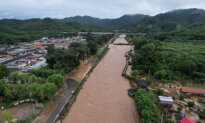

Over 280,000 residents were evacuated in Shanghai as a tropical storm struck eastern China, prompting authorities to cancel flights and halt ferry services on Wednesday.
Typhoon Co-May triggered the second landfall in Shanghai’s Fengxian District in the afternoon, after impacting the port city of Zhoushan in Zhejiang province hours before.
Earlier in the morning, an earthquake off Russia’s eastern coast raised concerns that the tsunamis it created could cause further storm surges in Taiwan, Zhejiang, and Shanghai, according to a forecaster interviewed by state news agency China News Service.
The city issued an orange rainstorm alert, the second-highest warning level, according to the Shanghai Central Meteorological Observatory.
“As of 10 a.m. today, Shanghai has relocated 283,000 people to 1,900 [plus] shelters to ensure safety as Typhoon Co-May approaches,” state media Shanghai Daily reported.
A video posted by its social media account shows Shanghai residents housed in an auditorium with blankets spread over the floor.
Local authorities reported that around 30 percent of flights were affected, with at least 640 scheduled flights at Pudong and Hongqiao airports cancelled.
Train service was temporarily suspended, with shortened operating intervals and speed restrictions, said the Shanghai Railway Station.
Ferry services were also cancelled, along with campus tours for Shanghai Jiao Tong University and Fudan University.
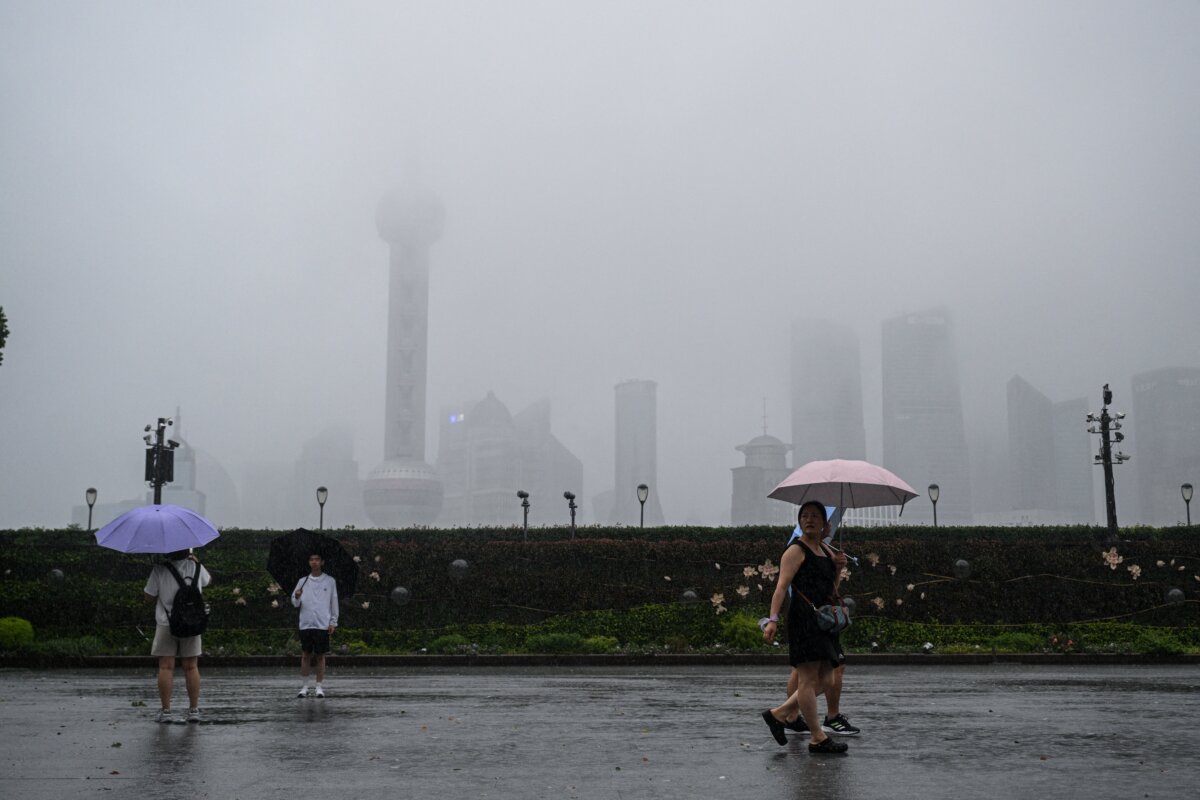
The driving speed on highways was limited to 60 kph (37 mph), and nine bus routes in other districts were closed, authorities stated.
Co-May is China’s eighth tropical storm this year. In response, China’s Central Meteorological Observatory presented a defense guide with safety instructions.
Authorities have been instructed to carry out typhoon prevention and emergency rescue efforts while ordering vessels to return to port, and outdoor activities to be suspended.
Residents were urged to stay indoors in safe areas, especially the elderly and children, reminded that “strong winds can strike suddenly” even when the storm temporarily calms, and warned of risks from heavy rainfall and geological hazards.
Shanghai seldom experiences direct hits from strong typhoons, which typically make landfall further south in China. The most notable recent storm to strike the city was Typhoon Bebinca last year, marking the most powerful tropical cyclone to impact China’s financial hub since 1949.
Reuters contributed to this report.