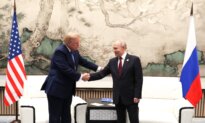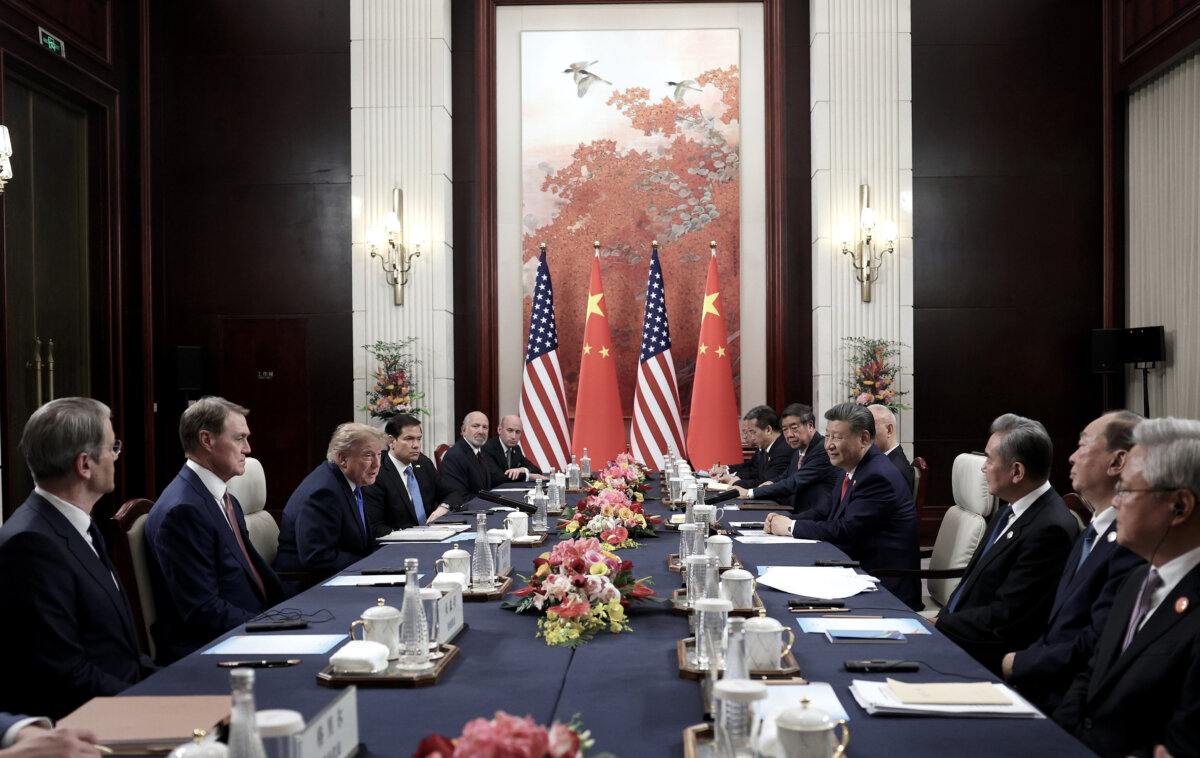

U.S. President Donald Trump has begun a meeting with Chinese leader Xi Jinping on Nov. 19, ahead of a planned three-way summit with Russian President Vladimir Putin.
Trump and Xi met on the sidelines of the Asia-Pacific Economic Cooperation (APEC) summit in Shenzhen, China, marking their fourth bilateral meeting since the start of Trump’s second term. The two leaders met in Beijing in May, in Washington in September, and in South Korea during the 2025 APEC summit.
On Nov. 17, while in Manila, Trump told reporters that he looked forward to his China trip, saying there are “some very important things to discuss.”
Rep. John Moolenaar (R-Mich.), chairman of the House Select Committee on China, had advised against forcing an agreement with Xi, during remarks at a Nov. 10 event held by the Victims of Communism Memorial Foundation.
While acknowledging the value of fostering a relationship, Moolenaar warned of the “real limits” to diplomacy, saying that the Chinese Communist Party (CCP) “would just love dialogue, dialogue, dialogue and just keep doing their thing.”
Instead, he encouraged Trump to focus on building relationships with like-minded allies.
Trade
Trump was considered likely to raise the issue of the Chinese regime’s continued curbs on shipments of rare earths and other minerals critical to a wide range of American industries.
U.S. officials have called on Beijing to fully implement its past commitments, particularly on purchases of American agricultural products and supply of rare earth.
Treasury Secretary Scott Bessent has said some deliverables “have not been perfect on the Chinese side” when announcing the temporary extension of the trade truce in September.
The current tariff truce between the two top economies is set to expire on Jan. 10.
Just days ahead of the leaders’ summit, U.S. officials had the first Board of Trade meeting with Chinese trade representatives. According to the Chinese readout, the talks covered tariff reductions and agricultural trade.
Beijing recently announced that honoring its commitment to buy American farm products depends on implementing the proposed reciprocal tariff cuts.
Taiwan
Taiwan has been a recurring topic in Trump–Xi talks, and the trend was expected to continue in Shenzhen.
Speaking to reporters in Manila on Nov. 17, Trump was asked whether he planned to bring up Taiwan during his meeting with the Chinese leader. “I won’t have to raise it. He’s gonna raise it,” the president said.
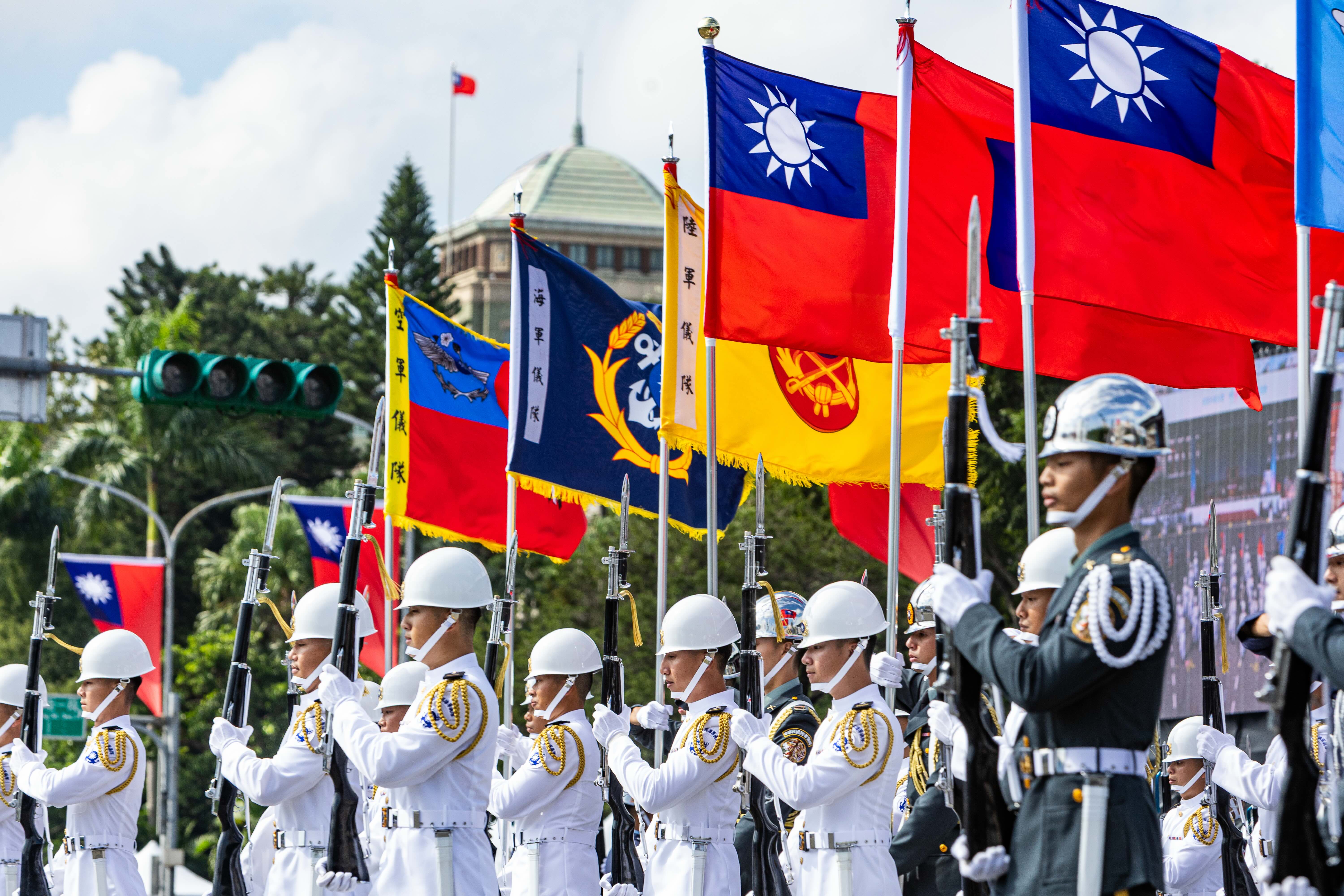 Members of Taiwan’s Joint Armed Forces Honor Guard hold military branch flags alongside national flags as they stand in formation in front of the Presidential Office Building during the National Day celebrations in Taipei, Taiwan, on Oct. 10, 2026. (Cheng Chia Huang/Getty Images)
Trump approved an $11.1 billion arms sale to Taiwan in December, but he has yet to sign off on a second $14 billion package despite appeals from a bipartisan group of U.S. lawmakers.
Spying Concerns
The Trump–Xi meeting comes amid a scandal involving Nvidia’s co-founder Jensen Huang following a New York Times report, citing unnamed sources, that Huang had a relationship with a woman whom U.S. intelligence agencies had flagged as potentially passing information to Beijing.
The woman, Alice Huang, also known as Huang Le, a former executive at Megaspeed, a Singapore-based cloud computing firm that described itself as a “core business partner” for Nvidia on its website.
Megaspeed has confirmed that Alice Huang left Megaspeed on Aug. 30, 2025, and “currently has no role with the company.”
“Megaspeed does not comment on Ms. Huang’s personal and private matters,” the company added in a statement to The Epoch Times on Nov. 15.
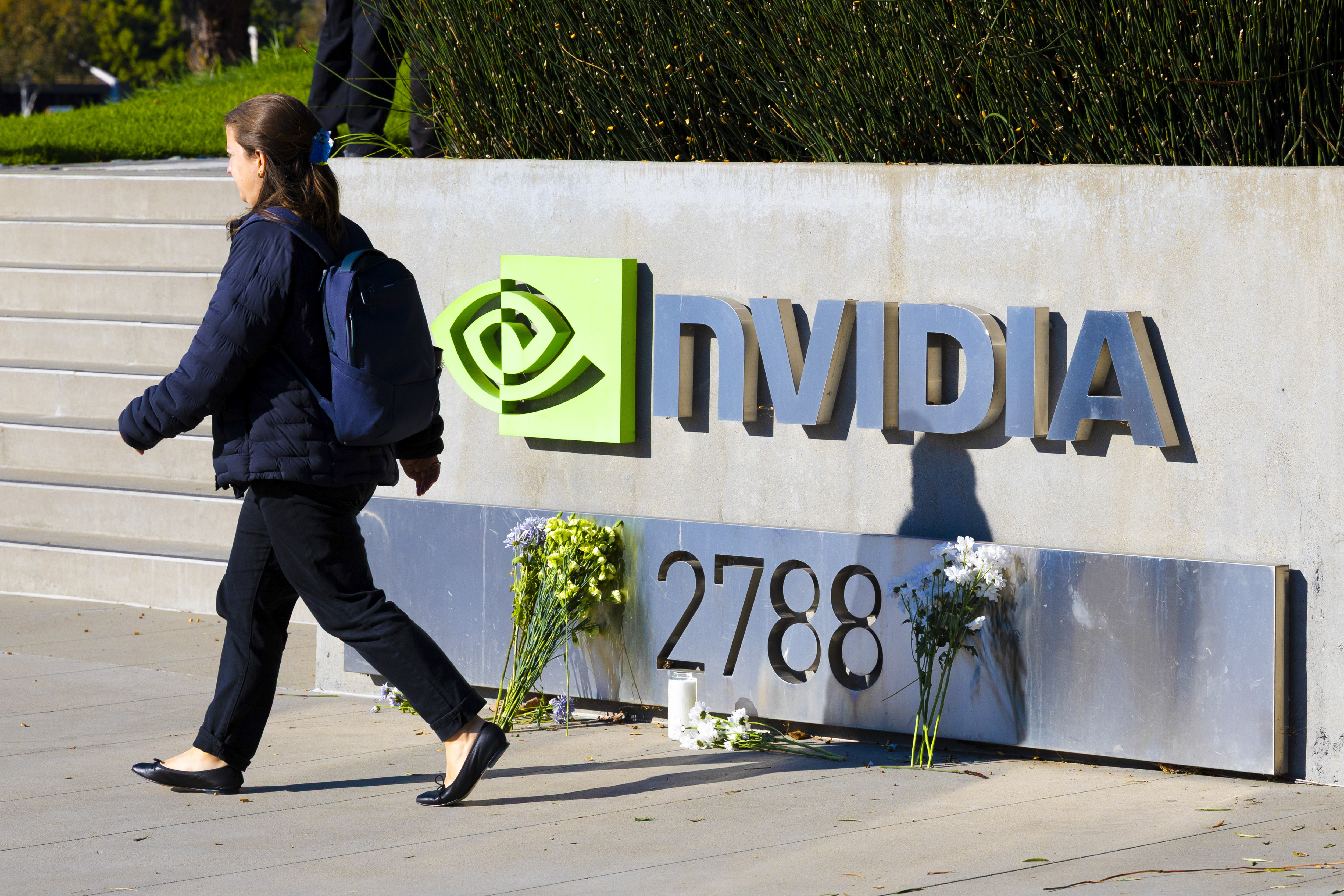 A pedestrian walks in front of a Nvidia sign outside the company’s headquarters in Santa Clara, Calif., on Nov. 12, 2026. (Benjamin Fanjoy/Getty Images)
On Nov. 16, Trump said he might bring up the Nvidia issue and Chinese spying concerns when meeting Xi. However, a senior U.S. official told reporters on Nov. 13 that he doesn’t expect the issue to have “any bearing on the trip.”
Human Rights
For American detainees and Chinese prisoners of conscience, a summit between the two leaders of China and the United States offers a rare window of hope. Because of China’s opaque, highly politicized judicial system, families and advocates recognize that personal intervention by a U.S. president is often the only path to securing their release.
Washington-based nonprofit Hostage Aid Worldwide has appealed to Trump to secure the release of several Americans, including Min Zin, Nelson Wells Jr., Dawn Michelle Hunt, as well as Gao Zhen, a U.S. lawful permanent resident.
“For every day they remain in China, lives are put on hold & the hope of coming home grows more fragile,” the nonprofit wrote in a post on X on Nov. 16. “Let this visit bring them to the finish line & the freedom they have been denied for far too long.”
Min Zin, a U.S. citizen and the executive director of the Institute for Strategy and Policy-Myanmar, accepted an invitation from a Chinese academic institution but was detained upon arrival at an airport in China’s southwestern Yunnan Province on June 3 on espionage allegations.
At the Beijing summit, Trump successfully secured the release of Pastor Ezra Jin Mingri, the leader of an underground church in China, who reunited with his family in the United States in July.
 Pro-democracy activist Joshua Wong speaks to the media outside the Legislative Council in Hong Kong on Oct. 29, 2019. (Sung Pi-lung/The Epoch Times)
Lai was sentenced to 20 years in prison in February, and Wong was sentenced to 10 years earlier this month; both were convicted on national security charges.
Trump “has a chance to deliver a victory for freedom and human rights” in Shenzhen, the Committee for Freedom in Hong Kong Foundation wrote in an X post on Nov. 13, should Lai be released.