
China has removed retired General Wang Ning, a former commander of the People’s Armed Police (PAP), from the country’s top political advisory body, amid a widening purge of senior military figures.
On Nov. 4, the Standing Committee of the Chinese People’s Political Consultative Conference (CPPCC) revoked Wang’s membership and removed him from his positions as a Standing Committee member and vice-chairman of its Foreign Affairs Committee, according to the state-run Xinhua News Agency.
The announcement did not specify the reasons for his removal or indicate whether he was under formal investigation.
Wang’s removal is particularly notable because both his predecessor, Wang Jianping, and his successor, Wang Chunning, have also faced official action. This makes Wang Ning the third consecutive commander of the People’s Armed Police to fall from official favor.
3 Successive PAP Commanders Face Official Action
Wang Jianping, who served as PAP commander before Wang Ning, was detained in 2016 and subsequently investigated for corruption.
Wang Ning led the force from December 2014 until 2020. His successor, Wang Chunning, took command in 2020 and was expelled from the Chinese Communist Party (CCP) and the military in October 2025.
Wang Ning’s removal from the CPPCC adds another chapter to this unusual succession of cases involving senior PAP commanders.
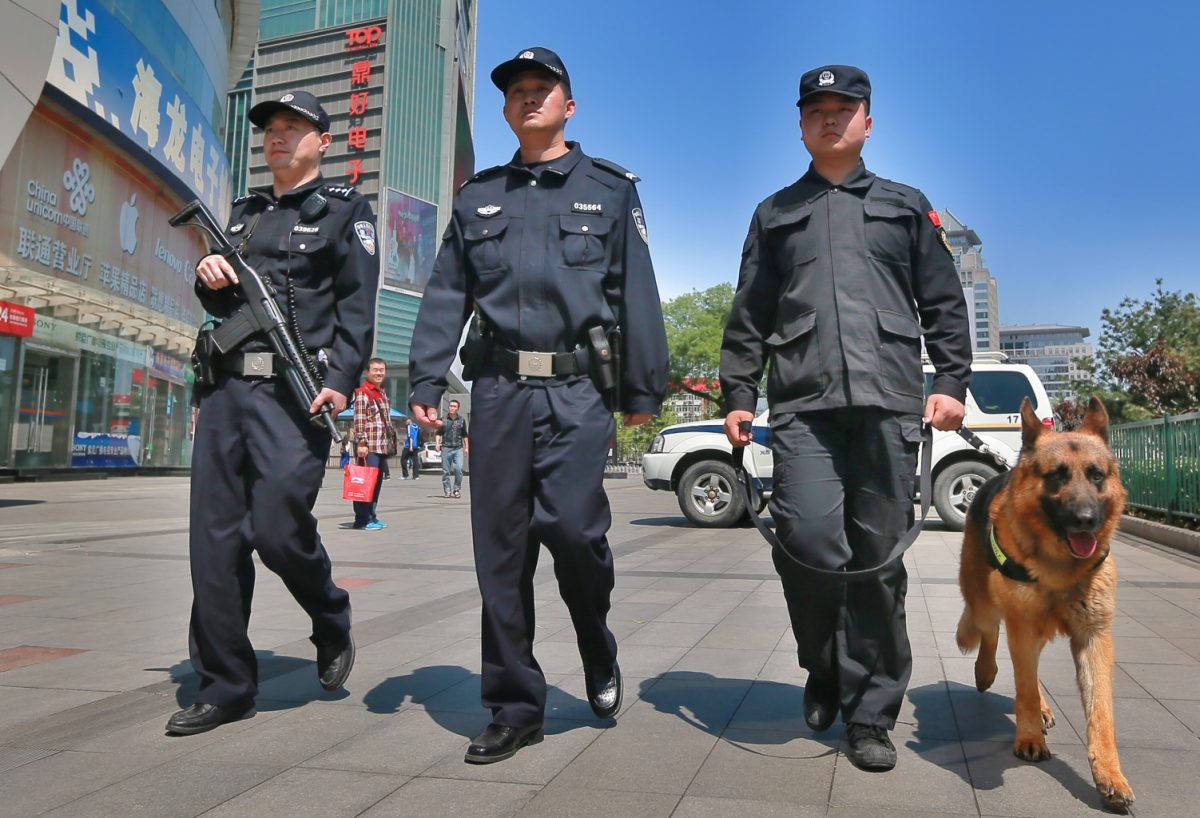
The People’s Armed Police is a paramilitary force responsible for domestic security, including counterterrorism, emergency response, and maintaining public order. It also protects key state institutions and infrastructure.
Unlike the regular People’s Liberation Army (PLA), which primarily handles national defense, the PAP focuses on internal security. After a major 2018 restructuring, the force came under the direct command of the CCP’s Central Military Commission (CMC), chaired by Chinese leader Xi Jinping.
Wang Ning’s Military Background
Born in August 1955, Wang Ning built his military career through a series of senior command and staff positions.
He served as commander of the 31st Group Army, chief of staff of the former Beijing Military Region, and deputy chief of the PLA General Staff Department before becoming PAP commander in December 2014.
After leaving the PAP leadership, Wang Ning continued to hold prominent political positions. He served as vice-chairman of the National People’s Congress Constitution and Law Committee before joining the CPPCC Standing Committee, where he also served as vice-chairman of its Foreign Affairs Committee.
Wang Ning came from a family with longstanding military connections. His father was a senior officer in the former Nanjing Military Region, while his father-in-law, Du Ping, was a lieutenant general and former political commissar of the same military region.
Wang Ning also had professional connections with several senior military figures who have since become embroiled in China’s ongoing military purge, including former CMC vice-chairman He Weidong and former CMC member Miao Hua.
Military Purge Expands After Party Plenum
Wang Ning’s removal came shortly after the CCP’s Fifth Plenum of the 20th Central Committee, held in Beijing from Oct. 26 to 29.
At the meeting’s conclusion, the party confirmed the expulsion of 33 full and alternate members of the Central Committee, including 16 senior military officials, according to the official communiqué.
The military figures named included former CMC vice-chairman Zhang Youxia, former Joint Staff Department chief Liu Zhenli, and several senior officers from the PLA’s service branches and regional commands.
Xi launched his anti-corruption campaign after coming to power in 2012. Although Beijing has presented the campaign as an effort to strengthen party discipline and eliminate misconduct, many see it as a means for Xi to remove officials perceived as political rivals or insufficiently loyal.
The official communiqué described the latest disciplinary actions as necessary to address serious problems within the party, state, and military. However, it provided few details about the specific allegations against the individuals involved.
For now, Wang Ning’s removal from the CPPCC is a confirmed personnel decision, not evidence that he has been formally charged with a crime or placed under investigation. It remains unclear whether further action will be announced.