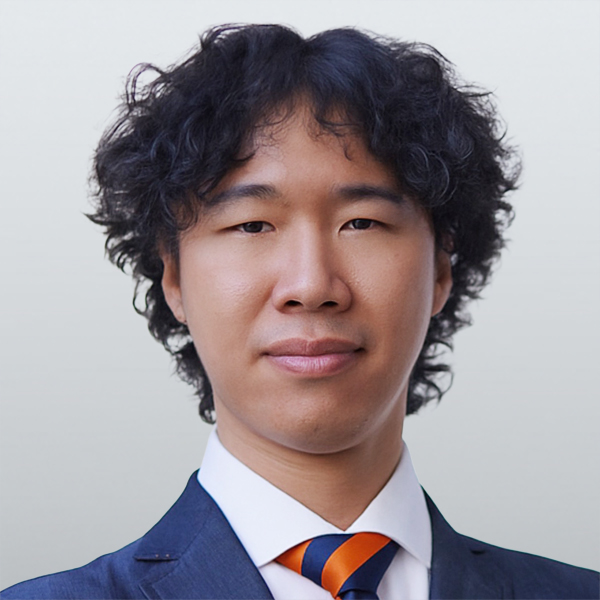
A Chinese Communist Party (CCP) insider revealed that former Chinese Vice Premier Hu Chunhua missed an official anniversary event for health reasons, pushing back against online rumors that Hu and his family had gone missing ahead of a key Party meeting.
Hu, 63, did not attend a ceremony in Beijing on Oct. 22 commemorating the CCP’s historic retreat during the Chinese civil war known as the “Long March,” two days before the CCP was scheduled to open its Fifth Plenum on Oct. 26. The four-day meeting is expected to draw attention to political maneuvering within the Party leadership.
Hu’s absence fueled speculation about his political fate and the whereabouts of his family. However, an insider with connections to senior CCP officials told The Epoch Times on Oct. 24 that Hu had missed the event because of health problems.
“These senior officials also get sick easily,” the insider said.
The insider also disputed online claims that Hu’s family members had become unreachable, saying he had recently seen Hu’s son at a horse-racing event.
“I don’t know whether he was discussing business or meeting friends. We saw him at a gathering at the horse-racing club. His son is a businessman,” he said.
Hu’s absence attracted attention because of his long-standing association with the Communist Youth League faction, a group of officials associated with former Chinese leader Hu Jintao. Hu Chunhua was once regarded as a potential successor to Hu Jintao but has since fallen from the Party’s top ranks.
Hu Chunhua began his political career in the Communist Youth League system in Tibet and later served as governor of Hebei Province, Party chief of Inner Mongolia, and Party chief of Guangdong Province. He entered the CCP Politburo in 2012 and became a vice premier in 2018.
However, he failed to enter the Politburo Standing Committee at the Party’s 19th National Congress in 2017. At the 20th National Congress in October 2022, he lost his Politburo seat. The following year, he became a vice chairman of the Chinese People’s Political Consultative Conference, a rubber-stamp advisory body.
Despite his diminished formal position, rumors have periodically circulated about a possible political comeback. The insider dismissed such speculation, saying Hu’s departure from the Politburo had effectively ended his political prospects.
The insider described what he called a rule of political competition within the CCP: “If you don’t advance, you fall back.”
“If you can’t move up to the position you were competing for, you risk being arrested. Once you can’t move up, it becomes easy for you to be brought down. That’s the situation now,” he said.
As an example, the insider cited Ma Xingrui, a former Politburo member who was seeking further promotion but was removed from power before the next leadership reshuffle. Ma fell under investigation in April of this year.
Limited Wealth of the Youth League Faction
The insider also discussed the business interests of officials associated with the Communist Youth League and Hu Jintao’s political network, arguing that they were generally less focused on accumulating wealth than other elite factions.
“Those people in the Communist Youth League faction are more obsessed with power. They are not enthusiastic about making money,” he said.
He contrasted them with officials and families he described as having accumulated substantial wealth through corruption and political connections. The insider cited former Chinese Premier Li Keqiang and his family as examples of officials whose wealth, in his view, was comparatively limited.
He also said that officials who emerged from the Communist Youth League or from academic backgrounds generally had fewer ways to exploit political connections for business purposes.
The insider acknowledged that relatives of some officials could benefit from their family connections but argued that such cases varied. He cited the families of former Premier Wen Jiabao as an example.
He suggested that the comparatively limited wealth of some officials could make them less vulnerable to corruption investigations.
“Li Keqiang and Hu Chunhua have never run into trouble over corruption because, compared with other families, their wealth doesn’t even amount to a fraction of theirs,” he said.
The claims about Hu’s illness and the wealth and business activities of senior officials and their relatives could not be independently verified by The Epoch Times.
Analysts Urge Caution Over Hu’s Absence
U.S.-based China current affairs commentator Li Linyi told The Epoch Times that the CCP’s opaque political system makes it difficult to determine why senior officials miss major events.
Senior officials can be absent for various reasons, he said, but they generally do not miss such events unless there is a serious illness or another significant circumstance. Whether Hu’s absence signals further political trouble remains uncertain, Li said, adding that his subsequent public appearances could provide clues.
U.S.-based independent Chinese writer and commentator David Tsai, also known as Cai Shenkun, also urged caution in interpreting Hu’s absence.
In a post on X on Oct. 23, Cai argued that targeting Hu immediately before the plenum would serve little purpose for Chinese leader Xi Jinping because Hu had already lost most of his political influence and posed no meaningful threat to Xi’s continued rule.
Cai nevertheless noted that Hu’s continued presence in the Party leadership could complicate future personnel arrangements. Hu is still relatively young by the standards of senior Chinese officials, and his position at the next Party congress in 2027 could become a point of contention.
“I am relatively cautious in my assessment of Hu Chunhua’s absence from the 90th-anniversary ceremony marking the victory of the Red Army’s Long March,” Cai wrote. “It is possible that Hu Chunhua was ill or was not in Beijing. Let’s see whether Hu Chunhua appears at the Fifth Plenum. It is unlikely that the Politburo would discuss Hu Chunhua’s political fate before the Fifth Plenum.”
Tang Bing and Bai Luping contributed to this report.