
Shares of two major Chinese artificial intelligence (AI) developers have plunged more than 30 percent in less than two weeks as the United States tightened restrictions on advanced computing technology and Chinese technology companies disclosed new obstacles.
Hong Kong-listed MiniMax lost nearly 41 percent between Nov. 10 and Nov. 20, falling from HK$173.10 ($22.08) to HK$102.40 ($13.06). Rival developer Z.AI dropped nearly 31 percent over the same period, from HK$482 ($61.48) to HK$334 ($42.60), according to Hong Kong stock exchange data.
Both stocks suffered further losses on Friday, with MiniMax falling 10.8 percent and Z.AI declining 7.2 percent. Chinese semiconductor manufacturer Hua Hong fell 10.2 percent to HK$75.10 ($9.58).
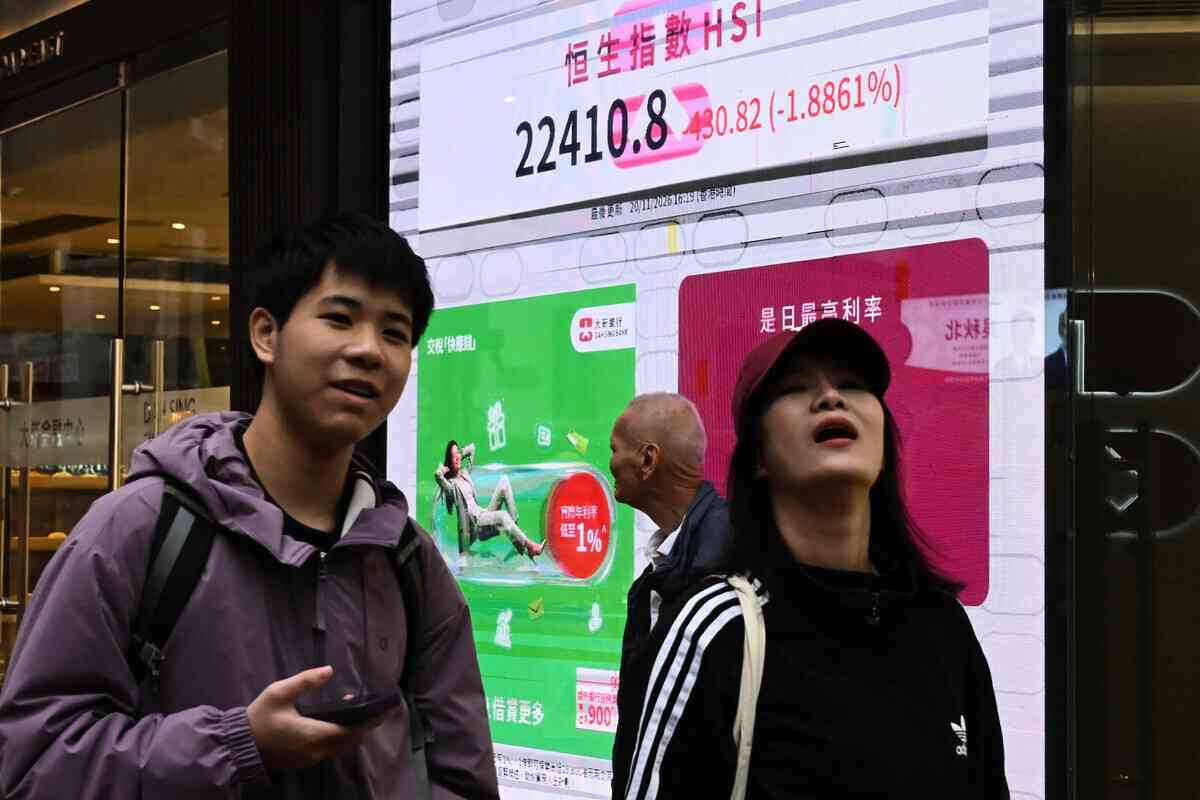
Hong Kong’s benchmark Hang Seng Index closed down 1.9 percent. Alibaba, however, gained 3.5 percent to HK$83.35 ($10.63) following its quarterly earnings announcement.
The declines extended a selloff reported by The Epoch Times on Nov. 13, when MiniMax and Z.AI suffered steep losses as U.S. lawmakers pressed for tighter restrictions on Nvidia’s advanced processors.
Since then, new U.S. export controls have taken effect, while Tencent and Alibaba executives have described how reduced access to advanced computing power could affect their AI development. The selloff began before the latest rule took effect and coincided with other pressures on Chinese technology stocks.
US Tightens Overseas Computing Access
The Commerce Department’s Bureau of Industry and Security introduced new export controls that took effect Nov. 19, targeting a route that allows Chinese companies to obtain advanced American computing power without importing restricted chips into China.
Under such arrangements, companies can rent computing capacity from overseas data centers equipped with powerful U.S.-made processors.
The new rule requires U.S. authorization for covered advanced computing equipment supplied to overseas data centers that provide substantial computing capacity to Chinese companies. It also tightens controls on certain advanced chip shipments to countries including Malaysia and Singapore, citing risks that the technology could be diverted to restricted users.
The restrictions are intended to prevent Chinese firms from circumventing U.S. export controls by accessing advanced processors remotely.
Tencent Warns of Delays in AI Training
Tencent President Martin Lau said during the company’s Nov. 18 earnings call that the new restrictions could delay development of its next-generation Hunyuan AI model.
Lau said the restrictions would leave Chinese companies with less-advanced computing power, potentially lengthening the time needed to train new models.
Training an advanced AI model requires enormous computing power. Running an existing model to answer questions or perform other tasks—a process known as inference—can often be done with less-advanced processors.
Tencent Chief Strategy Officer James Mitchell said the company did not expect a substantial impact on its cloud revenue because much of its business involves inference, which can increasingly run on Chinese-made chips.
Tencent’s third-quarter earnings reported revenue of 207.3 billion yuan ($30.9 billion), up 8 percent from a year earlier.
Alibaba Expands Domestic Chip Development
Alibaba CEO Eddie Wu said during the company’s Nov. 19 earnings call that the company was still assessing the potential effects of the new U.S. computing restrictions on its operations.
Wu said Alibaba was already using processors developed by its chip-design subsidiary, T-Head, to train its next-generation Qwen AI models. He also said the company expected to increase production of its own chips substantially in 2027.
Alibaba’s quarterly results reported that revenue from AI cloud and compute services rose 53 percent from a year earlier to 60.97 billion yuan ($9.09 billion), driven by demand for cloud computing and AI-related products.
The company has scheduled the commercial release of its next-generation Zhenwu V900 processor, designed for both AI training and inference, for the first quarter of 2027.
Despite the steep share-price declines, MiniMax and Z.AI are preparing to join a major Hong Kong stock benchmark.
In a Nov. 20 announcement, Hang Seng Indexes Company said the two AI developers would be added to the 50-company Hang Seng China Enterprises Index, replacing Postal Savings Bank of China and clothing manufacturer Shenzhou International.
The index changes will be implemented Dec. 7 after the Hong Kong market closes on Dec. 4.