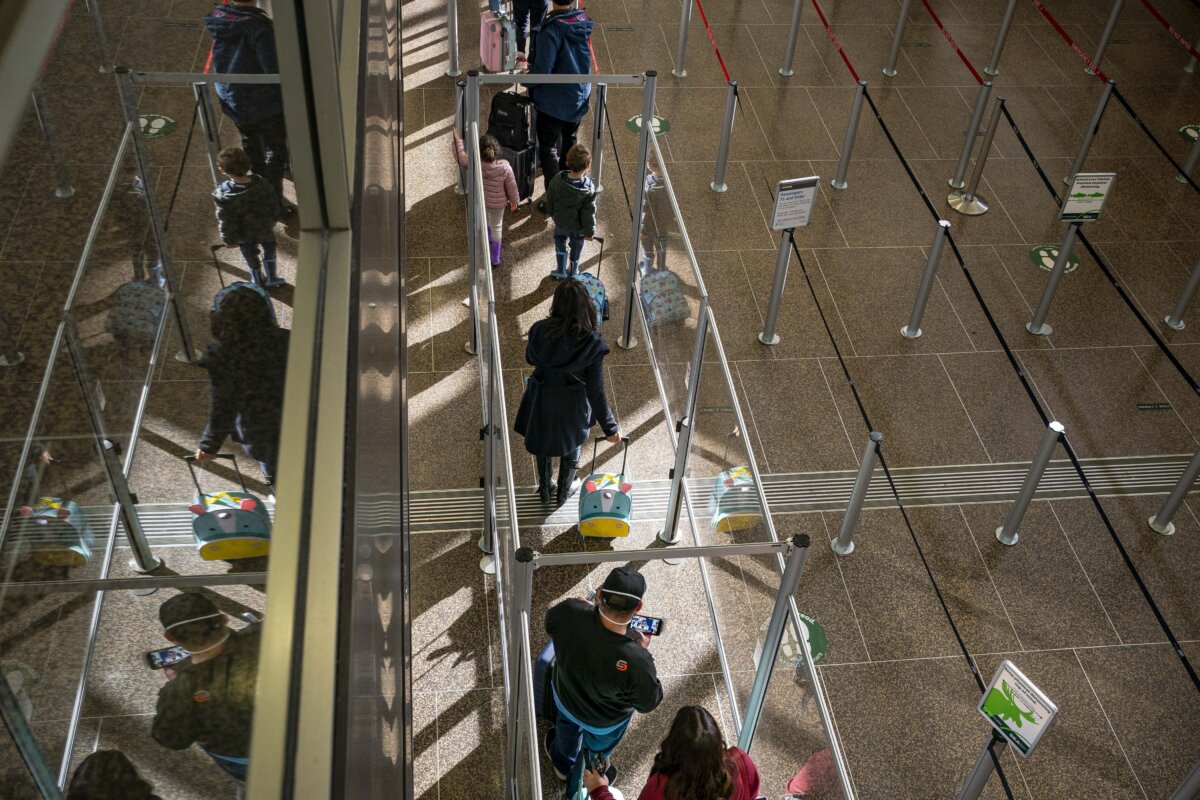

About 20 Chinese scholars were recently denied entry into the United States at a Seattle Airport, the Chinese regime said in a statement on April 16.
In an alert posted on X, China Consular Affairs stated that the 20 scholars were traveling to the United States to attend an academic conference when they were inspected by U.S. Customs and Border Protection (CBP) officers at the Seattle-Tacoma International Airport. The scholars were subsequently refused entry despite having valid visas, according to the notice.
The circumstances surrounding the scholars’ refusal of entry remain unclear. The Epoch Times reached out to CBP and the Chinese Embassy in Washington for comment but did not receive a response by the time of publication.
Such incidents are not new, as similar cases have occurred in the past in which Chinese researchers and graduate students working in American universities were interrogated by U.S. Customs and detained for hours after returning from China.
In some cases, Chinese researchers ended up being deported after the interrogation. Their research at U.S. universities and research institutions had also been affected.
U.S. authorities have intensified efforts to tackle espionage and intellectual property theft linked to the ruling Chinese Communist Party (CCP) in Beijing, as more cases involving Chinese nationals working at U.S. research institutions and tech companies illegally sending cutting-edge U.S. technology to China have emerged.
Last month, the U.S. Department of Justice charged Yih-Shyan “Wally” Liaw, a U.S. citizen who co-founded Super Micro Computer (also known as Supermicro), and two workers with diverting to China servers containing Nvidia-made chips, which are subject to U.S. export controls.
Exports of Nvidia’s AI chips have been restricted by U.S. authorities as Washington seeks to prevent the most advanced chips from being sold to China to protect its national security.
In another case last year, a U.S. judge sentenced a Chinese American man to 46 months in prison for stealing U.S. military trade secrets for the CCP. The defendant, identified as Gong Chenguang, had worked at a Los Angeles-area research and development company where he transferred more than 3,600 files to personal storage devices.
Those files allegedly included technologies developed for the U.S. government to detect nuclear missile launches, track ballistic and hypersonic missiles, enable U.S. fighter planes to detect and evade heat-seeking missiles, and provide so-called next-generation sensors for use in space.
Alex Wu and Catherine Yang contributed to this report.