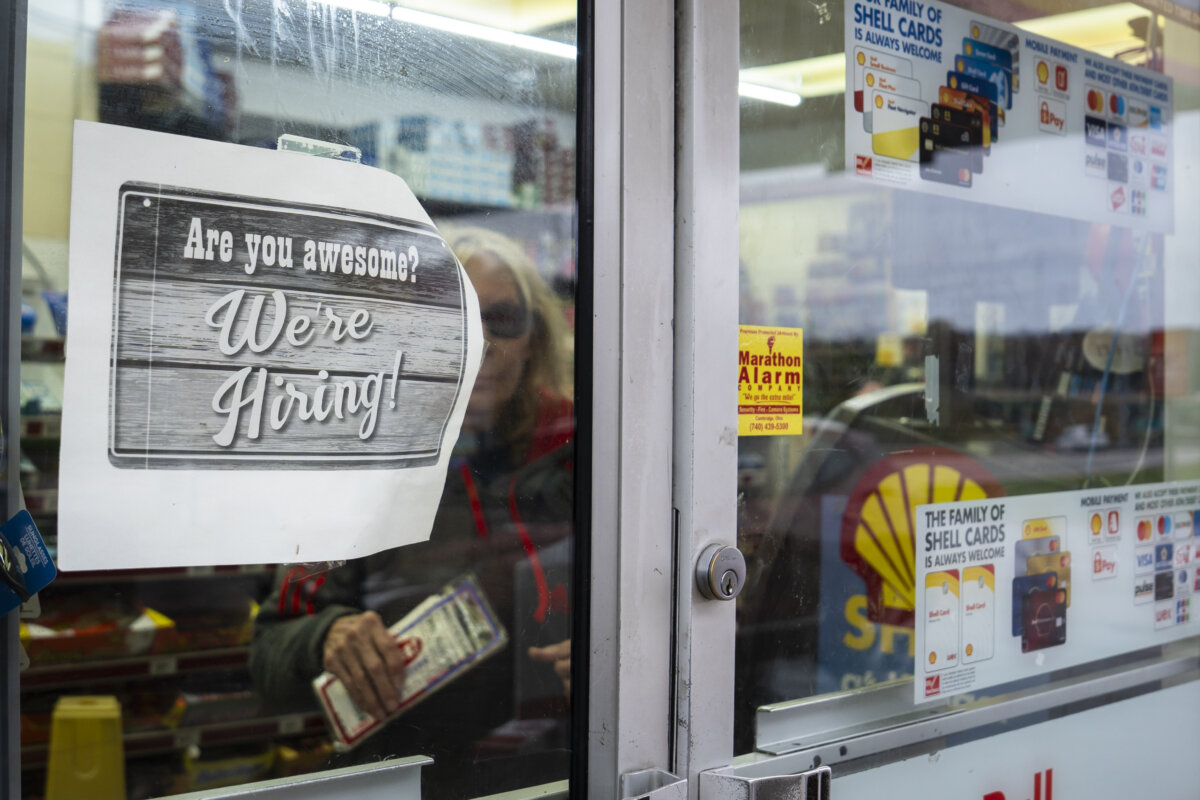

The number of Americans filing for unemployment benefits rose for the second straight week to more than 200,000, according to new government data.
Initial jobless claims rose by 1,000 to 203,000 for the week ending Nov. 14, the Department of Labor reported on Nov. 19.
This topped the consensus forecast of 197,000.
The previous week’s reading was also revised upward to 202,000 from 200,000.
Unemployment claims have remained in a historically tight range of 189,000 to 230,000 throughout the year, highlighting the low level of layoffs in today’s labor market.
Removing week-to-week volatility, the four-week average edged up to 197,750.
Additionally, unemployment claims filed by federal workers increased by 146 to 732. This has been a key measure for economists to monitor, as the current administration has been seeking to shrink the public sector workforce.
Overall, employment conditions continue to spotlight their ongoing resilience.
“The U.S. labor market remained remarkably steady in 2026, proving more durable than policymakers feared coming into the year, offering stability to those already employed but also providing little relief to struggling job seekers,” Indeed and Glassdoor economists said in a Nov. 18 report.
Finding Employment
While terminations have been low, job seekers have been looking for signs of hiring momentum—and the numbers have been mixed.
Recurring claims—a measure of individuals currently receiving unemployment benefits—surged by 70,000 to 1.763 million, the department said. The previous week’s reading was adjusted lower to 1.69 million.
October’s long-term unemployment rate—out of a job for 27 weeks or longer as a percent of total unemployed—ticked up to 27.6 percent.
But recent numbers suggest U.S. firms have been either increasing headcount or looking to add workers.
The economy added a larger-than-expected 165,000 jobs in October.
Private employers added an average of 23,750 jobs per week in the four weeks ending Oct. 31, according to payroll processor ADP.
The National Federation of Independent Business recently said that the share of small businesses planning to create jobs rose to 18 percent in October. The share of owners reporting hiring or trying to hire last month also increased to 56 percent, according to the group’s small business optimism index.
As in previous surveys, labor quality and availability have been the top operating problem for these small businesses.
“Our biggest hindrance to growth is finding quality employees,” one small business owner told the organization.
Heading into 2027, Indeed and Glassdoor economists anticipate both a hiring rebound and a turnover wave.
“The unhappy employee who stayed put in 2026 may be the first to leave in 2027,” they said.
More consumers say they could find a job if they lose theirs.
The mean probability of locating new employment in the next three months for those who lost their jobs today was 46.5 percent, according to the New York Federal Reserve’s Survey of Consumer Expectations. This is up from 44 percent in February.
Updates on Holiday Hiring
Various indicators suggest this year’s holiday hiring activity has been solid.
UPS recently announced plans to hire 100,000 seasonal workers. Amazon is seeking 300,000 seasonal, part-time, and full-time staff. Best Buy, Carter’s, Dick’s Sporting Goods, and Michaels have also expanded temporary staff during the busy Christmas shopping season.
This is in response to forecasts of solid consumer demand in November and December.
Almost 183 million consumers plan to shop during the Thanksgiving weekend, according to the National Retail Federation.
“Holiday shopping continues to be pulled forward, but Thanksgiving weekend remains an important shopping event for consumers,” Allison Zeller, the association’s vice president of industry and consumer insights, said in a Nov. 19 news release.
Consumers will aim to take advantage of the multi-day shopping events: Thanksgiving Day, Black Friday, Small Business Saturday, and Cyber Monday.
Retail sales are expected to increase by more than 4 percent in November and December from a year earlier, to more than $1 trillion.