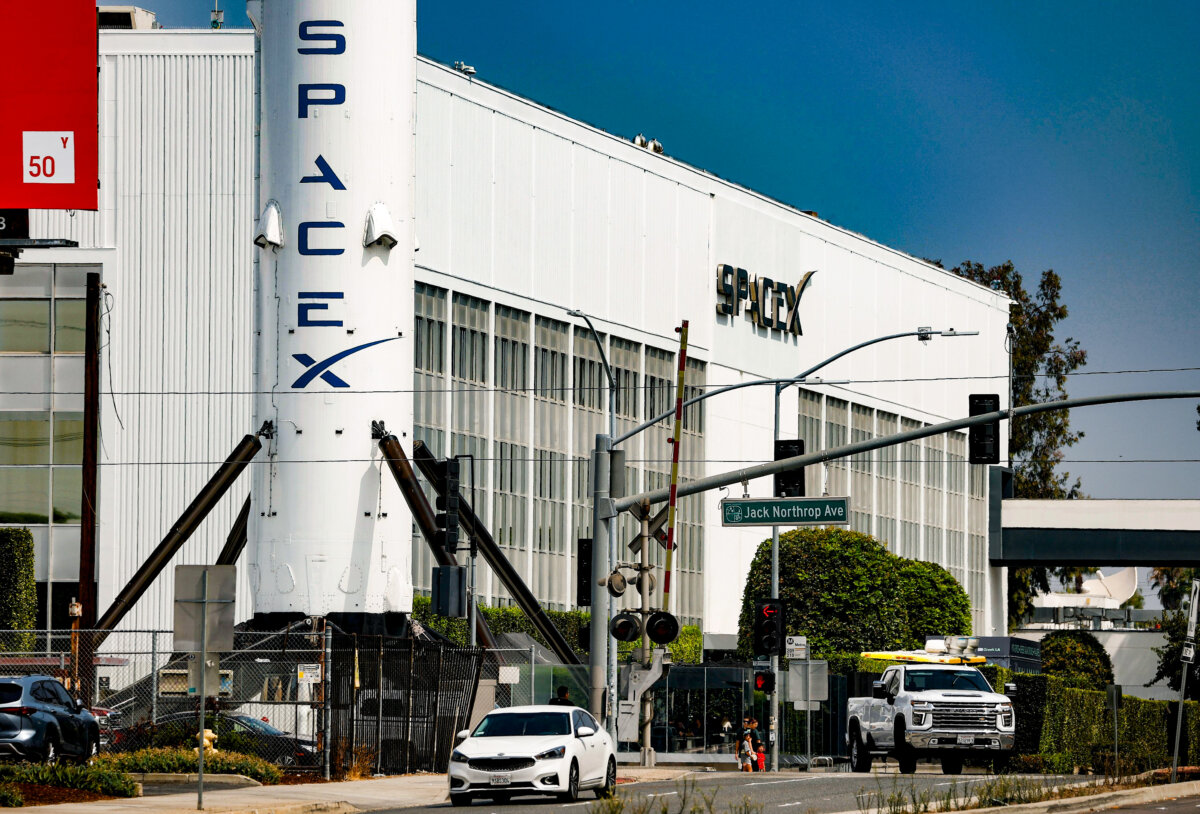

SpaceX has selected Qualcomm as its 5G network supplier for Starlink Mobile, its satellite-based cellular service, advancing its plans to become a full-fledged U.S. mobile carrier combining satellite connectivity with ground-based coverage.
Under the multiyear agreement announced Nov. 4, SpaceX will use Qualcomm’s Dragonwing cellular infrastructure technology at tens of thousands of cell sites across the United States.
Nationwide deployment is scheduled to begin in 2027.
“Together with SpaceX, we are building world-leading cellular infrastructure in the United States, advancing 5G today, with an opportunity to lay the foundation for AI-native 6G in the years ahead.” Durga Malladi, Qualcomm’s executive vice president, said in a statement.
“Qualcomm’s technology is excellent,” SpaceX CEO Elon Musk wrote on X.
The Nov. 4 agreement marks another step in SpaceX’s effort to turn Starlink Mobile into a major carrier alongside AT&T, T-Mobile, and Verizon.
Building a terrestrial network would complement its direct-to-cell satellites and give the company more infrastructure to support everyday mobile service.
Specifically, Qualcomm will provide radio and signal-processing technology, along with software, for Starlink Mobile’s cellular base stations.
Its Dragonwing platform is designed to improve coverage, increase capacity, and reduce power consumption as the network expands.
The equipment includes Massive MIMO antenna technology, which uses multiple transmission and reception paths to handle more traffic and use available airwaves more efficiently, according to Qualcomm.
Spectrum Deal Targets Coverage Gaps
The Qualcomm agreement follows SpaceX’s October deal to acquire Grain Management’s nationwide portfolio of spectrum licenses in the 800 megahertz (MHz) spectrum.
That acquisition addresses one of the biggest limitations of satellite-to-phone service, which is how to get mobile phone signals reliably through buildings and other physical obstacles.
Lower-frequency spectrum such as the 800 MHz band can travel longer distances and penetrate walls and roofs more effectively than higher-frequency signals. SpaceX said it plans to use the spectrum as a coverage layer alongside its 2 GHz mid-band spectrum, which provides greater capacity but does not penetrate structures as easily.
“This is the last critical piece of the spectrum puzzle needed for SpaceX to provide complete phone coverage in America,” Musk said at that time.
Once federal regulators approve the Grain deal, SpaceX said, Starlink Mobile would become the first network operator to deploy both satellite and terrestrial spectrum, servicing indoors, outdoors, and in conventional cellular dead zones through a single network.
Preparing for 6G Networks
For Qualcomm, the partnership with SpaceX would allow it to expand beyond making smartphone chips and into laying the groundwork for 6G, the next generation of cellular technology intended to succeed 5G.
A final commercial 6G standard has not yet been established, but artificial intelligence is expected to play a central role in how these networks are designed and operated.
Malladi has described his vision of an “AI-native” 6G network as combining connectivity, wide-area sensing and powerful computing capabilities. Some AI tasks would run directly on users’ devices, while more demanding workloads could move to nearby computing infrastructure or centralized data centers.
Qualcomm has outlined a path toward commercial 6G systems beginning in 2029, with ecosystem milestones stretching from 2027 through 2030.







