
To address the housing affordability issue Americans increasingly face, the Trump administration and Congress have taken several measures to expand manufactured home construction.
However, the negative images of unsightly trailer parks with dilapidated homes on wheels that the words “mobile home” conjured up decades ago may be hindering the adoption of manufactured housing by local communities.
Real estate professionals and recent reports suggest that modern manufactured homes differ markedly from the stereotypical mobile homes of the past.
They say a key policy change under the 21st Century ROAD to Housing Act could make this type of housing more appealing to local communities, potentially increasing supply and making homeownership more affordable for many first-time buyers.
Mobile Home vs Manufactured Home
A 2016 study by Virginia Tech’s Center for Housing Research found that manufactured housing is an important source of affordable housing for American families, particularly low-income households.
The Census Bureau reported that the average sales price of a new manufactured home was $130,500 as of May—a substantial savings from the median single-family home price of $422,700 reported by the National Association of Realtors for September.
According to the Department of Housing and Urban Development (HUD), both mobile homes and manufactured homes are built in factories and then moved to residential lots for installation.
HUD classifies homes built after June 15, 1976, under the HUD Manufactured Home Construction and Safety Standards as manufactured homes, while those built before that date are called mobile homes.
The Center for Housing Research stated that many regard mobile homes built before 1976 as the “worst housing stock” because they tend to have leaking roofs, dangerous or inefficient heating sources, a lack of insulation, and deteriorating foundations.
As a result, the organization stated that mobile homes are often recommended for replacement rather than retrofitting.
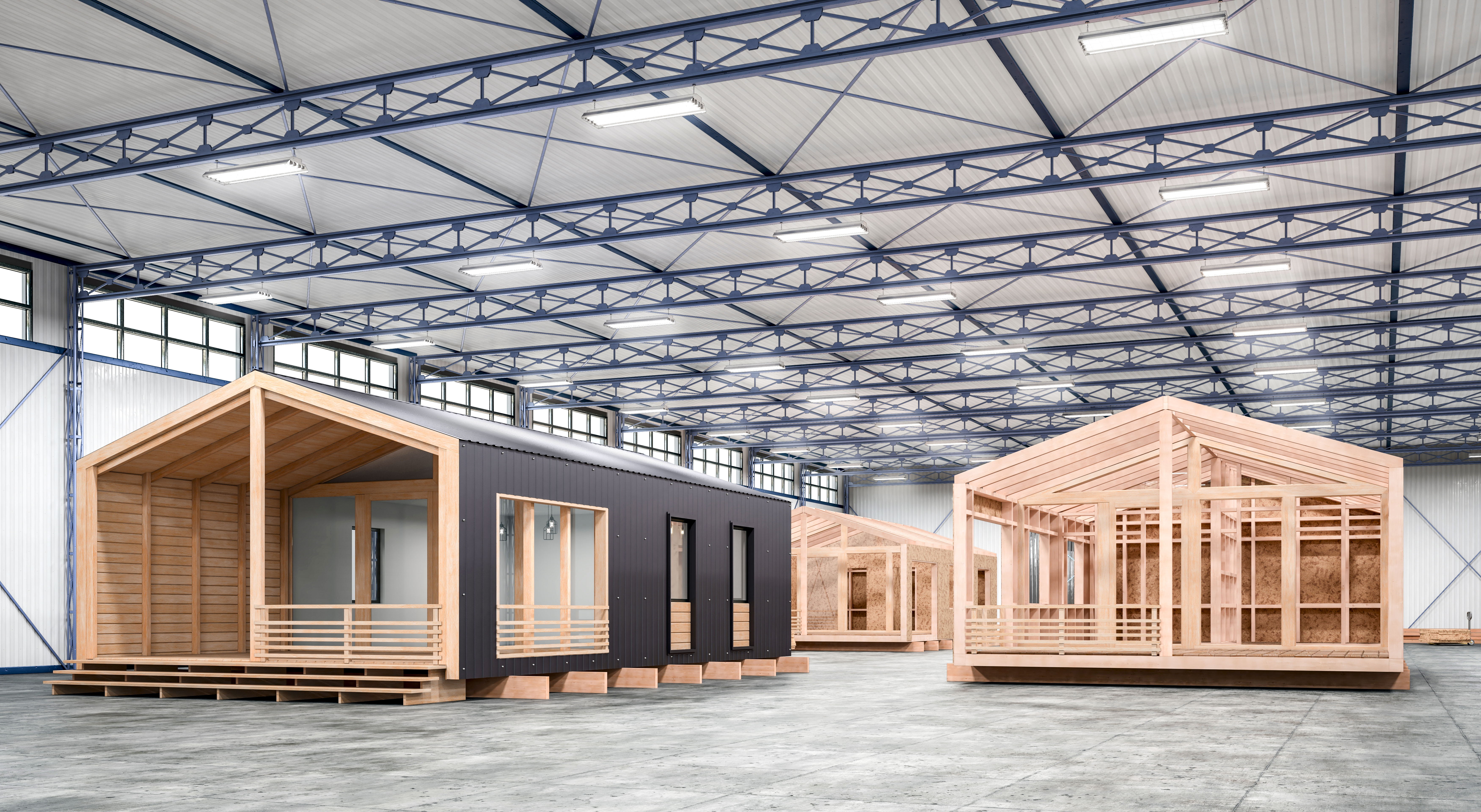 Workshop for assembling modular houses. (Shutterstock)
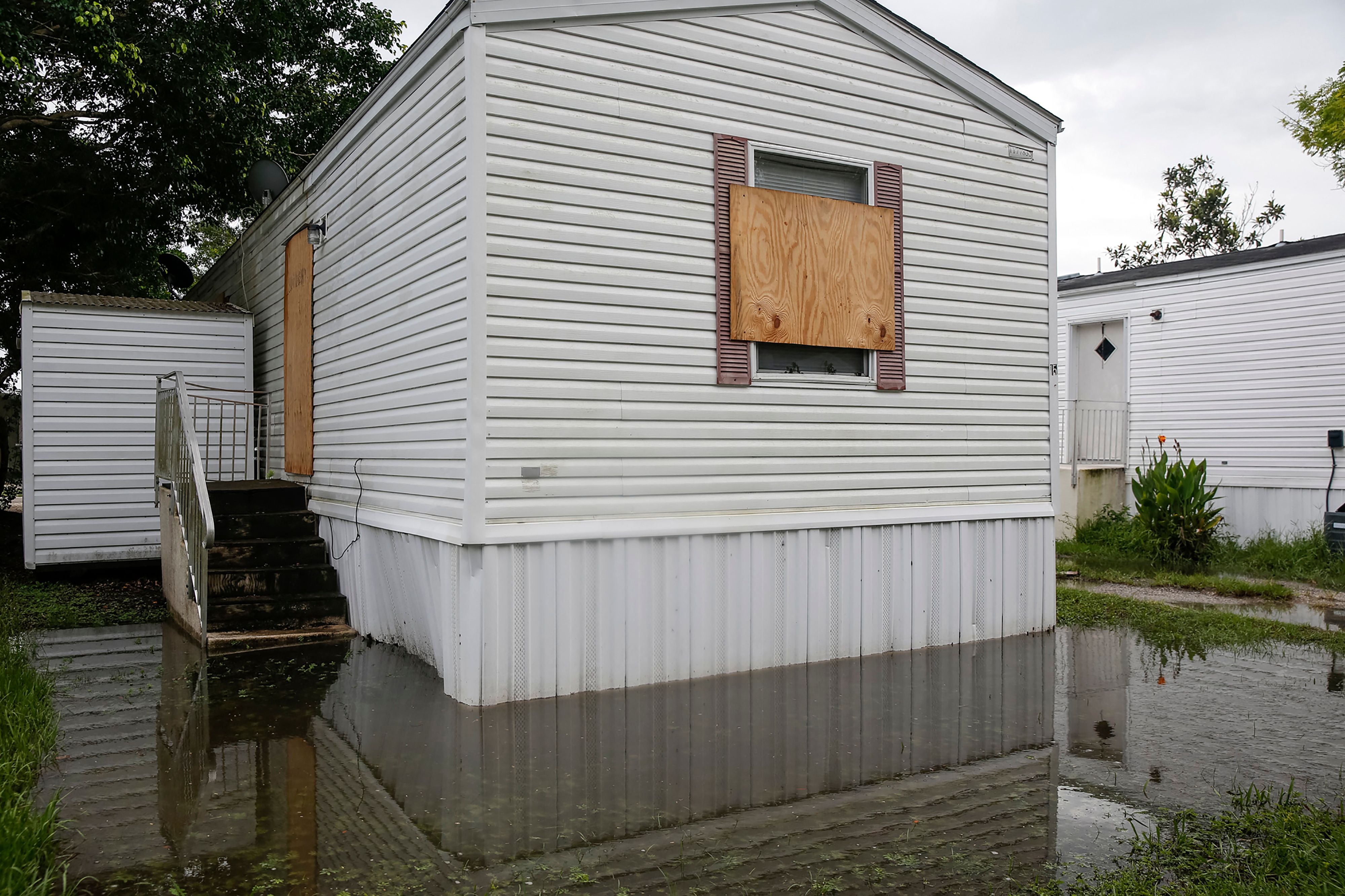 A house is pictured at the Manatee Mobile Home & RV Park in Fort Pierce, Fla., on Sept. 2, 2019. (Adam DelGiudice/AFP via Getty Images)
Community Resistance
In an Oct. 26 report, Realtor.com stated that only about 17 percent of zoned land across the country allows mobile or manufactured housing parks, citing data from Land Use Labs.
The real estate listing platform noted that some municipalities restrict manufactured housing by excluding it from regular residential zones or limiting it to commercial, industrial, or agricultural regions. Some zoning boards may also set minimum floor-area requirements or architectural standards to block these homes.
Alexei Morgado, a real estate agent in Hialeah, Florida, and CEO and founder of real estate exam prep course provider Lexawise, told The Epoch Times that most of the concerns that he has heard about manufactured housing stem from image and property-value concerns.
“Many people envision those old mobile homes of years past and fear that having one on the property will bring down the value of their home,” he said. “Although newer homes are designed much differently, this idea persists.”
Morgado said communities also worry that a new manufactured home community could increase demand on local infrastructure such as utilities, drainage, and roads.
“Florida, where hurricanes are common, has the added fear of wondering whether the new home is built correctly for its wind zone, and if it will withstand storm winds,” he said.
Modern Manufactured Homes
AmeriSave, a national online mortgage lender, said in an online guide that the National Mobile Home Construction and Safety Act, enacted in 1974, transformed the industry by authorizing HUD to establish federal construction and safety standards.
First implemented in 1976, these regulations “ensure that modern manufactured homes meet comprehensive safety, durability, and energy efficiency standards—addressing historical concerns about quality and longevity that plagued earlier mobile home construction.”
“Modern manufactured homes bear little resemblance to the stereotypical mobile homes of decades past,” the guide reads.
“Today’s units feature contemporary designs, high-quality materials, ENERGY STAR certification options, and customization choices rivaling traditional stick-built construction.”
HUD code specifications cover body and frame, thermal protection, plumbing and electrical systems, fire safety measures, and wind zone ratings.
HUD-certified third-party inspectors oversee manufactured home construction at various stages.
According to MHVillage, a manufactured-home marketplace and industry information provider, manufactured homes typically come as single-wide (about 480 to 1,440 square feet) or double-wide (640 to 2,560 square feet). Triple-wide homes can vary from 960 to 3,600 square feet.
HUD says completed homes can be transported whole or in sections, depending on size, and placed on either permanent or non-permanent foundations.
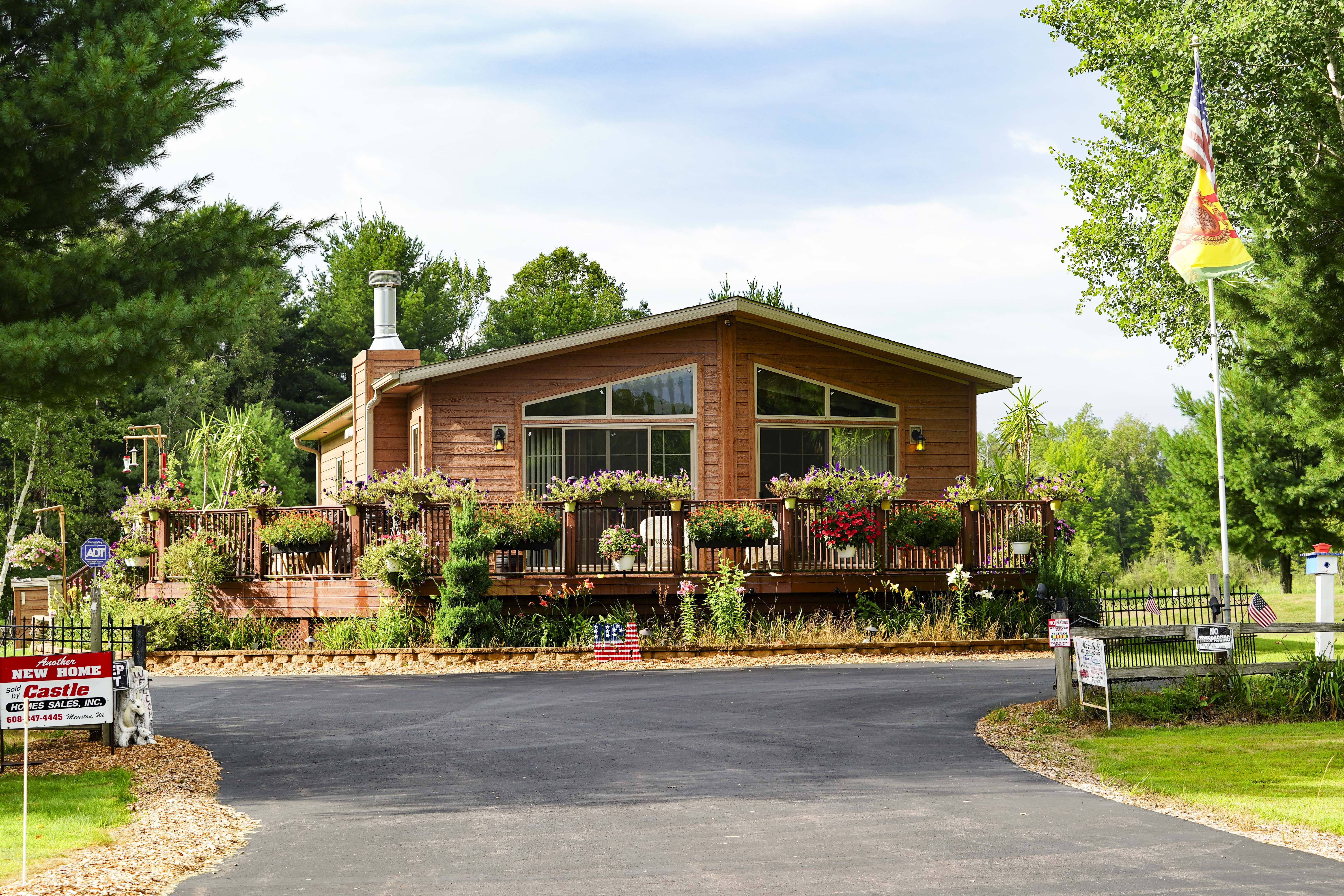 A double-wide manufactured home sits outside in the countryside of New Lisbon, Wis., on Aug. 18, 2022. (Shutterstock)
ROAD to Housing Act and Task Force
The Oct. 26 Realtor.com report states that the 21st Century ROAD to Housing Act, enacted on July 11, “opened the door and created the opportunity for cities to allow for building homes more efficiently.”
The federal law removed the requirement that manufactured homes be built on a permanent steel chassis for towing. Realtor.com said this could help reduce material costs, make installation more flexible, and eliminate the “step-up” appearance often associated with mobile homes.
“A home that looks more like a site-built home may face less resistance from communities that have used design standards and zoning rules to keep manufactured housing out,” Realtor.com chief economist Danielle Hale said.
Daniel Yoon, a real estate agent with eXp Realty LLC in Richmond, Virginia, believes that the new ruling will help clear the way for more of this type of housing for first-time buyers facing affordability challenges.
“Most manufactured homes move one time, from the factory to the lot, and then they stay there for decades,” he told The Epoch Times. “Remove the chassis, and you get two wins: a lower price, and a home that sits low on a foundation like the house next door.”
Meanwhile, an executive order President Donald Trump signed on Oct. 22 directs the creation of a Task Force on Manufactured Housing Innovation, co-chaired by Federal Housing Finance Agency Director Bill Pulte and Housing and Urban Development Secretary Scott Turner.
The task force is charged with improving manufactured housing quality, reducing regulatory barriers to construction, and encouraging modern manufacturing methods to lower production costs.
“The Task Force on Manufactured Housing Innovation will continue to slash red tape, unleash private sector innovation, and deliver housing affordability for American families,” Trump said.
Growth of Manufactured Homes
According to a July NAR report, more than 22 million Americans live in manufactured homes.
Elayne Weiss, senior policy adviser for Federal Financing and Housing at the real estate trade association, said that as first-time buyers continue to face affordability challenges, manufactured housing is giving them an opportunity to own a home.
“Manufactured housing has significant room to grow, particularly as first-time buyers struggle to find homes they can afford,” she told The Epoch Times.
“Manufactured homes can be built at a significantly lower cost than traditional site-built housing, making them an important option for buyers who might otherwise be priced out of homeownership.”
Weiss believes that eliminating the permanent chassis requirement should help spur manufactured home sales over time. She noted that the chassis alone has been estimated to add as much as $10,000 to the cost of a new home.
Weiss said the new ROAD to Housing Act provision gives manufacturers greater flexibility in how they design homes and could make these properties more attractive to potential homebuyers.
“In fact, many newer manufactured homes look so much like traditional site-built houses that you wouldn’t know the difference just by looking at them,” she said. “They can offer a lot of the same features and quality at a more affordable price.”
Weiss said zoning restrictions could remain a significant barrier, but she’s optimistic that rules will change as local lawmakers overcome longstanding misconceptions about manufactured housing.
“As more communities see what modern manufactured homes can offer, I’m hopeful we’ll see greater willingness to allow them,” she said.
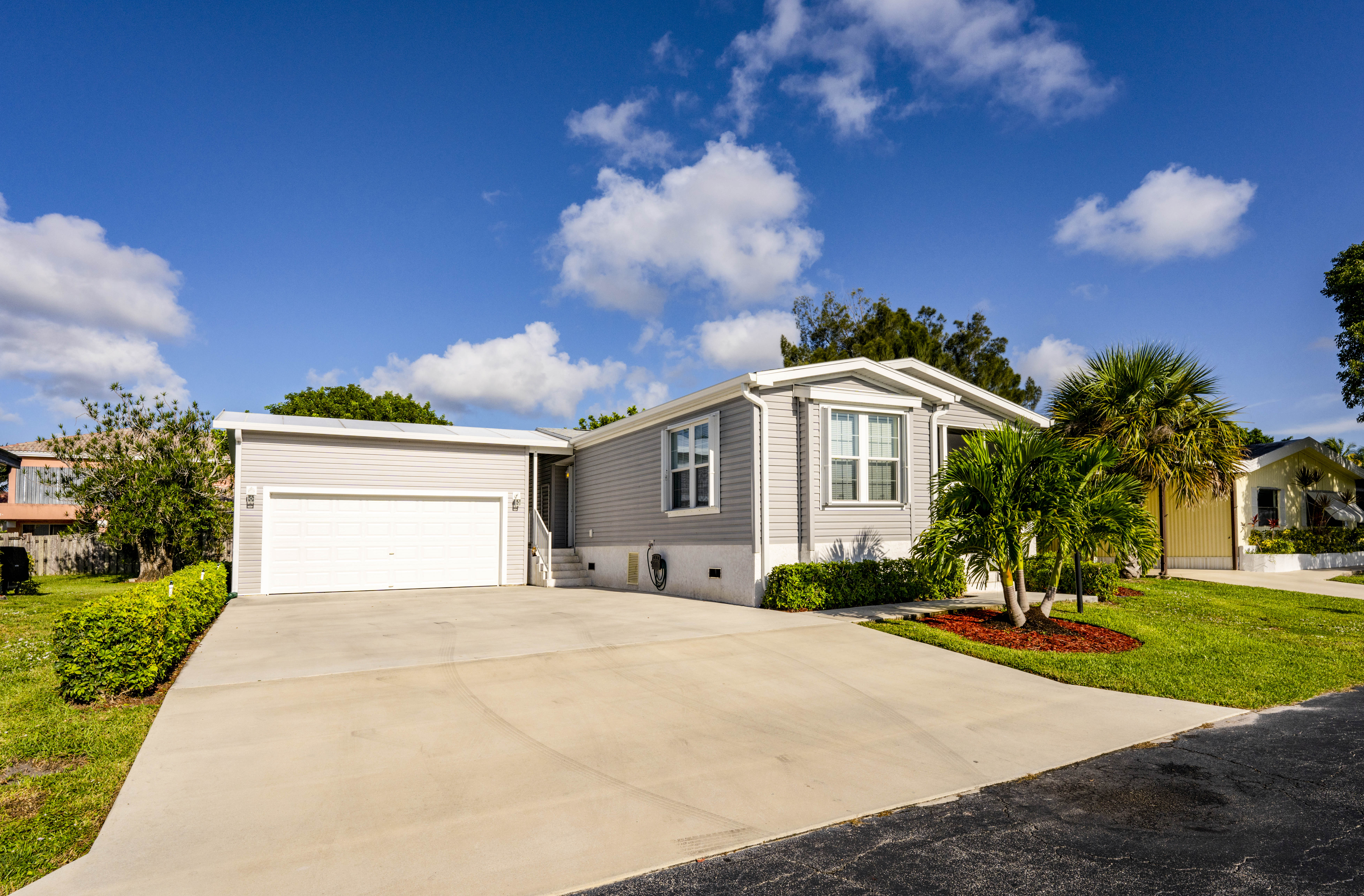 A modular manufactured home in Florida. (Shutterstock)
Financing Options
According to Realtor.com, financing options for manufactured homes vary depending on whether buyers rent or purchase the land where the home will be located. If the land is purchased, installation costs such as foundation work and utility connections may be included in the loan balance.
The report also indicates that Fannie Mae allows down payments as low as 3 percent, with mortgage rates comparable to those for traditional site-built dwellings.
“For example, a $200,000 manufactured-home purchase with 3 percent down at a 7.4 percent rate would require a $6,000 down payment and carry an estimated monthly payment of $1,343,” the report reads.
“By comparison, the median site-built homebuyer put $27,100 down on a home priced at $419,250, producing an estimated monthly payment of $2,715 at the same rate.”
Yoon recommends that buyers of manufactured homes purchase the land so that it can be titled as real property.
“Next, confirm the lot’s zoning and any HOA covenants before you choose a floor plan,” he said. “Then, ask your lender how they will appraise the home and which comps they will use.”
Michael Farrell, president of the National Association of Mortgage Brokers in Washington, told The Epoch Times that manufactured-home loans mostly depend on how the home is classified.
“When the home is permanently affixed to land the buyer owns and is titled as real property, it can be financed much like a site-built home, with FHA, VA, and conventional options,” he said.
“Many manufactured homes are instead financed as personal property, called chattel loans, which are closer to a vehicle loan than a mortgage.”
Farrell explained that chattel loans tend to carry higher rates and shorter terms.
If a buyer wants to finance a manufactured home, he noted, the most important step is determining whether it will be titled as real property.
Home Lifespan
Patriot Homes, a manufactured home dealer serving Arizona, Nevada, Idaho, and California, stated on its website that manufactured homes typically last from 30 to 55 years. Those located in drier climates often last longer, while those along the coast or in humid areas may have shorter lifespans.
“Modern manufactured homes use the same framing, sheathing, and roofing materials as site-built homes,” the website reads.
Homes built after 1994, when the federal HUD code for safety and durability was upgraded, generally last longer than older units, it states.
For those considering buying a manufactured home, Patriot recommends scheduled maintenance, such as sealing gaps, keeping gutters clear, and ensuring that the ground slopes away from the home, Patriot Homes stated.
As with site-built homes, licensed professionals should be consulted if there are signs of structural movement, such as wall cracks, sloping floors, or roof damage, as well as electrical issues or gas odors.
Jill McLaughlin contributed to this report.