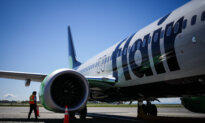
Frontier Airlines reported significant fare increases for its passengers in the third quarter as the ultra-low-cost carrier tried to offset soaring fuel costs.
The Denver-based airline said Wednesday that fare revenue per passenger rose to $67.82 in the three months ended Sept. 30, up 71 percent from $39.74 a year earlier.
When baggage fees, seat charges, and other revenue are included, total revenue per passenger rose 30 percent to $138.22 from $106.44.
The higher prices helped Frontier absorb a significant increase in fuel expenses.
The airline said it paid an average of $3.96 per gallon for fuel in the third quarter, up 56 percent from $2.54 a year earlier. Its total fuel bill rose to $425 million from $234 million.
Frontier said fuel costs were about $150 million higher than they would have been at last year’s prices.
CEO Jimmy Dempsey said in an earnings call on Wednesday that the industry “certainly has a strong appetite to pass on higher fuel with higher fares. We are participating in that.”
The airline expects fuel pressure to intensify in the fourth quarter, forecasting an average price of $4.75 per gallon.
Fuel Costs Drive Up Airfares
Airfares have risen across the broader industry.
According to Airlines Reporting Corp., U.S. travel agency ticket sales reached $29.7 billion in the third quarter, up 18 percent from a year earlier.
Over the same period, passenger trips booked through travel agencies rose only 3.5 percent, suggesting that much of the increase in sales came from higher ticket prices. In September, the average ticket price reached $669, up 20 percent from a year earlier.
Higher fares have been particularly risky for budget carriers, whose customer base is generally more sensitive to price changes.
Frontier, however, appeared to have struck a balance between ticket prices and passenger volume.
The carrier said it flew about 9.8 million passengers during the third quarter, up 18 percent from 8.3 million a year earlier.
Overall, the company reported a net loss of $104 million for the quarter, compared with a $77 million loss a year earlier. Much of the latest loss reflected special charges, including costs related to returning leased aircraft early.
Excluding those items, Frontier reported an adjusted net gain of $40 million.
Frontier Expands After Spirit Collapse
The quarterly results came after Spirit Airlines, one of Frontier’s biggest rivals, ceased operations in May, after years of losses and back-to-back bankruptcy filings.
Spirit said at the time that a “sudden and sustained rise in fuel prices” had damaged its financial outlook, creating a funding shortfall of several hundred million dollars that it was unable to cover.
Frontier, meanwhile, has continued expanding, with capacity up 18 percent in the third quarter. Its fleet consisted of 164 aircraft at the end of September.
It has also expanded into routes previously served by Spirit.
“We positioned the airline very effectively earlier this year to take advantage of continued reductions in capacity by Spirit Airlines,” Dempsey said. “That has proven to be very successful as we progress through this year.
“We will continue to look at opportunities that exist as we roll into next year.”