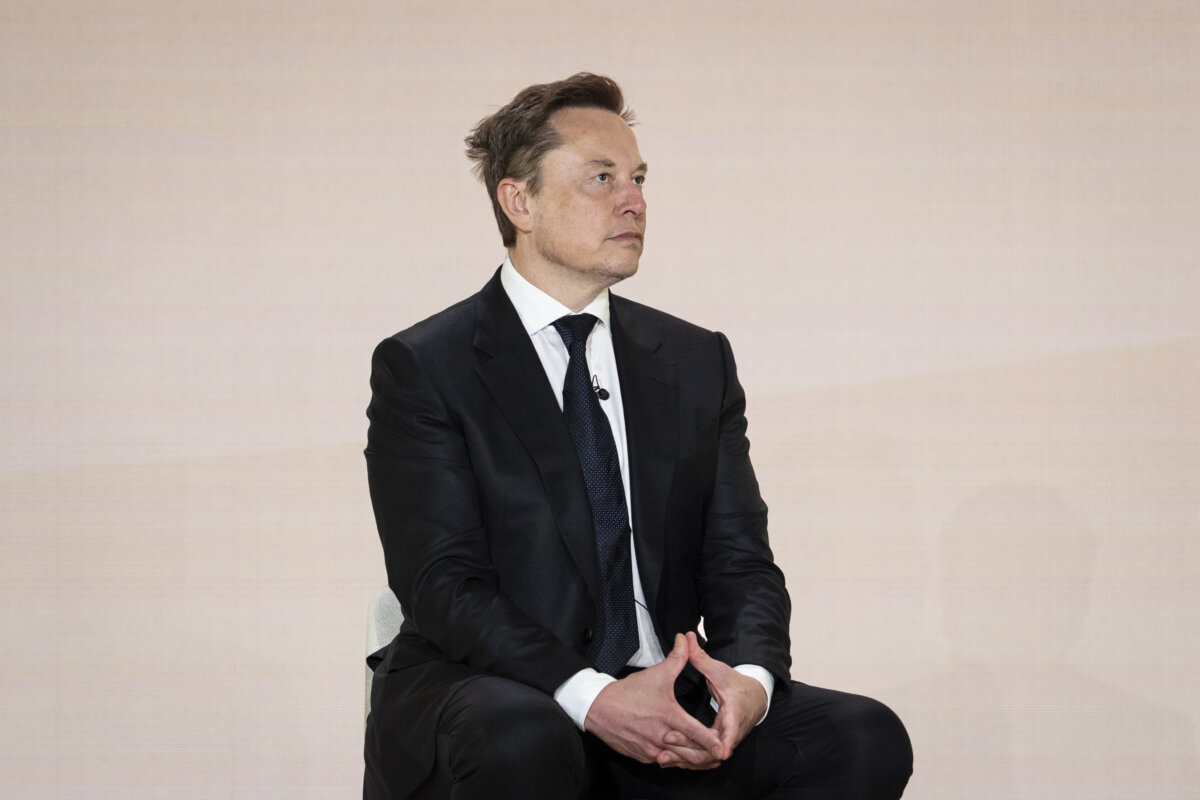

Shares of SpaceX and Tesla Inc. took off midweek after billionaire Elon Musk floated a potential merger between the trillion-dollar companies.
Wall Street has long assessed the prospect of a merger that would unite two pillars of the on-again, off-again trillionaire’s business empire under a single corporate structure.
In an Oct. 20 earnings call with analysts, Musk suggested that combining the two companies would be a “good idea.”
Musk confirmed that the boards of SpaceX and Tesla formed special committees of independent directors to discuss joining the two companies.
“Some people out there assume that a SpaceX and Tesla merger is a certainty, and I think that would be overstating it,” Musk told analysts.
“The special committees have not reached agreement on the terms of any transaction. And obviously there’s no guarantee that they will.”
In addition to merger talks, investors cheered SpaceX’s solid third-quarter earnings, which beat Wall Street estimates.
Tesla will post its results in the last quarter after the Oct. 21 closing bell.
SpaceX stock jumped by as much as 10 percent, while Tesla rose by about 3 percent.
Inside a Potential Merger
A merger has been widely expected since SpaceX announced its initial public offering earlier this year, according to Daniel Newman, CEO of big tech analyst firm The Futurum Group.
Based on the companies’ long-term vision—colonizing the stars, building robots, and advancing artificial intelligence—their collaboration would likely create many advantages, something Musk acknowledged.
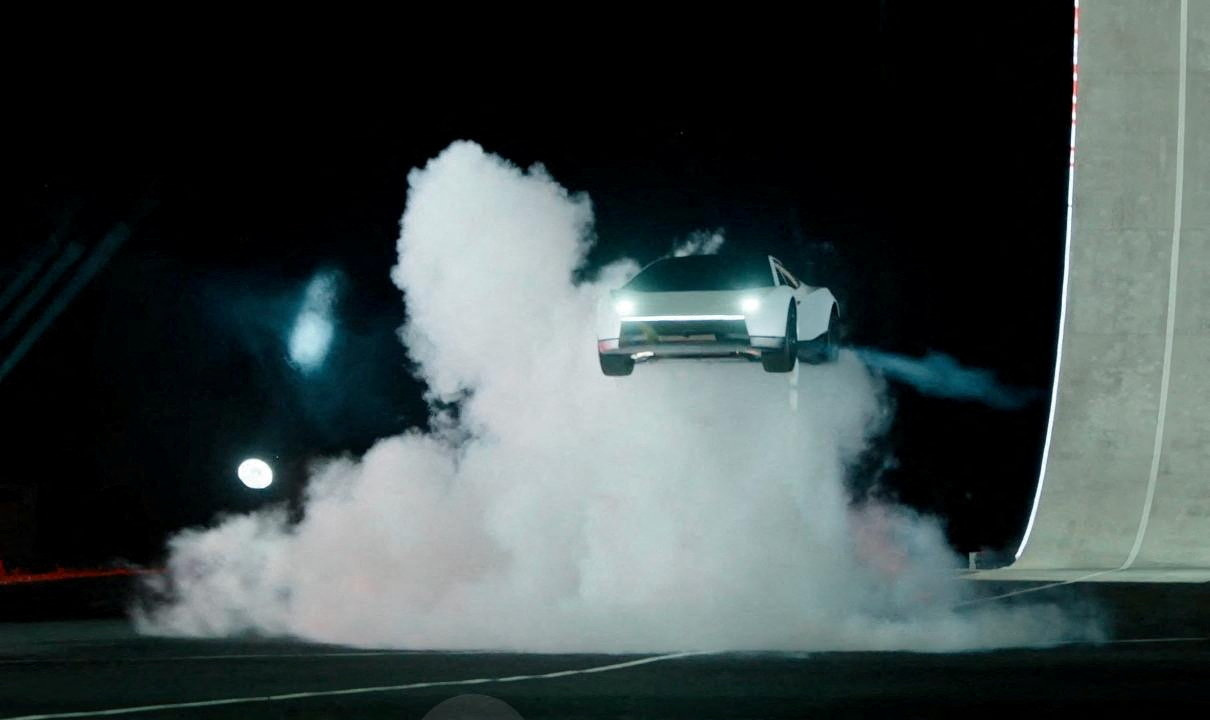 Tesla unveils its long-delayed Roadster nearly a decade after first revealing a next-generation version of its original electric sports car, at a launch event in Waco, Texas, on Oct. 15, 2026. (Tesla/Handout via Reuters)
They have also done plenty of business together. SpaceX purchased $1 billion of Megapack batteries and Cybertrucks from Tesla.
Plus, Tesla became a SpaceX shareholder when its $2 billion xAI investment was converted into SpaceX stock.
Musk’s AI model Grok is also installed for free in many Tesla automobiles.
Along with Intel, SpaceX and Tesla have already partnered on Terafab, a semiconductor manufacturing facility that consolidates chip design, memory production, and packaging.
The joint venture aims to test its first SRAM chip by June 2027 and produce chips for self-driving vehicles, humanoid robots, and orbital AI data centers.
“Rocket Thrusters on the Tesla Roadster served as a nice preview of how he sees the companies collaborating in the future,” Newman told The Epoch Times.
Last week, Tesla unveiled a flying sports car that performed inverted backflips and jumps using SpaceX’s cold-gas thrusters.
“Bottom line is the two companies bring together space, AI, autonomy, and robotics and would be arguably the most well-positioned company on the planet for what comes next,” Newman said.
One of the World’s Largest Companies
If the largest merger of all time can be pulled off, the almost $4 trillion market cap would immediately make it one of the world’s largest publicly traded companies, rivaling Alphabet, Amazon, and Microsoft.
Beyond a sky-high market cap, a joint SpaceX–Tesla venture would become a sprawling industrial and technology behemoth, with about 155,000 employees and approximately $153 billion in annual revenue.
At the same time, both companies continue to burn cash. In the first nine months of 2026, SpaceX’s negative cash flow totals about $35 billion after spending $48 billion, mostly on AI-related infrastructure.
As of the second quarter, Tesla’s free cash flow is negative $1.1 billion.
A SpaceX–Tesla merger could create a “complex organization to run,” according to Ryan Zurrer, founder of alternative assets firm Dialectic, which was an early investor in SpaceX.
He said that a likely scenario is that they would operate as siloed entities within the conglomerate and then share engineering resources.
“I don’t see a lot of brand mixing,” Zurrer said in a statement to The Epoch Times. “I would think that the conglomerate itself probably sits under some kind of X function.”
Wall Street’s Take
A deal would enhance Musk’s influence over Tesla. While Musk controls 84 percent of voting power at SpaceX, his Tesla stake is just 20 percent.
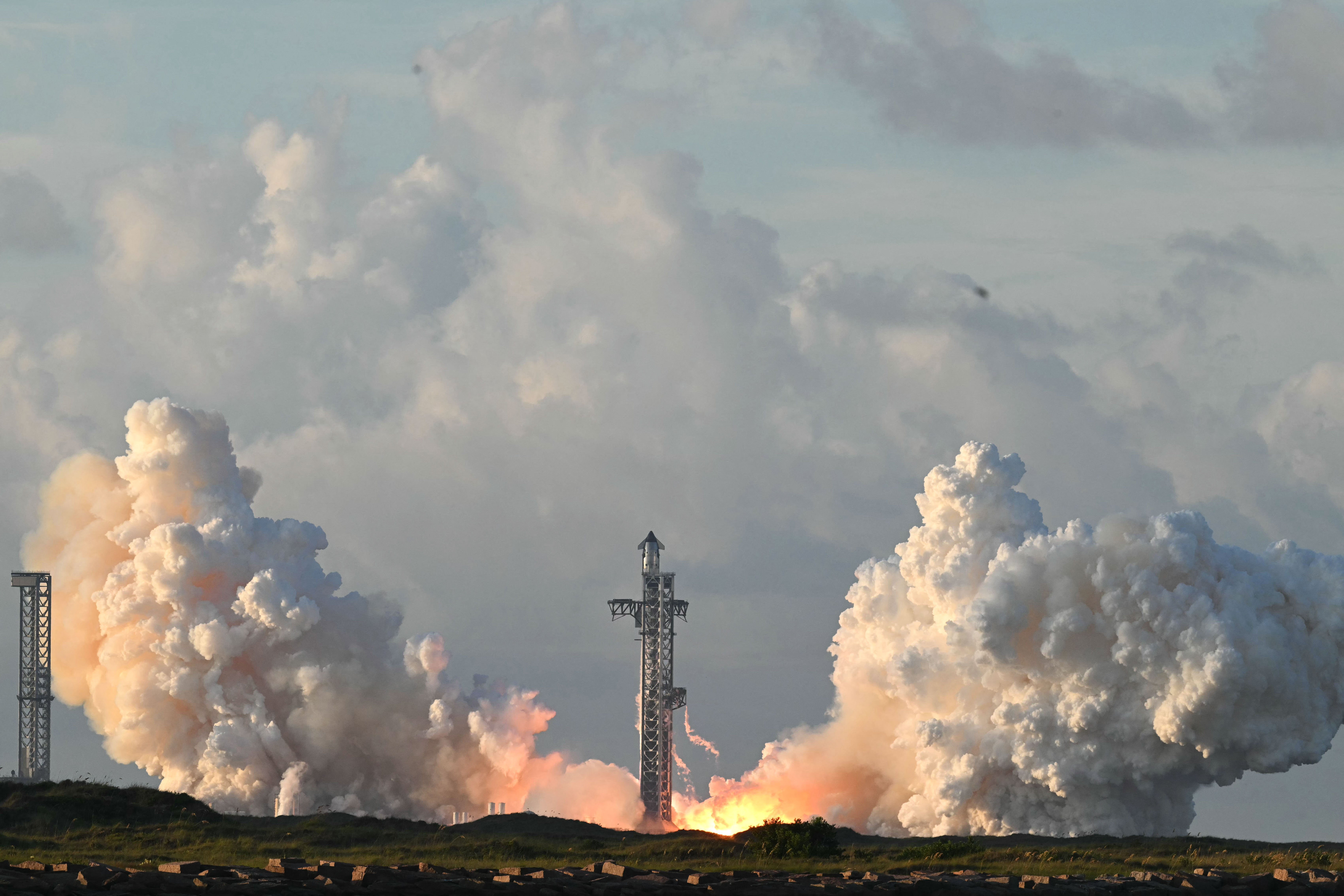 SpaceX Starship Flight 14 launches from SpaceX Starbase in Texas on Sept. 28, 2026. The mission was planned as the first Starship flight to enter orbit around Earth and deploy Starlink satellites. (Ronaldo Schemidt/AFP via Getty Images)
Despite widespread Wall Street optimism, a SpaceX–Tesla merger could pose risks to shareholders, according to Robert Johnson, a finance professor at Creighton University’s Heider College of Business.
“One can be bullish on the prospects of one of the entities and bearish on the prospects of the other entity,” Johnson told The Epoch Times.
“When they are separate companies, you can invest in one and not invest (or short) the other. The combined entity doesn’t provide an investor with that option.”
As of Oct. 21, Wall Street analysts have separate expectations for the two companies, according to MarketBeat.
SpaceX’s consensus rating is “moderate buy,” with a 12-month 43 percent upside target.
Tesla has a “hold” rating and a 12-month 7 percent upside forecast.
Any deal would need support from a majority of Tesla’s total shareholder base, not just a majority of participating voters, creating what Musk called “quite a high hurdle” to overcome.
Prediction markets expect an official merger by December 2027 at the latest.