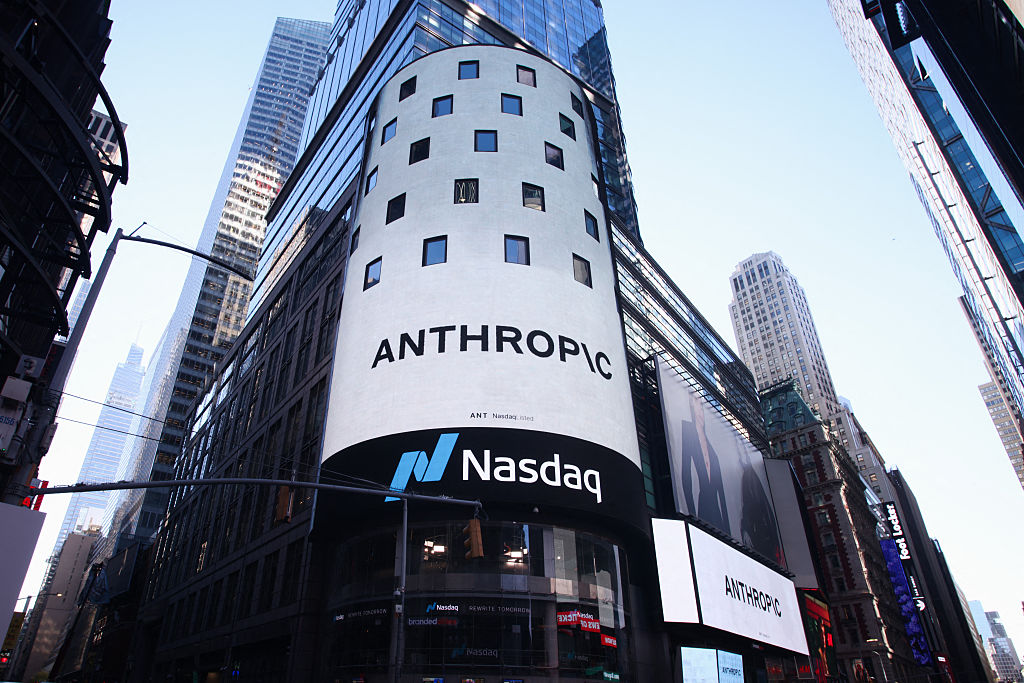

Anthropic’s share price fell about 10 percent in early trading one day after its blockbuster Wall Street debut as a stock market rout intensified.
After its initial public offering price of $83, the artificial intelligence (AI) giant’s stock opened Nov. 19 at $111.50 and closed at $97.17.
Under the ticker symbol “ANT,” Anthropic opened its first full session on the Nasdaq at $89.86 before falling below $88.
Anthropic’s near-term performance may be driven by the broader market backdrop, says Gavin Ezekowitz, co-founder of private asset investment manager BFA Global Investors. Market conditions are currently decidedly negative.
“It is often forgotten that 30-50% of a stock’s performance is controlled by broad market performance,” Ezekowitz said in a note emailed to The Epoch Times. “Investors will focus on whether the company stays above the issue price.”
SpaceX, the other major IPO this year, has struggled to stay above its $135 IPO price. Shares of the rocket-and-AI company are down 2 percent from its IPO to about $132 as of Nov. 20.
U.S. tech stocks continued to sink at the end of a raucous trading week.
The tech-heavy Nasdaq Composite Index fell about 900 points, or around 3.75 percent, at 1:47 p.m. ET. It is on track for a weekly loss of roughly 8 percent. The broad-market S&P 500 erased around 160 points, or 2.25 percent, and is expected to log a weekly drop of about 7 percent.
The Nasdaq has erased all of this year’s gains and is down close to 1 percent year-to-date.
Dan Ives, a tech analyst and senior managing director at Yorkville Ives, says more than one factor is contributing to the selloff.
Ives said in a Nov. 20 post on X that it has been driven by a perfect storm of the Democratic Party’s election success and perceived anti-AI sentiment, Jensen Huang’s resignation from Nvidia, the Anthropic IPO sucking up liquidity, and the Federal Reserve signaling more interest rate hikes ahead.
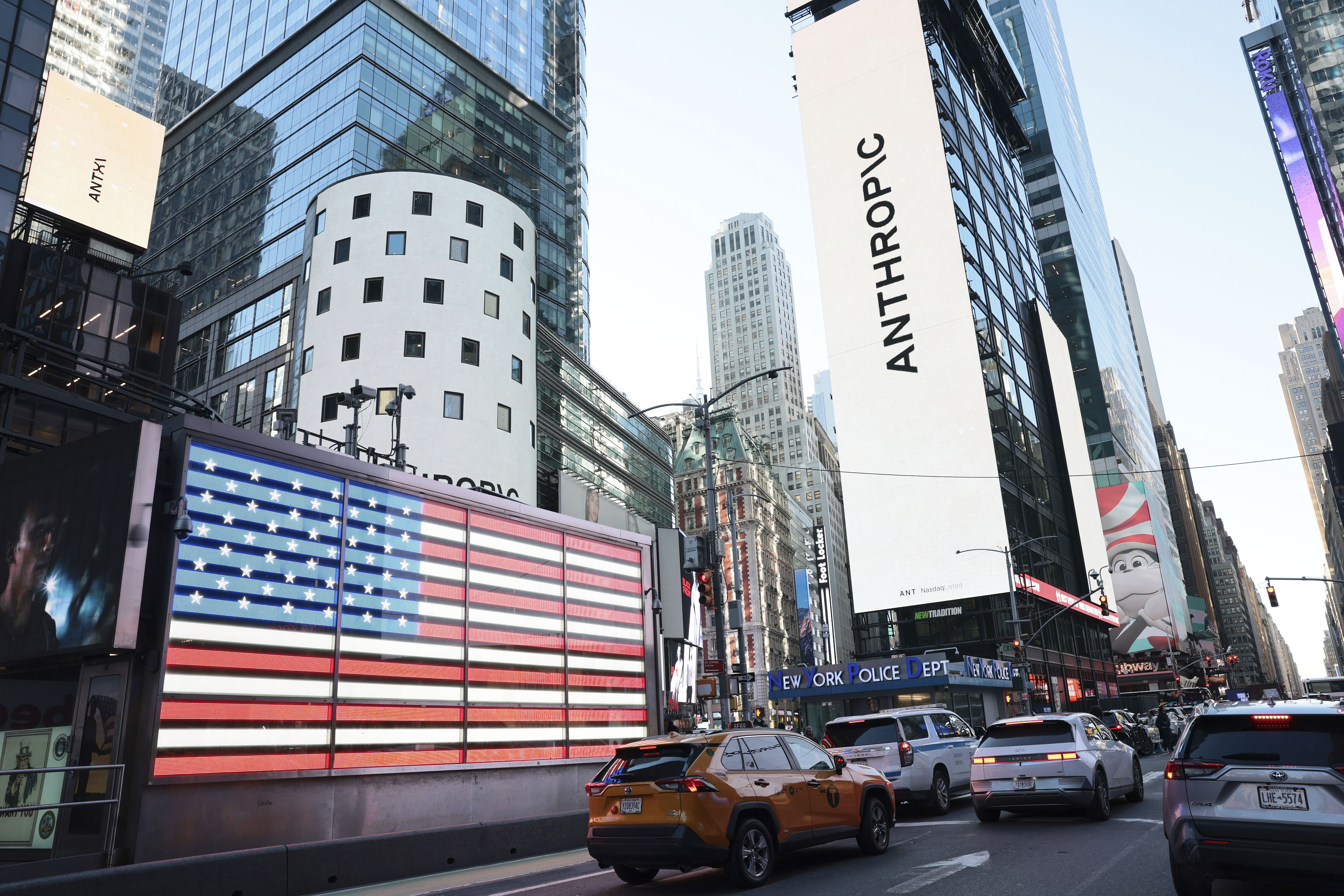 Anthropic billboards are displayed in Times Square as shares begin trading after their IPO in New York City, on Nov. 19, 2026. (Michael M. Santiago/Getty Images)
“The $4 trillion AI buildout is still happening and our tech thesis into 2027 remains,” he said.
Earnings Spotlight
Third-quarter earnings could signal that equities still have room to grow.
At the tail end of earnings season, S&P 500 companies that have reported have beaten analysts’ estimates by 3.1 percent, according to FactSet Insights.
The July–September reporting period marked the lowest earnings surprise percentage since the fourth quarter of 2022 and is below the five-year average of 7.5 percent.
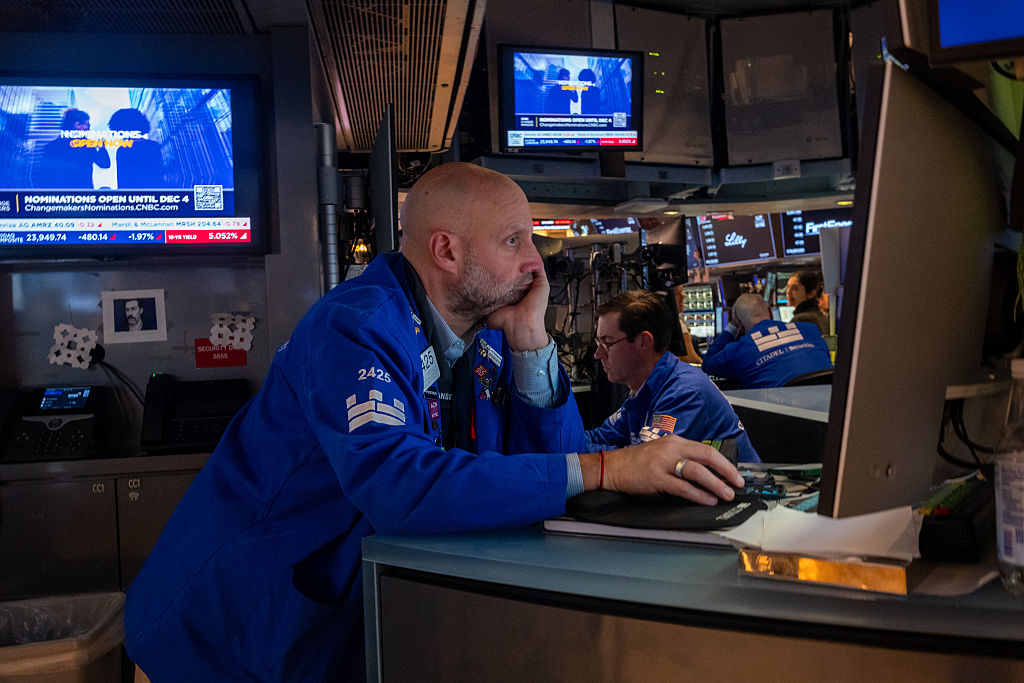 Traders work on the floor of the New York Stock Exchange (NYSE) in New York City on Nov. 19, 2026. (Spencer Platt/Getty Images)
The blue-chip Dow Jones Industrial Average fell around 350 points, or 0.73 percent, to below 49,000. The index is now in correction territory—down 10 percent from its record high—and is poised for a sizable weekly loss.
Dollars, Yields
Yields on U.S. Treasury securities were down across the board as investors sought shelter.
The benchmark 10-year yield fell below 5 percent, while the 30-year slipped under 5.4 percent. The 2-year, which generally tracks monetary policy expectations, declined to around 4.7 percent.
The U.S. Dollar Index—a measure of the greenback against a weighted basket of currencies—slipped as much as 0.15 percent and is below 104.00. The index has surged more than 5 percent this year and is hovering around a 19-month high.
Geopolitical strife, higher-for-longer interest rates, and safe-haven demand have fueled the U.S. dollar’s ascent this year.
“Monetary policy still offers a cushion to the dollar and yields. After a run of hawkish remarks from officials, markets priced a quarter-point Federal Reserve hike in December and several more increases through 2027,” Milad Azar, market analyst at XTB MENA, said in an emailed note to The Epoch Times.
Fed Governor Christopher Waller told CNBC this week that the central bank may need to shock people with a half-point rate hike next month.
Futures markets overwhelmingly anticipate a quarter-point increase at the December Federal Open Market Committee policy meeting.