
S&P 500 companies’ third-quarter results showed the lowest earnings surprises in more than three years, largely due to earnings misses from a few companies. However, analysts remain optimistic about the overall outlook, as businesses continue to demonstrate solid fundamentals.
As the third-quarter reporting season winds down, S&P 500 companies, in aggregate, reported earnings per share that exceeded analysts’ estimates by 3.1 percent, according to FactSet, which tracks earnings for the nation’s largest publicly traded companies.
That lags the one-, five-, 10-, and 15-year average surprise rates—13.8 percent, 7.5 percent, 8 percent, and 6.7 percent, respectively—and marks the lowest figure since the fourth quarter of 2022.
By most measures, it was a solid quarter for corporate America. Profits grew more than 30 percent, and more than eight in 10 S&P 500 companies beat Wall Street’s forecasts.
Big Tech Misses
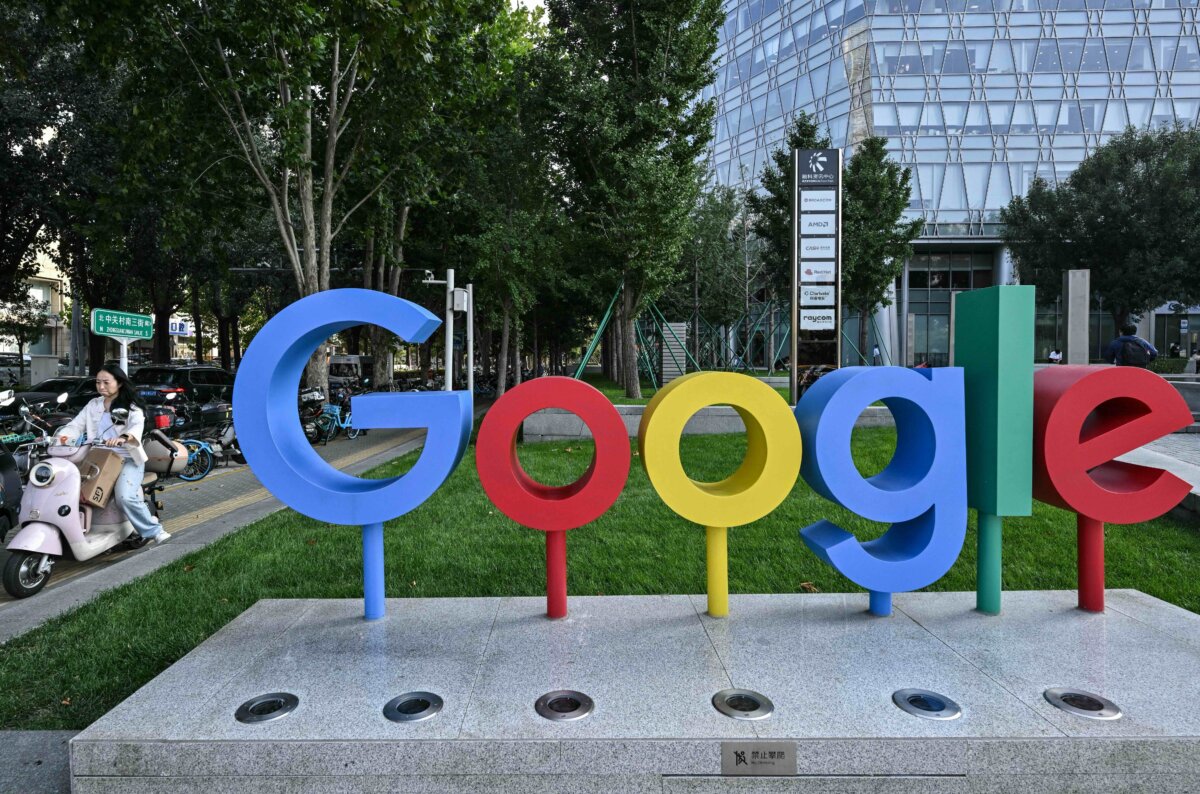
FactSet found that the lower earnings per share surprise figure came down to three companies in the same corner of the market: communication services. Charter Communications, Meta Platforms, and Alphabet each fell well short of expectations, and their misses were big enough to pull down the entire index.
Charter reported a loss of $20.50 per share, compared with an expected profit of $8.94. Meta reported earnings of $3.83 per share, compared with analysts’ expectations of $6.54. Alphabet reported earnings of $2.12 per share, against a forecast of $3.02.
Most of the shortfalls stemmed from unusual items. Meta recorded a $9.89 billion charge related to a litigation agreement; Charter incurred a $6.3 billion franchise impairment charge; while Alphabet booked an $8.7 billion loss in other income from net losses on equity securities.
Still, many sectors delivered positive earnings-per-share surprises, led by healthcare, utilities, and energy. Across the index, 84 percent of companies beat estimates, above the five-year average of 78 percent.
FactSet noted that excluding the three communication services companies raises the earnings-per-share surprise from 3.1 percent to 6.7 percent. That is close to the five-year (7.5 percent) and 10-year (8 percent) averages.
Market Reaction Mixed
Equity markets have responded unevenly. Meta and Alphabet shares have fallen 12.10 percent and 17.13 percent over the past month, respectively, while Charter Communications shares have gained 26.41 percent.
Over the same period, the State Street Communication Services Select Sector SPDR ETF (XLC) has lost 4.3 percent, in line with the State Street SPDR S&P 500 ETF Trust (SPY). That suggests the sector’s decline reflects overall market sentiment rather than the three companies’ earnings misses.
‘A Legal Bill’
Dejan Glavas, professor of finance and AI at ESSCA School of Management, believes the third-quarter earnings-surprise episode is a story of concentration rather than weakness, and one that investors have largely seen through.
“Three companies turned an ordinary quarter into the weakest earnings surprise since 2022. This season the market forgives a miss everywhere except at the top,” he told The Epoch Times.
“The S&P 500 didn’t have a weak quarter; it had a legal bill,” Allison Huynh, a Stanford-trained computer scientist who doesn’t accept Wall Street’s habit of calling this a “one-time item,” told The Epoch Times.
“As an early Googler, I see it as the bill coming due for a business model built on young people’s attention, and litigation is now a recurring cost of doing business for Big Tech.”
Huynh said Google’s core business is still strong, providing fundamental support for its market value. Alphabet, Google’s parent company, reported a roughly 30 percent increase in third-quarter operating income compared with the same quarter of 2025.
“The real risk is that a handful of mega-caps now carry both the index’s earnings and its legal and AI-spending exposure, so one courtroom or one capex disappointment can move the whole market,” she said.
High Expectations
Dustin Wigington, founder of Rulicent Investments, a fee-only fiduciary investment adviser in the Oklahoma City area, sees a different reason for the deflated earnings-per-share surprise number: high expectations.
“Analysts expected about 29 percent earnings growth going into the season. When expectations are that high, there’s simply less room to beat them,” he told The Epoch Times.
“A smaller surprise is not the same as weaker earnings. It measures how far results beat forecasts; not how much profits grew. Earnings growth for the quarter is still above 30 percent,” he said.
Wigington said stocks move less on whether news is good or bad than on the gap between what happens and what was expected.
“A one-time charge that doesn’t change future earning power shouldn’t change the price much, and FactSet’s data suggests investors agree,” he said.
Bright Spot
Vsevolod Smirnov, chief marketing officer at Just2Trade, sees a bright spot in the concentration of negative surprises in three companies, taking it as a sign that analysts have better tools to forecast earnings accurately.
“Fewer earnings surprises can be viewed as a good thing, because it should point to lower levels of volatility among AI leaders while helping investors to better align their research with the stocks that are central to their portfolio growth,” he told The Epoch Times.
Wigington cautioned that the real warning sign would be weakness spreading.
“More companies missing, revenue and margins slipping, and guidance coming down. If that starts, the story changes. If the shortfall stays concentrated, this headline says more about three companies than about the market,” he said.