
Sponsored Content
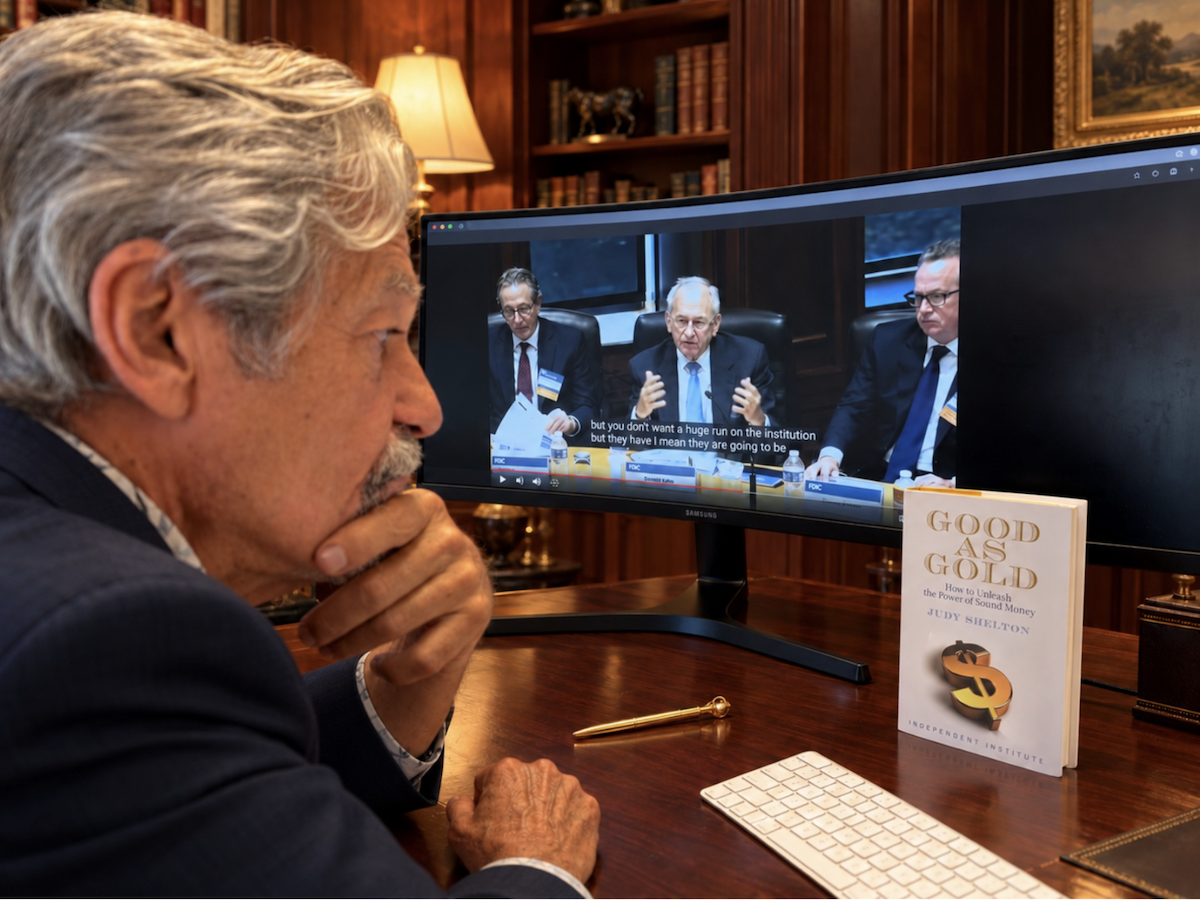
Judy Shelton is back in Washington, and Americans should pay attention to what she brought with her. On Oct. 9, Treasury Secretary Scott Bessent announced her appointment as counselor in the Office of the Secretary. Her assignment includes advising him on currency policy. This is the economist who wrote “Good as Gold” and proposed putting gold convertibility into a Treasury bond. A sound money advocate now has a seat inside the department that issues America’s debt. That deserves a closer look than another passing headline.
Start with her idea. Instead of asking investors to accept only a promise of future dollars, Shelton has proposed a Treasury security offering conversion into gold at maturity. The point is to give government borrowing a connection to something tangible. A saver would be evaluating a different promise: not simply how many dollars arrive years from now but what those dollars could represent. For anyone watching retirement savings lose purchasing power, that is a consequential distinction.
Now place that proposal beside another development already underway. Payment stablecoins are building a new market for Treasury securities. These digital tokens are designed to maintain a dollar value, with reserve assets supporting redemption. Under the GENIUS Act, qualifying government debt is among the assets permitted to back them. Treasury has described stablecoin issuers’ Treasury holdings as nearly $200 billion. The digital payment business is becoming a buyer of the paper Washington sells to finance itself.
Follow the connection. Shelton is discussing sound money through Treasury debt. Stablecoin issuers are buying Treasury debt to support digital dollars. Those are separate developments, but they raise a question worth investigating: Could a future monetary structure connect gold convertibility, government borrowing, and digital payments? If so, who would actually receive the gold-related rights, the institution holding the security, or the customer holding the token? That question is more important than the promotional language surrounding either instrument.
There is a boundary here that readers should understand. Shelton’s proposal concerns a long-term bond. Stablecoin reserve rules favor short-term instruments. Her appointment does not make existing Treasuries gold-backed or establish her proposed bonds as eligible reserves. Connecting the two would require policy changes and explicit terms. But that is precisely why the conversation matters now. Americans should examine the possibilities while the architecture is being debated rather than wait for a finished product to explain their rights.
Consider what happens on the customer’s side of the screen. You acquire a token intended to be redeemable for a dollar. The issuer holds reserve assets that may earn income. The GENIUS Act prohibits permitted issuers from paying you interest or yield solely for holding, using, or retaining that token. You hold the payment claim. Someone else holds the assets supporting it. A stable balance does not mean you participate in the income generated behind it.
Imagine looking at your digital wallet and seeing the same thousand dollars every morning. Behind that display, reserve assets may be earning income while your groceries keep getting more expensive. The screen tells you the balance. It does not tell you who owns the financial opportunity underneath.
Suppose some future reserve instrument carried gold convertibility. That feature would not automatically pass through to the token holder. Neither would a rise in gold automatically become the customer’s profit. Rights would depend on the instrument, the law, and the redemption contract. Before celebrating a digital dollar backed by something valuable, ask the obvious question: Do you own that value, or do you own a dollar claim against someone who does?
Outside Washington, the physical relationship with money is changing too. As of Oct. 11, DeDollarize News’ counter, drawing on FDIC records, displayed 6,819 branch office closings since Nov. 9, 2022. These are gross closures, including consolidation—not failed banks or net branch losses. For customers, the consequence can still be immediate. The teller disappears. The drive gets longer. An app becomes the easiest way to reach money that once came through a familiar neighborhood door.
Nov. 9, 2022, was also the date of a public FDIC committee meeting on resolving major financial institutions. Participants discussed confidence, communication, and run risk. One warned, “You don’t want a huge run on the institution.” Watch the footage in context. It concerns a potential failure scenario, but it reminds depositors that the people managing the system consider risks customers rarely discuss over a bank statement. Understanding your access arrangements belongs on your agenda before stress makes it urgent.
Now mark Oct. 26. Four federal information collection proceedings close for public comment that day across the FDIC, SEC, and FTC. They concern deposit reporting, securities market records, settlement procedures, and customer information safeguards. They do not announce a conversion of your bank balance. They show how much financial activity depends on structured records, institutional responsibilities, and rules that receive little attention outside specialist circles. The public has an opportunity to examine those systems. Use it.
For a household, the issue is straightforward. A savings balance must support groceries, housing, healthcare, and retirement. Inflation can erode what it buys. An access problem can interrupt its usefulness. A new financial product can change the claim you hold. These are different risks, and understanding them requires more than accepting assurances that everything is faster. Ask who earns, who controls access, and what you can redeem. Read the terms before entrusting your future to the interface.
Call 866-487-9106, visit https://epoch.dedollarizenews.com/oct26 or scan the QR code to request “The Vanishing Dollar” plus the free book “Digital Dollar Exposed.” Watch the FDIC footage online. Read them before Oct. 26. Shelton’s return, Treasury reserve demand and changing financial rules deserve your attention. The system is moving. Your understanding should move with it.
By calling 866-487-9106 or visiting offers.dedollarizenews.com to request information, you authorize DeDollarize News or its affiliates to contact you regarding your requested information. DeDollarize News and its affiliates are not financial, tax, or legal advisors. This material is for educational and informational purposes only and does not constitute investment, financial, tax, or legal advice. Consult qualified professionals regarding your individual circumstances.
Third-party advertisements and links to other sites where goods or services are advertised aren’t endorsements or recommendations by The Epoch Times of the third-party sites, goods, or services. The Epoch Times takes no responsibility for the content of the ads, promises made, or the quality/reliability of the products or services offered in all advertisements.