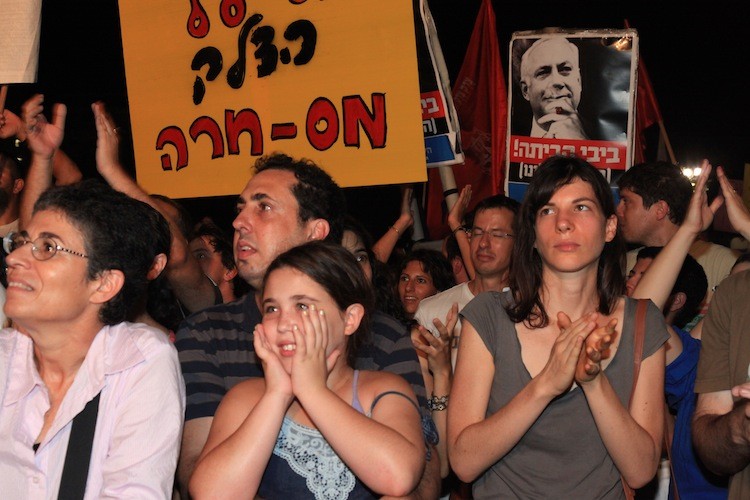
TEL AVIV, Israel—A housing crisis that has been brewing for years in Israel, boiled over this week into mass street protests in Tel Aviv and a march to the Knesset in the capital of Jerusalem.
What started as a small protest on Facebook by Daphni Leef, 26, a freelance filmmaker protesting high rents on July 14, has spread across the country. For over a week, “tent cities” have sprouted up around the country, starting with 10 tents on Rothschild Blvd. in Tel Aviv. By Saturday night, tens of thousands of people from across Israel rallied in central Tel Aviv.
The protesters, largely young adults but also joined by Israelis from a transection of society, are demanding changes to government housing policy, soaring rents, and social inequalities, in what is quickly becoming a large-scale civil protest movement.
Speakers who took the stage at Saturday’s rally were not politicians, but teachers, social workers, and students demanding not only rent reductions and more housing, but lower prices on basic food items, changes to the education system, and better salaries in the health system.
“We know that there are more voices who would like to be heard today. There are retired people, disable people, and others who would like to be heard, and we promise you all—your voice will be heard in our future rallies,” Leef told an enthusiastic crowd at the rally.
At the end of the rally the crowd shouted, “Bibi [Prime Minister Netanyahu] you are fired!”
The housing issue is a long-standing problem in Israel, which successive governments have not been able to solve.
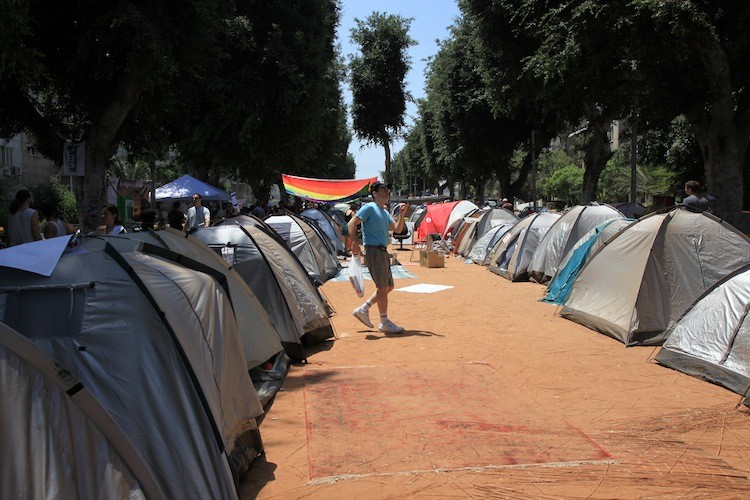
Netanyahu devoted almost all of his remarks, save for a few words of shock and condolences for the attacks in Norway, to what he called “a housing crisis that is finding public expression.”
The housing shortage and high cost of apartments in Israel make it extremely difficult for young couples and discharged soldiers to find a place to live forcing them to live with parents and in-laws.
Red tape is also a significant issue, exacerbated by the high competition for apartments.
“When you find an apartment you want to rent you have to go through an investigation by the potential landlord who wants to know everything about you, your salary, your parents, your way of life, your gender, your sexual orientation, and of course you have to compete with dozens of others wanting these apartments and then you have to give all sorts of guarantees the landlords require,” said one protester who preferred to remain anonymous.
Next… Average apartment of 1,076 sq. feet costs about US$ 324,000