
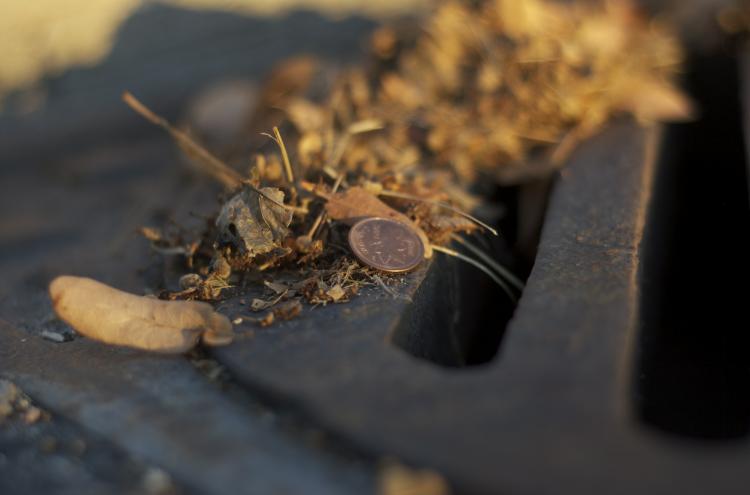
Australia and New Zealand have already dropped their one-cent coin and the U.S. has also looked into it. Now Canada is doing the same with a Senate committee examining the issue.
Those in favour of getting rid of the penny say it is worthless and a nuisance. Those who want to keep it worry about prices going up. If the penny is cut, the hardest hit will be charities that rely on the oft-discarded coin and candy-consuming children who might not find penny candy anymore, but can still get their sugar fix with a few cents scraped together.
The mint produced almost 500 million pennies last year and Canadians needed a billion of them, which means half a billion were returned to circulation from the estimated 28 billion floating around the country.
The Toronto Star reports that government documents show Canadian officials have looked closely at the fallout that followed the end of the penny in New Zealand and Australia, where both countries cut the coin for the same reasons as Canada is considering.
Besides the cost to produce, pennies are also blamed for weighing down productivity and taking up the time of cashiers, bank tellers, and others who handle them.
Cutting the coin in Australia has had a negligible effect on prices, with register totals rounded to the nickel or dime for cash payments while electronic purchases are still made to the exact cent.
The change, if it happens, is not expected to affect inflation, Pierre Duguay, deputy governor of the Bank of Canada, told the Senate National Finance committee in May.
He said consumers and merchants would share the wins and losses depending on how prices were rounded at the till.
“On balance it evens out,” he said.
Since the penny was introduced in 1908 it has lost half its weight from 5.67 grams to 2.35 grams, and shrunk in size from 2.54 centimetres across to 1.9 centimetres. It has also gone from being made of copper to steel with copper plating.
But more important than the coin’s shrivelling size has been its diminishing value.
NDP MP Pat Martin tabled a bill in 2008 proposing to eliminate the coin. He has estimated that the cost to produce and transport it could be as high as 4 cents, costing the Canadian economy $100 million to $150 million each year in lost productivity. Others have pegged that cost at $220 million a year.
By the Mint’s estimates, there are 28 billion pennies in circulation, and if the coin was phased out Martin’s bill would have given people five years to cash them in before they would be removed from circulation entirely.
A report prepared for the Mint on the issue in 2007 found businesses favoured cutting the coin while it was a toss for consumers who slightly preferred going penniless. Surprisingly, young people were most opposed to penny removal, but not by much—35 percent were against removal, 25 percent were for, and 39 percent were indifferent. Those 25 and older favoured removal.
The Senate finance committee has yet to release a report on its study of the penny.