
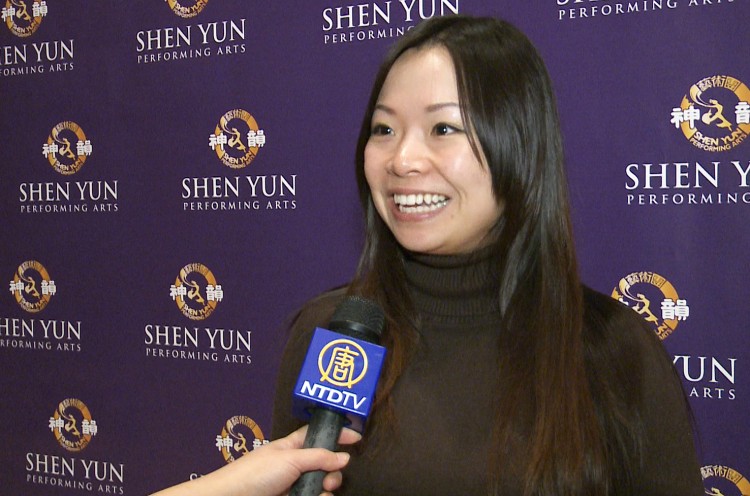
NEW YORK—Shen Yun Performing Arts concluded a five-performance run at Lincoln Center’s David H. Koch Theater on Sunday afternoon to a standing ovation.
“Once the opening piece started, I was truly moved,” said Kelly Lin, a virtuoso pianist who learned from internationally-acclaimed Daniel Epstein. “The whole scene was splendid, and the music—oh my tears just dropped,” she said.
Ms. Lin said the performance was filled with “an abundance of magical things—very artistic.”
“This is my first time attending this show; I was not prepared,” she said. “I thought the music was superb … the music and dance were melded into one.”
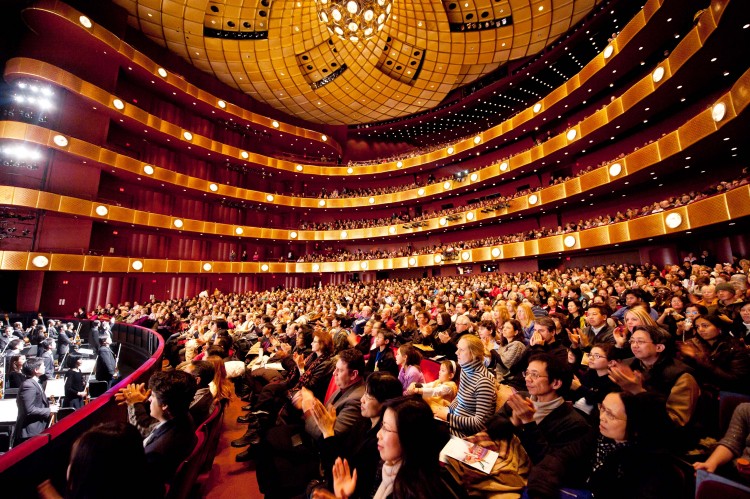
Shen Yun’s orchestra blends classical Western instruments with traditional Eastern ones, forming a harmonious and unique arrangement, according to Shen Yun’s website. Western instruments serve as the foundation for rhythm and harmony, and Chinese instruments, such as the two stringed erhu, and the bamboo flute—known as Dizi—rise above as the melody.
Ms. Lin was surprised to learn that Shen Yun’s music is composed specifically for each performance.
“Very original,” she said, impressed. “It was very special. In just one performance, I was able to see so many different dances, different folklore, and different characteristics of folktales.”
Shen Yun, based in New York, was formed with a mission to revive 5,000 years of Chinese culture through classical Chinese music and dance, including spiritual principles such as honor, wisdom, and sincerity, and a reverence for gods and the heavens, says Shen Yun’s website. This ancient culture was nearly decimated by more than 60 years of communist rule in China.
“I felt that [Shen Yun] represents the most traditional and filial of principles,” Ms. Lin said.
Ms. Lin said that there were many children sitting nearby her. “They would ask: ‘Wow, why are [the Amei dancers] nodding their heads?’ Then their mother would explain it represents showing respect to elders and teachers.”
Lin felt that it was outstanding how “the show incorporates filial piety.” Filial piety is a Confucian virtue based on respect for parents and ancestors.
As a native from Taiwan, Lin was particularly amazed to see the In the Mountains, the Taiwanese Amei Dance.
“I never would have thought the Taiwanese Amei ethnic group would be in this show too,” she said. “I was very moved.”
“The Amei ethnicity is one of Taiwan’s indigenous peoples,” according to the Shen Yun program book. “Amei dance, like its people, emphasizes teamwork, coordination, and community.”
In addition to classical Chinese and traditional folk dance, Shen Yun also has distinct ethnic dances. “China has 55 officially recognized ethnic minorities, and their distinct ways of life reflect discrepancies in local topography, climate, and religious tradition” says Shen Yun’s website.
“I feel that it is a shame today is their last show. They should have many more performances,” Lin said. “I can’t wait for their April performance.”
Reporting by NTD and Amelia Pang.
Shen Yun Performing Arts Touring Company will next perform at Providence Performing Arts Center in Rhode Island, Jan. 19.
They will return to New York’s Lincoln Center Apr. 18-22.
For more information, visit ShenYunPerformingArts.org.
The Epoch Times is a proud sponsor of Shen Yun Performing Arts.