
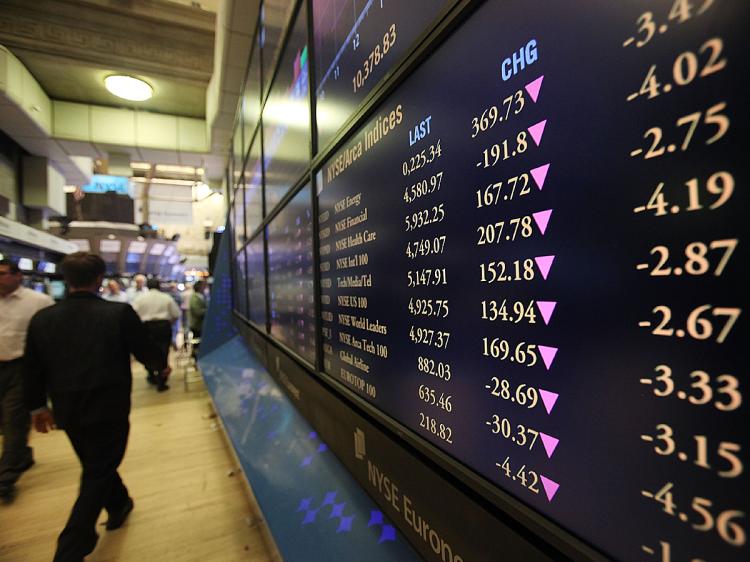
Markets tumbled broadly—with 90 percent of the S&P 500 companies in the red on Wednesday. The S&P lost 2.8 percent, or 32 points, while the Dow Jones Industrial Average fell 265 points, or 2.5 percent. The Nasdaq Composite Index dropped 3 percent, or 69 points.
Wednesday the U.S. Department of Commerce reported that the June trade deficit widened by almost $8 billion to $49.9 billion, much more than economists had predicted, signaling weak overseas demand for U.S. goods and services. The trade deficit is the difference between exports and imports.
China reported weak manufacturing output for July, soon after the Chinese Communist regime curbed its economic stimulus and closed factories and reined in bank lending. In the U.K., Mervyn King, the head of the Bank of England said that the U.K.’s economic growth this year will be slower than predicted, according to his quarterly inflation report. "Inflation is now expected to remain above the 2 percent target until the end of 2011, significantly longer than predicted in May," said King in the report.
The Federal Reserve this week signaled that it would reinvest $1.3 trillion in mortgage-related securities to help stimulate the economy as it admitted that the U.S. economic recovery may be softening. "To help support the economic recovery in a context of price stability, the committee will keep constant the Federal Reserve's holdings of securities at their current level," the Fed said in a statement.
All S&P sectors declined. Bank of America Corp. was down 3 percent, and Citigroup Inc. fell 3.8 percent. Shares of Walt Disney Co., which reported earnings on Tuesday, fell 3 percent. Technology shares also dropped, led by Apple Inc., which fell 3.6 percent, and Dell Inc., which dropped 2.8 percent.