
But instead of trying to compete with his rivals directly, Gutman and his management team came up with an idea: They began hiring ultra-Orthodox female programmers.
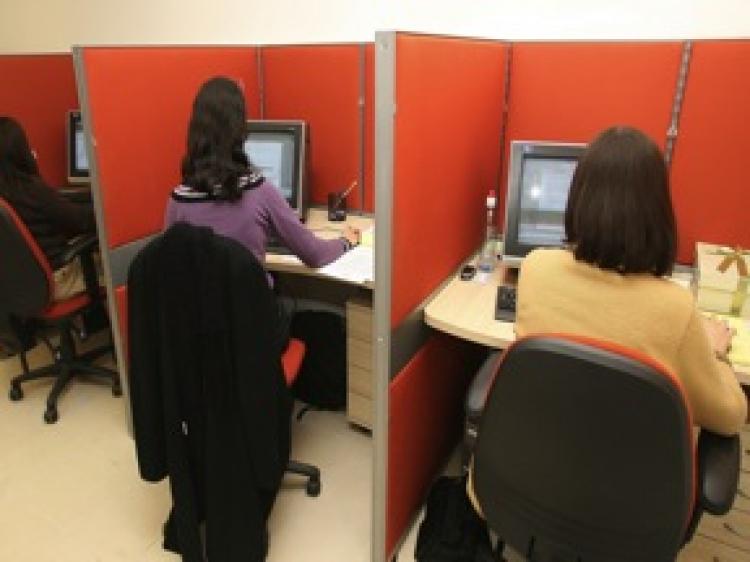
In 2004, Matrix IT opened the development center of Matrix Global, a software-programming center in Modiin Illit, an ultra-religious community east of Tel Aviv, where office space was cheap and a surplus of underemployed female workers was available.
Their model is based on a simple, yet unusual idea—recruiting ultra-Orthodox women for software development and quality assurance positions in a work environment and culture adjusted to the needs of the ultra-Orthodox demographic while meeting Rabbinical requirements—such as not mixing men and women. It is now one of the main models in Israel for integrating ultra-Orthodox women in the workforce.
High employment and poverty rates in ultra-Orthodox communities in Israel are time-ticking bombs facing Israeli society. For religious and social reasons these communities tend to have little contact with the general public.
According to a research by the Kenneset's Research and Information Center from 2008, the poverty rate in that demographic is above 50 percent. Most ultra-Orthodox men do not work, but rather study religious texts in religious institutions. Their studies are subsidized by the state.
The participation rate in the work force is 44 percent among ultra-Orthodox men and 55 percent among ultra-Orthodox women.
Initiatives like Matrix’s can be a way out of poverty for these communities. Most of the 700 ultra-Orthodox women currently employed at Matrix’s development center have a degree in either computer science or computer engineering, and have undergone professional training at John Bryce, Matrix’s sister company.
Matrix is not the only software company in Israel tapping into the ultra-Orthodox workforce. Another software company i-Rox, employs more than 100 ultra-Orthodox women developers in Benei Berak, near Tel Aviv. All company employees hold degrees in computer sciences or software engineering.
For these women, a normal job in a secular environment might be uncomfortable, said Yehudit Swissa, co-CEO of i-Rox. That is one of the benefits the company can give them. I-rox was founded in part to create jobs for ultra-Orthodox women and only employs women, most of them ultra-Orthodox.
Swissa said she can see a thirst among these women to join the IT industry. “I see it in the amount of resumes I get,” she said, adding that the screening process is arduous and enables the company to hire only the best.
The developers earn as much as 20 percent less than their counterparts in other companies, which enables the company to be competitive, said Swissa. But for many of the women, the suitable working environment at the company outweighs the lower pay.
One challenge facing these companies is the number of births, which is especially high in ultra-Orthodox communities, where families of eight or 10 children are common.
However, according to Ram Yonish, CTO Quality Assurance at Matrix Global, this is not a big problem. Maternity leave lasts exactly 14 weeks, said Yonish, and the workers hardly ever extend beyond that, allowing for accurate personnel planning.
Yonish talked about the main differences between Matrix employees and employees in the secular world.
Read More . . . Extreme Cases