

“What was the day that changed your life?” asked the reporter with a smile on her face. The model hesitated for a moment, and then told a story that would shock the world.
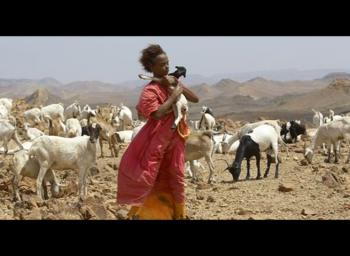
The above is a scene from Desert Flower, a nonfiction movie by German filmmaker Sherry Hormann, based on Somalian beauty Waris Dirie’s autobiographical bestseller of the same name.
“Desert Flower” tells the story of Dirie’s early life—from childhood in Somalia to her rise to become one of the world’s highest paid supermodels. In spite of her financial success, her childhood secret haunted her.
At the height of her career, she exposed a gruesome Somali tradition that she experienced as a young girl—female genital mutilation (also known as female genital cutting or female genital circumcision.)
Dirie decided to dedicate her life to stop this ritual, working with the United Nations as well as creating foundations of her own.
Recently, The Epoch Times caught up with the personable filmmaker and screenwriter Sherry Hormann to discuss transforming Dirie’s story for the big screen.
Planning the Movie
“Once I had read Dirie’s book, my interest grew … I felt I was given a gift, and felt hugely blessed at the opportunity to make a film from the story,” recounts Hormann on how the project got underway.
Dirie’s story is truly one of overcoming odds. At a young age, she ran away from home in rural Somalia to escape an arranged marriage, and she was eventually able to immigrate to Europe to start a new life.
She was truly in survival mode, working as a child to make ends meet, until one day her luck turned when a famous fashion photographer spotted her. Recreating these dramatic life events presented difficulties that Hormann would need to overcome.
“The problem comes when making a film about a living person—one realizes the effect of the life experiences the person went through. I do not know the person, nor did I know the 12-year-old when she just had arrived in Europe,” explains Hormann.
“She was unsure of herself, lived in fear, and did not know anything about the ins and outs of Western culture. That means I had to retreat—meaning the portrayal on the big screen needs to show a famous woman prior to her international success.”
Rising from rural Somalia to Europe’s most exclusive runways requires more than stunning beauty. It also takes the type of intelligence one can’t learn in a classroom.
“Waris was born in the desert and had been a goat herder. Unlike us, she lacked any education. She is by no means an intellectual now. She relies completely on her gut instincts—she senses things immediately. She is honest, truthful, and considers the correct path. All these are her gut instincts.”
Hormann goes on to explain how working with Dirie required her to strip any preconceived notions she had of the supermodel, and discover her with a blank slate. She describes their first meeting as a long, and occasionally awkward two hours, where Dirie would allow long gaps of silence.
“Perhaps she did this deliberately, to see if I would persevere. Now I know this was like a test,” explains Hormann of their first meeting. “No arrogance, merely distance. It meant she wanted me to discover her anew. Not like the media, but wanted me to discover her real persona.”
Dirie’s unique style forced Hormann to adapt when doing her research on her subject.
“I met her frequently. She is not the type of person to sit at a table, taking notes, hold lengthy conversations, or even speak into a recording machine. Instead, we took long walks through Vienna where she lived at the time. I was not permitted to record our conversations, either. I had to memorize everything and recorded it in my hotel room in the evening.”
Clearly a film about Dirie’s life has aspects of the horror and shame she endured as a victim of female genital mutilation (FGM). Yet the larger theme is not quite so narrow. When asked what that more overarching theme was, Hormann lit up.
“That is a beautiful question. The theme is courage!” she beamed.







