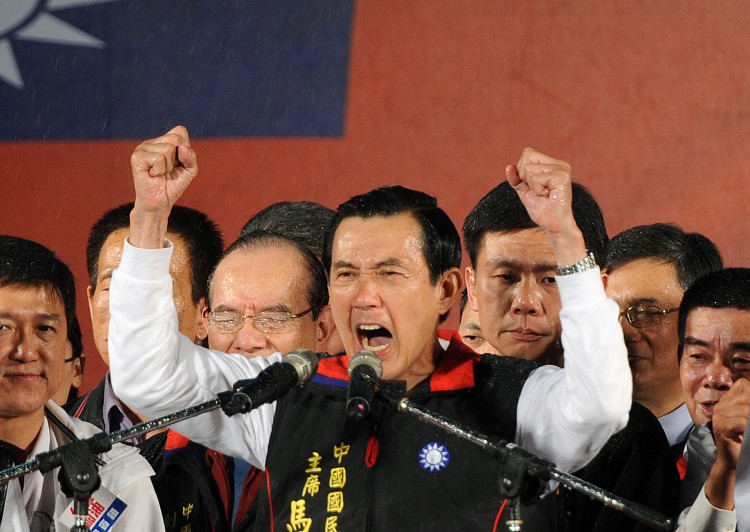

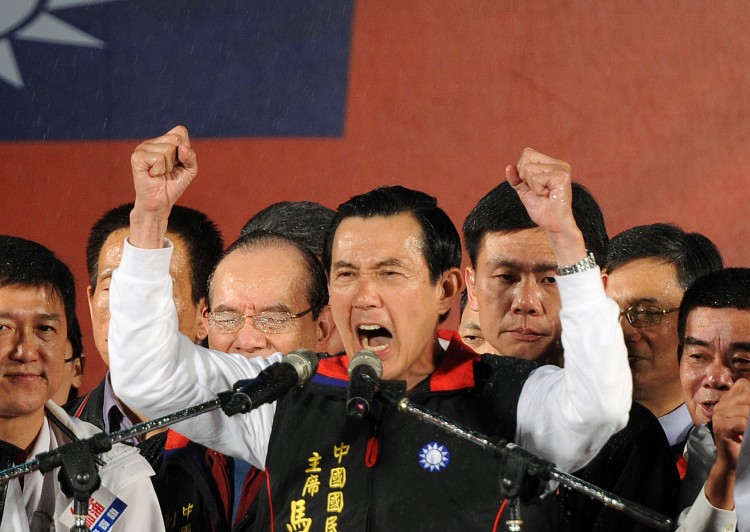
The incumbent President of the Republic of China, Ma Ying-jeou was re-elected to another term of four years on Saturday in an election that saw him win 51.6 percent of the vote.
Ma’s policies toward China were the source of greatest controversy in the election. Ma is proud of having helped integrate his country’s economy with that of China while easing diplomatic tensions across the straight. Critics have charged that Ma’s policies are threatening Taiwan’s independence from China.
His main rival, Tsai Ing-wen, chairman of the Democratic Progressive Party (DPP), gained 45.6 percent of the vote. A third candidate, James Soong, gained 2.7 percent.
Ma’s speech was introduced by enthusiastic yelling, waving, horns and music. Synthesized music blasted triumphantly as he held his hands up and yelled “We won!” It wasn’t just Ma Jing-jeou’s victory, he added, but the victory of the Taiwanese people. More triumphant music and arm pumping followed.
He would achieve harmony, peace, and prosperity for Taiwan, he said. He would enact the necessary reforms in the next four years, he said. The people show they agree with his China policy, he said, having “turned crisis into a business opportunity.” He also referred to an “uncorrupt” path that his Nationalist Party was said to have followed, an oblique criticism of the DPP, whose former leader and previous President of Taiwan Chen Shui-bian was indicted on charges of corruption, a charge that Ma also accused Tsai of during this election cycle.
In contrast to the jubilant Ma crowd, Tsai Ing-wen’s supporters were mostly silent at her concession statement. No music was played and no arms were pumped.
In her remarks to international media and supporters, Tsai said “We acknowledge defeat and respect the decision of the Taiwanese people in this election.”
She advised Ma: “Over the next four years he should carefully listen to the thoughts of the people, he should work hard, treat everyone fairly, and absolutely do not let down people’s expectations.”
She said that DPP lacked the benefits of incumbency, their grassroots organizing was not enough, and that in strategy and networking they could have done better. “We feel so sorry to have let you down. We will reflect carefully and self-criticize,” she said.
She then announced her resignation from the chairmanship of the DPP, before adding at the very end: “The DPP will stand up again.”
The election was watched closely across the strait, the term “Taiwan elections” placing first in Sina Weibo’s list of most-discussed topics, outstripping news about the iPhone 4s by more than two times. Reactions varied, but reflection on the contrast between the two countries appeared ever-present.
“If democracy could be measured, then today’s election in Taiwan was more democratic than that found in many well-known democratic countries,” one user wrote in a post that was forwarded and remarked upon thousands of times. “These people are like you and I: they have yellow skin and black eyes, they speak Chinese, and they eat rice. Those people that think democracy doesn’t suit Chinese people can now shut up.”