
TORONTO—Three generations of the Kies family came to see the performance of Shen Yun Performing Arts for a vision of Chinese culture and the substance behind it.
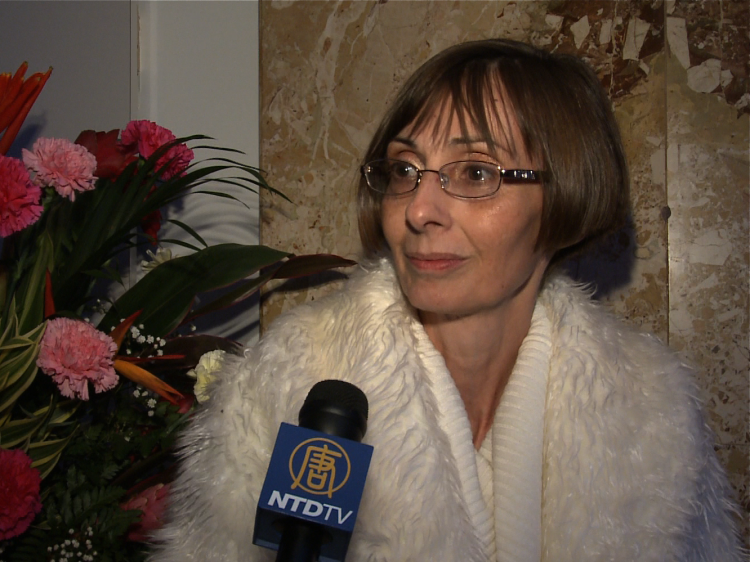
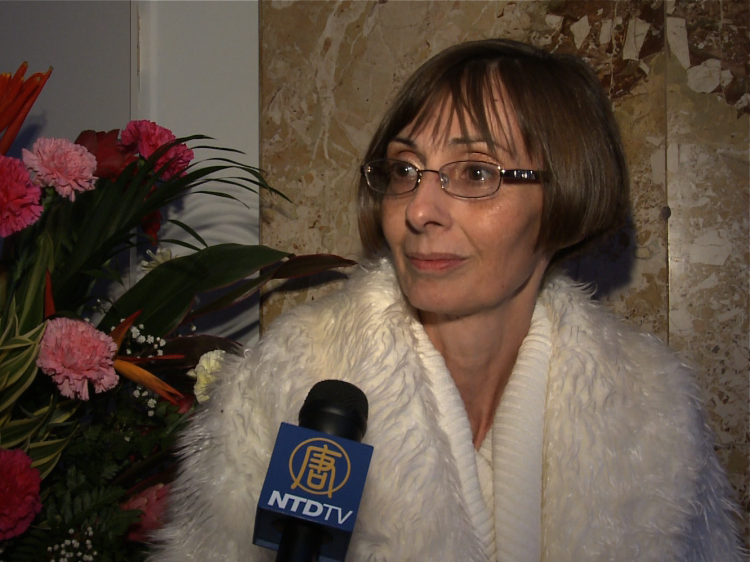
Grandmother, Madeleine Kies, who owns a sales agency and textile business, has seen Shen Yun twice now.
“Both times were marvellous,” she said.
“It’s very gracious, it’s flowing, it’s magical. Beautiful.”
She said she also enjoyed Shen Yun’s orchestra which combines classical Eastern and Western instruments for sound both harmonious and fresh.
“The music was fantastic, very, very, very nice,” said the elder Kies.
Her daughter, Suzy Kies, president of an Orillia-based NGO, was also full of praise.
“It’s a wonderful experience in so many different levels, it is very hard to just talk about it in one minute,” said Ms. Kies, president of the Orillia Natives Women’s Group, which provides culturally based support programs and services for urban Aboriginal families.
“This is the second time that I came to see the show, it was interesting because even though it is the same tradition the show is so completely different.”
Ms. Kies said her background in dance, ballet specifically, gave her a special appreciation for the precision and grace of the dancers.
She said she particularly enjoyed the dances Lotus Leaves and Sleeves of Silk.
In Lotus leave, the dancers portray lotus maidens dancing upon the water with full-circle fans that evoke a lotus garden in bloom in the summer. In Sleeves of Silk, dancers wear water sleeves, which trail lengths of silk that linger in the air like trailing ripples, a visual echo of the performer’s movement.
Shen Yun tours the world on a mission to revive 5,000 years of traditional Chinese culture, a heritage rooted in values like reverence for the divine, propriety, benevolence, and wisdom. Ms. Kies said that depth came through in the performance.
“I see a rich artistic culture and a very deeply spiritual culture … You can really see that in the show. It’s very profound. I found it very moving.”
She said compassion, tolerance, and generosity came through in the dances that night.
“One of the things that came through in the show which was really interesting was when we had scenes of people praying; what the feeling I got back from it was that the prayers of the people actually effect the world. It was great, it was uplifting.”
(Shen Yun’s dancers sometimes “heshi” in the dances, a traditional hand gesture of respect where one puts the two palms together, fingers pointed upward, in a gesture identical to praying.)
With the middle Kies was her daughter Christine Delong, a student of Japanese traditional dancing.
“It was wonderful,” she said, singling out Snowflakes Welcoming Spring for special praise.
“That one was wonderful.”
In this piece, the dancers twirl and flourish handkerchiefs in a farewell as they welcome spring.
“It’s just really interesting, the way that they’re changing the seasons and how they depicted the snowflakes, I also really liked the one The Choice, with the friends, that one I thought was a very sweet story.”
The Choice tells the story of two close friends, a young man and woman, separated by circumstance as he is recruited by the Chinese police. She later meets a group of Falun Dafa followers and adopts their belief after being inspired by their practice of truthfulness, compassion, and tolerance. But when the practice is outlawed, she comes face to face with her old friend in Tiananmen Square where the followers are protesting and he forgoes his official duty to protect her.
“It just seems like a very sweet story, that of the two friends [moving] apart eventually coming back together when one of them realizes who they really are.”
She said Shen Yun offers a lesson about staying true to one’s beliefs.
“It also teaches about very old, very important culture.”
“I’m interested in looking at some of the stories that are mentioned such as the Monk that’s famous for traveling around with his magic fan and the story of Journey to the West, which I actually started reading a bit.
That monk was Ji Gong, a man born to a wealthy family in the early part of the Southern Song Dynasty. He became a monk but dressed sloppily in torn rags, broke the prohibition on eating meat, and drank wine. His idiosyncrasies irked the other monks and earned him the nickname Ji the Crazy Monk, later shortened to “Master Ji,” or Ji Gong.
But for all his oddness, he was a sincere and kindhearted follower of Buddhist teachings, known for helping those in need with paranormal powers.
Reporting by NTD Television and Matthew Little
Shen Yun Performing Arts International Company is in Toronto for three more performances Saturday and Sunday at Sony Centre for the Performing Arts before continuing on to Mississauga for five shows at Living Arts Centre.
For more information, visit ShenYunPerformingArts.org.