
The Israel-Iran cease-fire is back in effect, for now.
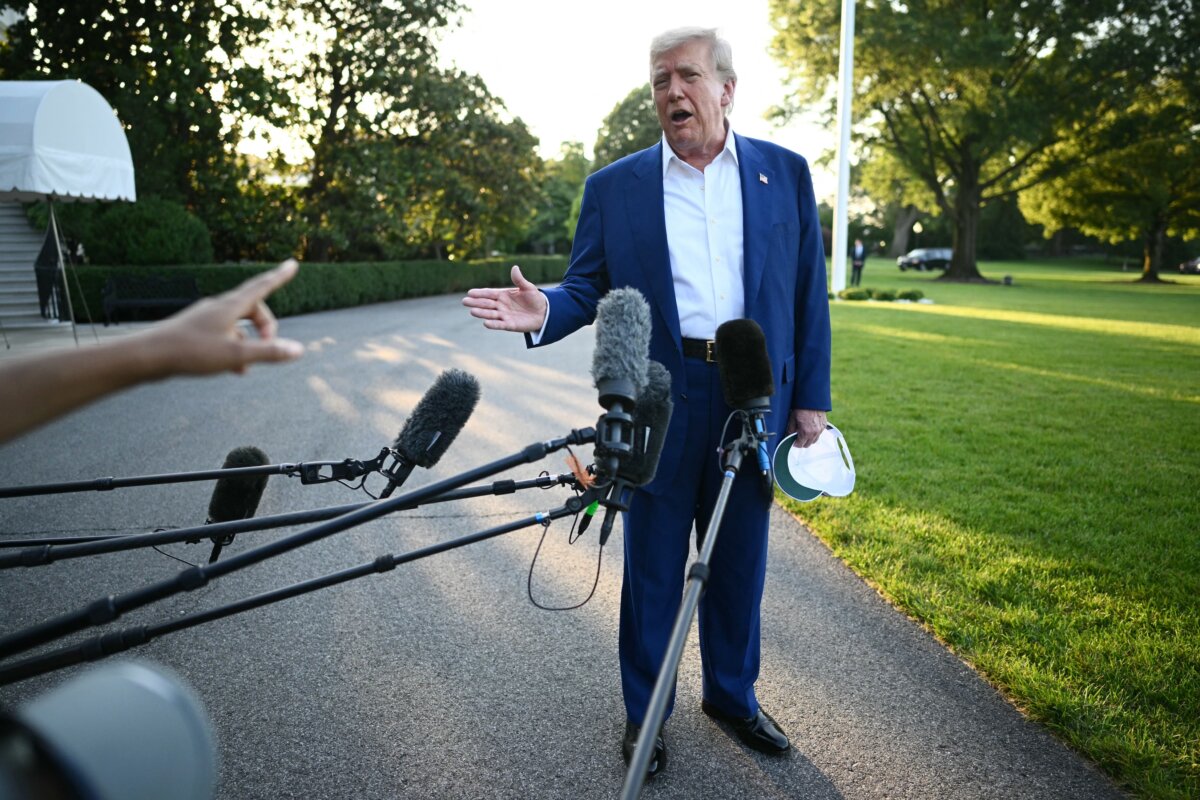
Hours after President Donald Trump announced the deal on Wednesday, both sides accused each other of violating the agreement.
Trump on Wednesday publicly scolded both countries for breaking the truce and called Israeli Prime Minister Benjamin Netanyahu. After the call, Israel agreed to stop further attacks, keeping the cease-fire in place.
The stunning events came not long after Iran launched a largely symbolic retaliation against the United States by striking itslargest military base in the Middle East on Monday.
Iranian authorities said that the attack was retaliation for the United States’ bombing of its uranium enrichment facilities over the weekend.
U.S. officials said Iran launched 14 missiles toward the Al Udeid Air Base in Qatar, one for each bomb dropped by the United States on its nuclear facilities.
President Donald Trump wrote on social media that Iran had given Washington advance notice of the attack and that all missiles were intercepted or else missed their target.
Iran’s attack against Al Udeid is nevertheless a historic moment, as it marks the first time that a foreign power has directly targeted the base in Qatar, which normally houses thousands of U.S. military personnel, dozens of aircraft, and vital logistical command units.
Al Udeid is technically a Qatari base but has been the nerve center for U.S. operations in the Middle East since the early days of the Global War on Terror.
The sprawling facilities serve as the largest U.S. military base in the Middle East, and grant the United States unparalleled power projection capability throughout the region.
Since 2009, Al Udeid has also served as the forward headquarters of U.S. Central Command, which oversees U.S. military operations throughout the entire Middle East.
The base is therefore a target rich in symbolic value, even if the Iranian attack achieved no immediate strategic benefit.
Also notable was Iran’s decision to attack the base with ballistic missiles rather than much cheaper and more attainable systems like one-way attack drones.
A U.S. defense official said in an email to the The Epoch Times that Iran used short and medium-range ballistic missiles against the base, and that the Pentagon was closely monitoring the situation for any new developments.
The defense official said that there were no reports of U.S. casualties in the hours following the attack.
Likewise, Qatar’s foreign ministry said that all missiles had been intercepted, and that the small Gulf nation now retained the right to retaliate if it so chose.
The ministry said that the government there considered the missile launch a “flagrant violation of the sovereignty of the state of Qatar, its airspace, international law, and the United Nations Charter.”
“We affirm that Qatar reserves the right to respond directly in a manner equivalent with the nature and scale of this brazen aggression, in line with international law,” the ministry said in a prepared statement.
Leaders throughout the Middle East condemned the attack, with officials in Bahrain, Egypt, Saudi Arabia, and the United Arab Emirates calling for Iran to deescalate and avoid further hostilities.
Iran’s Supreme National Security Council attempted to contain the fallout in relations, issuing a statement saying that the attack targeted facilities far from civilians and that Tehran was “committed to preserving and continuing its warm and historic relations with Qatar.”
Trump thanked Qatar for its role in countering the attack, and to say that he hoped Iran and Israel could now work to wind down their growing conflict.
“Perhaps Iran can now proceed to Peace and Harmony in the Region, and I will enthusiastically encourage Israel to do the same,” Trump wrote.
—Andrew Thornebrooke
BOOKMARKS
Iran’s Supreme National Security Council is considering blocking the Strait of Hormuz, a key gas and oil route in the Persian Gulf. U.S. officials are warning Iran that the move would be a misstep, with Secretary of State Marco Rubio calling it “a massive escalation that would merit a response not just by us but from others.”
The Supreme Court has decided it won’t dismiss a voting rights lawsuit brought against Virginia by two convicted felons. The pair argue their crimes were technically not felonies at the time when Virginia was readmitted to the Union in 1870, and therefore shouldn’t disqualify them from voting.
China usually promotes a group of generals every year before Army Day on Aug. 1, and this year the world is watching to see if the longstanding practice continues. There is speculation that Central Military Commission vice chair Zhang Youxia has wrested control of the military from President Xi Jinping.
British Health Secretary Wes Streeting says the country’s nationalized healthcare system doesn’t have the budget to implement its newly-passed assisted suicide law. “Even with the savings that might come from assisted dying if people take up the service—and it feels uncomfortable talking about savings in this context to be honest—setting up this service will also take time and money that is in short supply,” he said on social media.
The Supreme Court will temporarily allow Donald Trump’s administration to deport illegal immigrants to a country other than their native land. The High Court’s order reverses a block from a lower court while the case is still working its way through the system.
—Stacy Robinson







