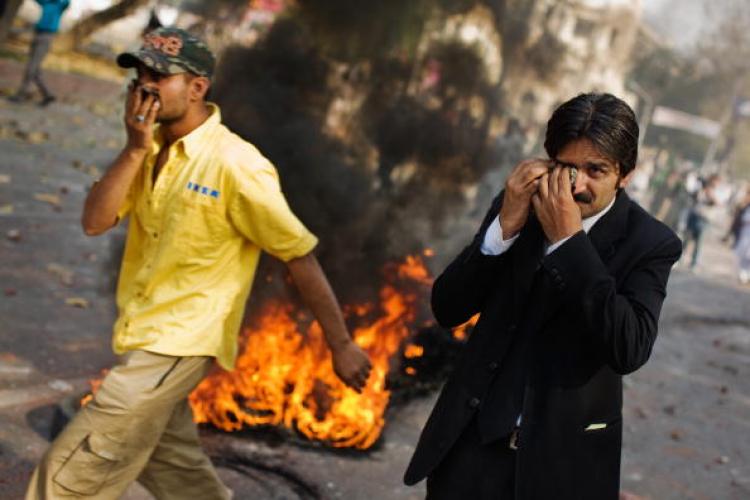
ISLAMABAD, Pakistan—On Sunday evening, lawyers, members of various political parties, and activists from Lahore boarded buses to the twin cities of Rawalpindi and Islamabad, despite clashes with the police. Their final destination—Constitution Avenue in front of the Parliament Building in Islamabad, where they are determined to stage their sit-in, until their demands for the reinstatement of sacked Supreme Court Chief Justice Iftikhar Muhammad Chaudhry are met.
In the hours before leaving Lahore—the hub of the lawyers’ movement—lawyers, Pakistan Muslim League-Nawaz (PML-N) party members, human rights activists, and other supporters of the movement for an independent judiciary clashed with police outside the Lahore High Court.
Police attempted to prevent marchers including Aitzaz Ahsan, lawyer and founder of the lawyers’ movement, from leaving the Lahore High Court.
The police had orders to use violence to keep people from participating in the march and from leaving Lahore. Some of the protesters responded to the harsh treatment by throwing stones at the police.
After hours of attempting to control the crowds with teargas, batons, and physical force, the police let the protesters proceed, including Ahsan and others being held in the high court building.
“After the police exhausted their tactics they were at a loss as to what to do,” said Anwar Kamal, president of the Lahore High Court Bar Association and one of the coordinators of the march, in a phone interview, moments prior to descending upon a bus headed for Islamabad.
Though the impetus for the lawyers’ movement comes from the indignation of lawyers at the firing of Chaudhry in March 2007, by then president Pervez Musharaf, the movement is strongly backed by political parties, and various segments of Pakistani society.
According to a report on Aaj TV Online, Deputy Attorney General of Pakistan Abdul Hai Gilani resigned from his post in protest against the violence inflicted on the protesters in Lahore.
In another report, the very popular humanitarian, Abdul Sattar Edhi, founder of the Edhi Foundation, which is solely committed to the cause of helping the poor, joined the protests and voiced his full support for the goals of the lawyers’ movement and the people of Pakistan.
“The civil society not only supported the long march, but has suffered police brutality for it,” said Kamal.
Asma Jahangir, renowned international lawyer and chairperson of the Human Rights Commission of Pakistan, told media that she would travel to Islamabad at any cost.
Interior ministry chief Rehman Malik has said that the marchers will not be allowed on Constitution Avenue in Islamabad, citing threats of terrorist attacks.
The lawyers are upbeat and hopeful as they head to Islamabad, but also uncertain of what to expect, says Kamal.
“We condemn the actions of the government; the government has overreacted. We [lawyers] have always been peaceful and non-violent.”
Yasser Iqbal in Lahore and Aysha Haq contributed to this report.