
“When working on behalf of people and communities living in poverty and using taxpayers money, we have a duty to ensure that our efforts bring about the maximum impact in addressing poverty and injustice,” said Hans Zomer, Director of Dóchas, the umbrella association of Irish development NGOs.
Non-governmental organisations (NGO's) across the globe are coming under added pressure with resource cutbacks in the face of growing demands coupled with calls for greater efficiency, which often results in exceeding staff tolerance levels for independent civic actions.
According to Dóchas, “The global economic crisis is forcing development NGOs to ask difficult questions of themselves and to demand even higher standards of conduct from their staff and volunteers.”
Jan O'Sullivan, Minister at the Department of Foreign Affairs, opened the conference. In her address, the Minister said that just before the conference a memorandum of understanding had been signed between Irish Aid and Dóchas, which the Minister claimed was “another step in the Dóchas collaboration with Irish Aid.”
The Minister said that the theme of the conference did not just focus on how effective organisations are but how effective they could be, and was thus was absolutely appropriate in the current times.
The Minister said that it was not just NGO's that were facing demands on resources and efficiencies, but that her own government was subject to similar demands.
“We have to be able to say to people, what it is that we are doing? We have to constantly and vigorously examine why we are doing what we are doing … and how we spend the money that is either given to us as government by the tax payers, or donated to organisations.”
Minister O'Sullivan said that it is vital that the trust that Irish NGO's have gained be maintained. Constant re-examination would help to maintain this trust, said the Minister.
She added that it was essential that we also demand the same efficiencies and examination of the countries that our NGO's partner with.
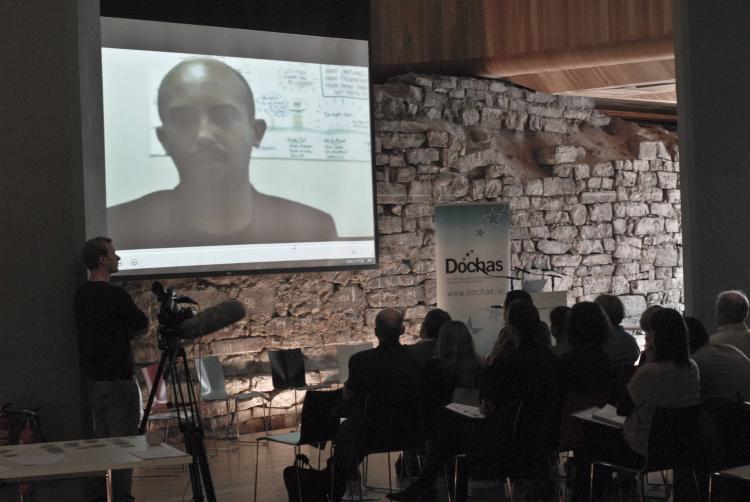
A keynote speech was given by Netsanet Belay, Director of policy and research, Civicus, via a YouTube video.
He said he was “humbled and honoured” by the opportunity to address the conference virtually.
With respect to the challenges that lay ahead for NGO's and civil society operations, Mr Belay said, “In many countries around the world civil society operations exist today in a state of heightened volatility and flux, and the challenges they are facing are exacerbated by newly changing economic and political conditions.”
A triple whammy of issues is to blame, he said. Funding cutbacks, an increase in services of civil society, and restrictions in fundamental rights of expression, association and assembly were the triad of issues highlighted by Mr Belay.
The trend that Mr Belay described as “militarising and politicising development aid” also concerned him.
“Some donors are increasingly concentrating both humanitarian and development aid on countries and regions seen to threaten their own immediate security interests while neglecting other equally insecure, impoverished conflict-affected places.”
According to Mr Belay, Iraq, Afghanistan and Pakistan are the countries most favoured for this type of practice.
“Both in Europe and North America, aid policy programmes are skewed by donor foreign policy, and national security interests are beginning to be formally embedded in international development strategies and humanitarian practices," said Mr Belay.
Lorna Gold, Advocacy Manager at Trócaire, concurred with Mr Belays sentiments that there is currently a global clampdown on civil society movements.
Ms Gold highlighted her concerns with the latest “value for money approach” being advocated for aid organisations. “Where does partnership fit in the value for money efficiency approach?” asked Ms Gold. Who believes that partnership, which leads to empowerment, may be discarded if new practices are insisted upon by government, who fund many NGO's?
“If you empower a community, then you are no longer in control,” explained Ms Gold. “You hand over the power and in a sense the rest is really about you supporting and working in partnership.”
This approach also involves risks, said Ms Gold. “If we really want to bring about change, failure is inevitable,” she said, though according to Ms Gold, our systems don't allow for failure.
Ms Gold said that as a sector, NGO’s seem to be losing the language of rights. “Maybe we need to really rethink that and return to the language of rights and empowerment.”







