
|Video Courtesy of NTDTV |
The Iranian parliament announced Thursday that it would carry out a review of the country’s ties with the International Atomic Energy Agency, without saying what measures would be taken.
Alaeddin Boroujerdi, the head of parliament's influential National Security and Foreign Policy Committee–which will carry out the review–added that the sanctions were “political, illegal and illogical.”
Foreign Ministry spokesman Ramin Mehmanparast was quoted by Associated Press as saying that the sanctions were not constructive and would “destroy the grounds for solving the current crisis.”
The Islamic Republic has been locked in a dispute with the West over its nuclear program. The country’s leaders insist the program is for civilian purposes but foreign governments believe the country is attempting to develop a nuclear weapon.
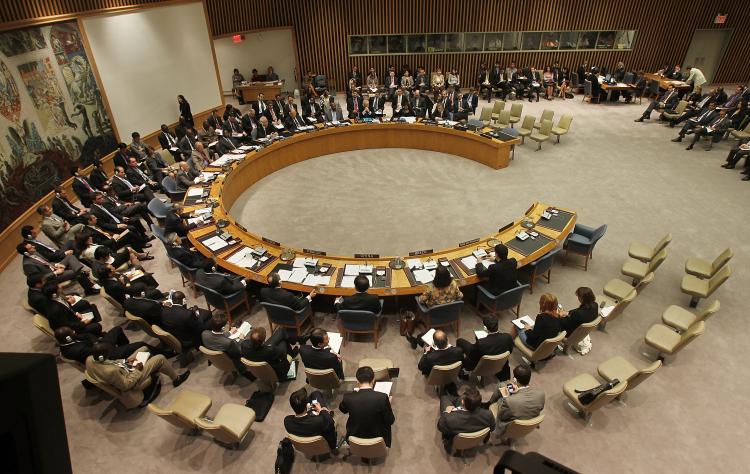
On Wednesday, the U.N. Security Council approved a fourth round of sanctions against the country. Critics say the measures fell far short of the “crippling sanctions” the U.S. vowed to take against Iran should diplomacy fail over the country’s nuclear program.
For instance, the sanctions do not affect the country’s oil exports, which are a key source of revenue for the Islamic regime.
It is believed that even tougher sanctions against Tehran were watered down in order to ensure the support of veto-wielding Security Council members China and Russia–who have close economic ties with Iran.
During a visit to Tajikistan, Ahmadinejad said the Security Council resolution “isn't worth a cent for the Iranian nation." The sanctions include a freeze on the assets of 40 organizations, 15 of which are linked to the country’s Revolutionary Guard. Companies involved in ballistic missile activities, as well as the Islamic Republic of Iran Shipping Lines would also be affected.
President Barack Obama said the measures impose “the toughest sanctions ever faced by the Iranian government." However, the Iranian Commerce Minister Mahdi Ghazanfari said Thursday that the country would find “new ways” for economic links with other countries.
During a visit to Beijing, he said that “there are countries that are pursuing economic cooperation with Iran and enjoy opportunities."