A letter addressed to Secretary of State Hillary Clinton, sent on Feb. 23 following a press conference, says the Global Internet Freedom Consortium (GIF) is being singled out. GIF develops and disseminates anti-censorship technologies for Internet users who live under oppressive regimes that curtail and control Internet use.
The letter, which is signed by 40 individuals and organizations, all of whom are pro-democracy advocates, alleges that GIF has been the object of religious prejudice by DOS. The majority of signers are from China, with others from Syria, Cuba, Cambodia, Laos, Vietnam, and North Korea.
The failure to fund GIF despite it’s successes, according to the letter, is based on the fact that the owners and employees of GIF are Falun Gong practitioners. Falun Gong is a spiritual practice that is persecuted by the Chinese communist regime.
GIF's prowess as a tool to break through Internet blockades has been tested in recent months. During violent attacks on post-election demonstrators in Iran, Iranian users of GIF software were able to circumvent Internet restrictions and post videos, photos, and messages about the crackdown.
To support the Iranian post-election demonstrations, GIF lifted the limit on traffic. It quickly spiked to nearly seven fold during the week of June 13-20, 2009, or nearly one million Iranian web surfers, according to GIF.

Supporters at the Feb. 23 press conference say that more funding could help GIF expand the amount of traffic their servers can handle.
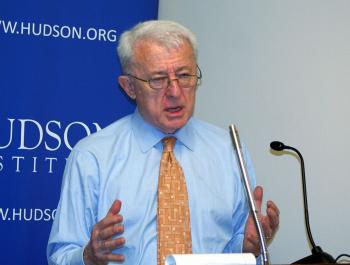
Michael Horowitz, senior fellow at the Hudson Institute, said that the GIF servers crash if they get more than 700 million “hits” per day or about one and half million users.
“Within a matter of months [it would] tear down the firewall of many of the dictatorships in the world. Overnight in Iran,” said Horowitz.
In a Jan. 21 speech on Internet freedom, Secretary Clinton’s made the case for “a single Internet where all of humanity has equal access to knowledge and ideas.” She said unrestricted access to the Internet is a U.S. foreign policy priority.
Former U.S. ambassador to Hungary Mark Palmer said he was outraged that Secretary Clinton’s extremely long speech about a free Internet only contained two sentences on “circumvention tools,” when GIF presents an “unprecedented opportunity to bring freedom to the Chinese people and the Iranian people and many other peoples.”
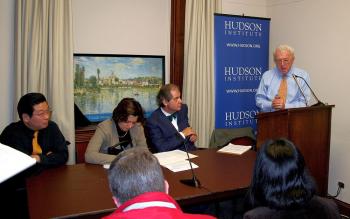
For the current fiscal year, Congress has appropriated $30 million to directly support counter-censorship programs and technology like GIF. Palmer noted that language was stripped out of the bill that would have required the applicants demonstrate a large user base in closed societies and have experience in Internet circumvention.
DOS would not answer specific questions about funding decisions when asked by The Epoch Times. David Miller in the Public Affairs Office, East Asia and Pacific Affairs said that DOS “supports a number of organizations that are committed to expanding access to the Internet.” They added that currently funded organizations were awarded the money through a “fair and competitive process.”
With reporting by Gary Feuerberg.