
| Extremism in varying degrees is now evident in many peoples’ lives. This is what Epoch Times reporters from Pakistan to New Zealand discovered when they asked locals: “Do you see any worrying signs of extremism around you?” |
|
Yes, there are very apparent signs and incidents that show intense extremism and a lack of tolerance in our society. The reasons, in my opinion, are, the poor situation of law and order over the last few decades, and the role of the media, which ignites peoples’ emotions rather than showing a more tolerant image of the individuals or society, where needed. The poor law and order situation was highlighted by several recent incidents in which some culprits and even mere suspects were brutally murdered by crowds. Media’s role in supporting anarchy cannot be ignored in terms of the rising signs of extremism. |
|
Fortunately, I do not see rescue teams running around, but I do see politicians riding the wave of cultural and religious differences between people in order to gain power. Extremism is on both sides of the equation: on one side, the majority tries to stay homogenous, and torture and assimilate the minority; on the other side the minority needs to identify itself. In order to be on the safe side, we have to keep both parts in equilibrium, and understanding is required. People basically have the same desires all over the world: having food and family, and being happy. … In history, those who survive are the ones who change and move. |
|
In the city where I live, there is no problem. But in bigger cities, yes, there are problems of extremism with the immigrant citizens, caused chiefly by ignorance of other cultures, and religious and cultural differences. Many immigrants do not want to adapt to the society where they live at present; it is an attitude problem. |
|
I see extremism regarding the position of women belonging to the culture that has to wear burqas. For example, they have no right to speak; they have to obey men; they have no freedom. When they’re wearing the burqa, it is not known whether the person is a man or a woman because you can only see the eyes. |
|
Every day in the media you can see elements of extremism. Most recently, Norway* has been in focus, which is a country, like Sweden, not associated with terrorism. There are also extreme groups in both the right and left, Christianity, Islam, environmental organizations, and elsewhere. *Last month a Norwegian right-wing extremist bombed government buildings and shot and killed youth at a summer camp in the country. |
|
I’m sure there is, but I don’t see it. It’s kind of hard to ignore. There are homegrown terrorists—that’s a fact. But so far today, I haven’t seen anything suspicious! |
|
I do think there is extremism; I think you only have to listen to talk back radio. It reeks of extremism, stirred up by the shock jocks. Their idea is to stir up trouble. I think it is alright to disagree with Julia Gillard [Australian prime minister], but there is certainly a strong violent streak to it now—to more than disagree[ing] with her, to take her out into the sea and throw her into the sea in a bag, and that sort of stuff. We should violently take over the government now. That’s extreme in my book. |
|
I see it more on the Internet than anywhere else. I think it’s because people there can be quite anonymous behind the keyboard. And you are sort of seeing a lot more message boards with racist and homophobic views that you probably wouldn’t see in the free press. For instance, New Zealand dating has message boards and there are some political threads in there that you can get some quite extremist views at times. It’s anonymous. It’s sort of abusing free speech, I suppose. It’s mainly negative. I usually stay out of it; just read it. |
|
In the environment I work in—with high-school students—there are no signs of extremism, but I do notice intolerance in young people. This is because they are sincere; they wish for an ideal world, and they request perfection from others. But even this kind of intolerance of theirs is not a general phenomenon. |
|
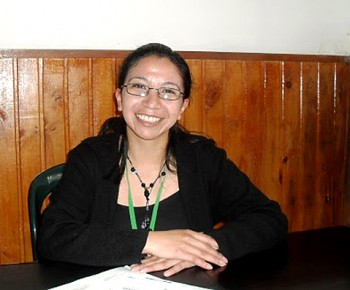
Yes, I see one sign of extremism. For example, in my work, there is too much racial discrimination; there is no respect. They mock all the clients who come to buy supplies for computers, and also those who work with us. I think they had some personality issues in their childhood or in their infancy. |
|
Maybe in some cities the way we dress isn’t a sign of extremism, but in my city it would be a sign of extremism if my boss dressed like a hippie. But … I don’t really see any sign of extremism in the people around me. They are very frugal. To go to the extreme is not good, and this is one of the biggest causes of conflict in small societies. |





Look for the Global Q&A column every week. Epoch Times correspondents interview people around the world to learn about their lives and perspectives on local and global realities. Next week’s global question: “What do you like to know about a person you meet for the first time?”