
Equal rights, forming an international body, and no one country to have absolute jurisdiction in protecting the Arctic is what Epoch Times reporters from Canada to New Zealand discovered when they asked locals:
 Vancouver, CanadaSarah Hennekens, 20, Student That was a big issue on the ship I was on while I was on the Students on Ice program. That’s an important question to the issue of global warming. Who owns the Arctic will have jurisdiction over what happens to it. Canada has the orientation to do so, but the way we’ve dealt with the environment, we shouldn’t have jurisdiction. I think it should be an international thing. Almost like a United Nations thing—just because it’s so prominently significant in the shifts that are occurring in the world right now. Note: Students on Ice is an award–winning organization offering unique educational expeditions to the Antarctic and the Arctic. |
 Dubai, United Arab EmiratesJaneesh Karammal, 32, IT Engineer All of those who share the border should have equal rights to it and should make a law that they do not use the resources from that area for commercial purposes—other than for research and protection of the same area—because it is believed that 25 percent of the world’s resources of oil and gas lies under the Arctic Ocean. |
 Puerto Montt, ChileFrancisco Villaroel, 22, Student and Part–Time Worker It’s like for Antarctica that no country should have sovereignty or absolute jurisdiction. The Arctic should only be for scientific research. |
 Itatiba, BrazilSheyla Desirée Flaibam, 63, Retired The law says that everyone has the right to control up to 200 miles from its coast—equivalent to 370 kilometers. The dilemma is to determine where the coast starts. But there is a deadline for the request, and therefore, there is a race game, so Russia has stepped forward. The dispute over the Arctic territory is fierce, but my guess is Russia. |
 Medellín, ColombiaEdgar Restrepo Rubio, 60, Journalist For now they have equal rights, all initial countries, and later, those who come into the region. The Arctic Ocean is a region teeming with life, is rich in fauna, flora, and in minerals such as gold. It is in a key position because it shortens distances between countries and avoids having to cross the Suez Canal or go around the cape, for example, between Tokyo and London. |
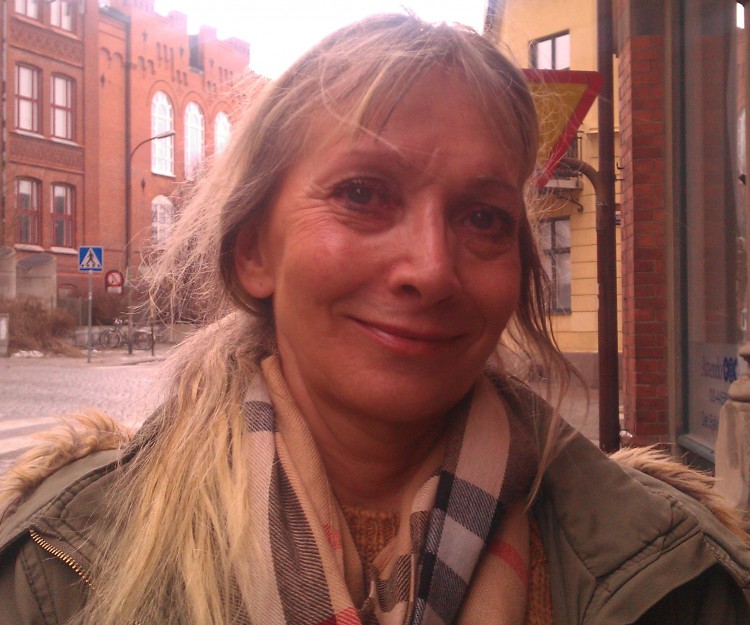 Lund, SwedenAnita Borisova, 26, Store Manager I am not so familiar with this issue, but in my opinion it should be Sweden, because I live here, and because, according to my understanding, Sweden has good environmental politics, and thinks about people a lot. Sweden is one of a few countries that consider the person and not only the mass, compared to Denmark, for example—I worked there for five years. The small person is not so important there; you don’t have so many rights as an employee. The team is more important instead. I would definitely not choose USA or Russia as owner for the Arctic. They already have so much power in our world. So I would say Sweden as first choice and maybe Denmark, or Finland. |
 Hamilton, New ZealandAaron Maisey, 26, Barista I want to say that no one has the right to own it, but it is everyone’s responsibility to look after it. Historical precedent shows that free market entrepreneurs don’t have the moral compass to know when to stop harvesting resources. And without thorough regulation and an international authority capable of taking action, they will be able to continue harvesting the resources unsustainably. |
 New York, USARichard Reagan, 72, Retired President of a Wildlife Foundation I would say no one. The penguins! Because I think as the polar ice melts, they’re losing their habitat. It’s caused by all those countries and over–industrialization, global warming. Now it’s man–made—it used to be ice ages every 40,000 years, now it’s accelerated by what we’re doing. The wildlife is suffering, and they have indigenous rights as far as I’m concerned. That land doesn’t belong to anyone, and I know ships have to go through there, but no one owns it. |
|
Look for the Global Q&A column every week. Epoch Times correspondents interview people around the world to learn about their lives and perspectives on local and global realities. Next week’s global question: “What’s the most memorable taxi ride you’ve ever given?” The Epoch Times publishes in 35 countries and in 19 languages. Subscribe to our e-newsletter. |