

Many people feel that some form of control or oil price manipulation is in operation is what Epoch Times reporters from Brazil to Sweden discovered when they asked locals:
 São Paulo, BrazilRenata Müller, 29, Gas Station Attendant I think it has an influence. In Brazil, it is Petrobras that controls the supply of oil. Even the oil coming from just one company, the price of gasoline at gas stations varies widely. I think the price should be stable with no price changes. |
 Pittsburgh, Pennsylvania, USASteve Mrdjenovich, Architectural Designer It seems like a lot of decisions are made based on who controls the oil. And that kind of gets us into situations that we otherwise wouldn’t want to be in—like wars or different entanglements abroad. I am for more green stuff. … It doesn’t matter who controls it, the countries or corporations; we are controlled by them and it drives our decision making. It is kind of like the tail wagging the dog: We need it [the oil] and they know we need it, so we get into all these situations we don’t want to be in. |
 Dubai, United Arab EmiratesHassan Ouda, 24, Shop Supervisor Let’s say Dubai or the UAE. They have oil here, so they have the right to control the oil or the companies that are working in this field. Dubai is a very rich city like Abu Dhabi. As long as the governments are good, the countries will prosper. They have oil and they use it smartly. For example, my country—I’m not going to mention any name—but in my country, we have oil and we have gas as well, but corruption is also there. So there is oil, but God knows where it is ..! |
 Sunshine Coast, AustraliaJohn Haster, 74, Retired Financial Planner Well companies dig to get the oil out of the ground so I guess they have to have some control. But the problem with some countries, they can manipulate the price of oil, which they do, like Iran and Libya are doing that at the moment. … If too many countries work together they force up the price of oil. This happens with companies in Australia for argument’s sake; the petrol [gasoline] companies seem to be working in unison. [The] Price goes up in one and they all go up at the same time so there is no competition. These are part of the problems. |
 Canary Islands, SpainSergio Naldoni, 39, Private Security Surveillance I’m not sure if OPEC [Organization of the Petroleum Exporting Countries] is the most appropriate organization to take control of the oil oligopoly, or maybe it’s necessary to find another way to do it in this global economy we live in. I think a better solution would be to get to an agreement and establish an international oil trade tax (similar to the Tobin tax). But in any case, this solution would not be free of manipulation, or speculation by private national or international companies. |
 Lund, SwedenJonas Fransson, 37, Post-Graduate Student |
 Ottawa, CanadaDino Soto, Construction Company Owner There are so many private companies that want to jump in and get crazy prices and I think that is ridiculous. I think the government should take control of that, as they take control of the alcohol and similar things so that companies don’t get rich from the people’s money. |
 Paris, FranceRedouane Taoumi, 27, Webmaster They control the supply to maintain a high rate in oil prices. That said, if they do not, the fall in oil prices may cause a large economic and ecological crisis. In my opinion, it is preferable that they control the oil supply albeit at the expense of other countries’ customers. |
 Lima, PeruRonald Véliz, 40, Electrician I think that they should not control the supply of oil because we have seen that this creates a monopoly, and creates conflicts between regions or countries. It has generated many interests, and is very serious for the people. We know that the industrialized world moves on oil. As an example, we have the conflict between the United States and Iraq. I think it was actually the real interest for oil and now we see the consequences.
|
 Bucharest, RomaniaMihai Staiculescu, 70, Retired Engineer But they are controlled, anyway. This is a fact. In America, for example, a great part of its economy is based on controlling this oil supply. Iran survives through oil exports and for the Arabian countries this is their source of income.

Neiva, ColombiaDiego Armando Vargas, 26, Hotel Assistant Well, I think there must always be an agency, be it private or from the state, to control the supply of oil, a resource so important to the world. If this agency did not exist, the economy would be different. This enables better product quality and supply, provided it is monitored. In Colombia, there are many foreign companies that exploit it and Ecopetrol has begun to manage this resource and the needs of other companies that do this work as well. And, as everything else, it has advantages and disadvantages.
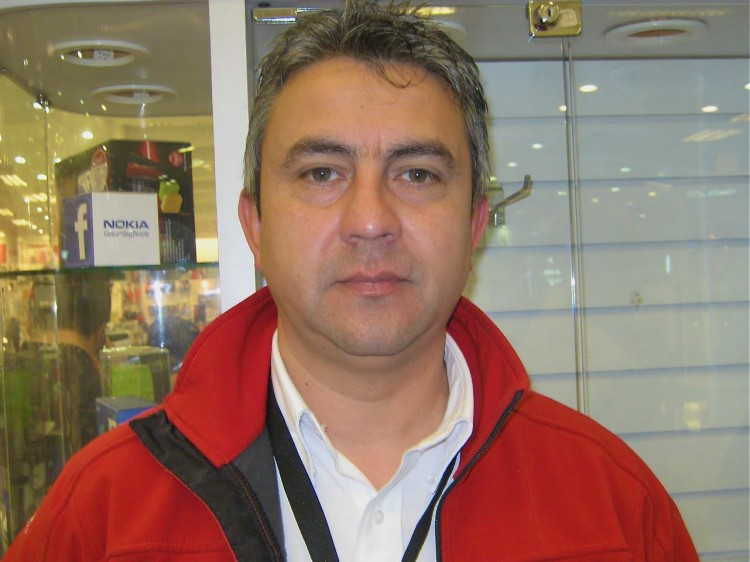
Puerto Montt, ChileJavier Poblete, 41, Salesman Yes, it is important that countries or companies responsible for controlling both the supply and sales, regulating prices, and profits generating taxes, be distributed equally to the development of the users of this precious and limited resource. If it would be otherwise, there would be anarchy that would increase the current chaos in the financial world. Look for the Global Q&A column every week. Epoch Times correspondents interview people around the world to learn about their lives and perspectives on local and global realities. Next week’s global question: “What aspect of recent history has most shaped the current situation in your country?” The Epoch Times publishes in 35 countries and in 19 languages. Subscribe to our e-newsletter. |






