
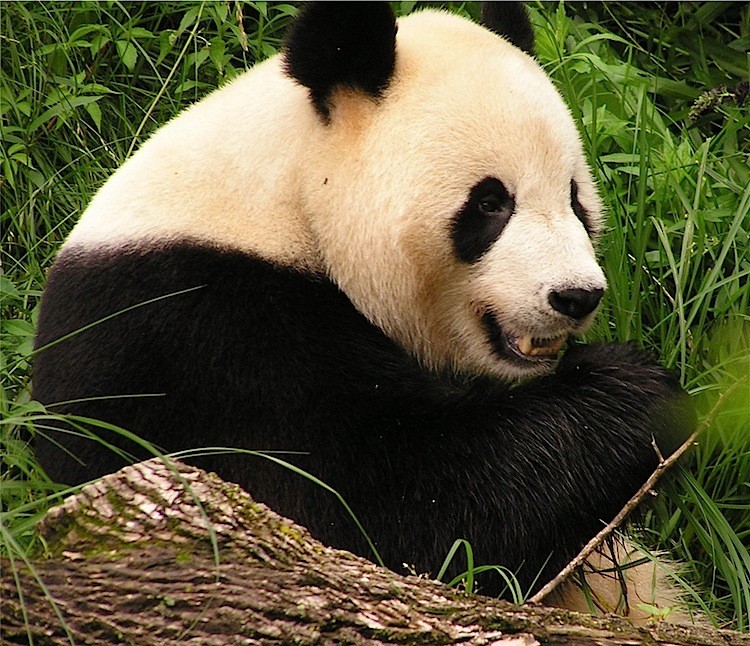
These omnivorous bears ingest up to 12.5 kilograms (28 pounds) of bamboo daily, but their gastrointestinal tracts cannot produce enzymes that herbivores use to break down the cellulose and hemicellulose present in a fibrous plant diet.
Researchers from Beijing looked at fecal samples from wild and captive pandas. By comparing microbial gene sequences with those found in herbivores, they identified 13 different taxa of bacteria similar to Clostridium, which can digest cellulose. Seven of these appear to be unique to giant pandas.
"The high proportion of Firmicutes [operational taxonomic units] found in the gut of giant pandas differs from the findings in previous studies attempting to characterize giant panda gut microbes and is notably similar to that found in herbivorous mammals," the researchers wrote in their paper.
"However, the species richness in the giant panda was lower than that seen in previous work on mammalian herbivores and non-herbivorous carnivores, perhaps due to the panda’s unique bamboo diet and simple digestive system."
By comparing the profiles of an enzyme called glycoside hydrolase with those of other herbivores, the team found that the abundance of enzymes that can digest intermediate carbohydrates in pandas (36 percent) is close to humans (37 percent), and lower than in cows (57 percent).
They also found that the abundance of cellulases and endohemicellulases in pandas was the lowest of the herbivores, suggesting that bamboo is a particularly indigestible food.
However, these bamboo specialists have some traits that would also assist with breaking down plant fibers, such as strong teeth and chewing muscles, plenty of gut mucus, and pseudo-thumbs for grasping bamboo stems.
The study was published online in the Proceedings of the National Academy of Sciences (PNAS) on Oct. 17.