
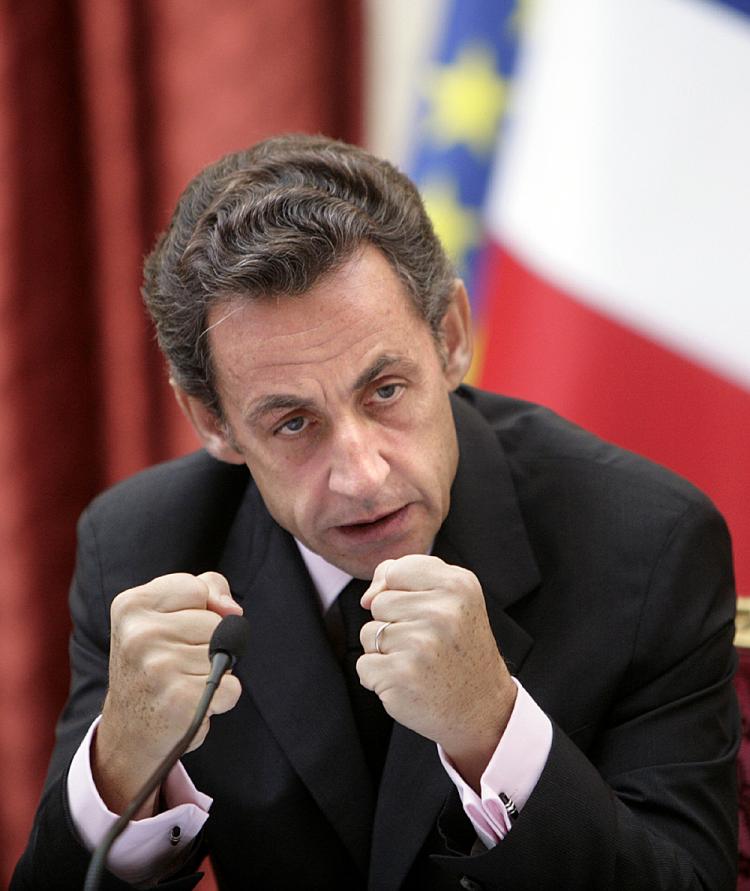
The diplomats’ critique comes as Sarkozy’s whole Mediterranean strategy seems to be crumbling, the French Foreign Affairs minister is apparently unwelcome in Tunisia, and the new French ambassador in Tunisia has had to issue public apologies for his uncouth language after less than one month at his post.
The group of diplomats, known as the “Marly group” after the French café where they first met, published a critique in Le Monde newspaper that parallels a earlier analysis published by Surcouf, a group of anonymous high-ranking military officials. Surcouf criticized what they called Sarkozy’s amateurism.
The Marley group was likewise uncomplimentary. “Europe is now powerless, Africa is leaving us, the Mediterranean refuses to talk to us, China has tamed us, and Washington ignores us,” the group said.
The French diplomats further hammered Sarkozy’s policies saying, “A French WikiLeaks would show how French diplomats have, as did their American colleagues, written notes of criticism. If they had been listened to, many mistakes that can be attributed to amateurism, impulsivity, and short-term media interest, would have been avoided.”
The diplomats also criticized France’s reintegration into NATO in 2009 and alignment with the United States, which leaves the country little space for an independent diplomatic voice.
The group noted other failures of French foreign policy, including the Mediterranean Union project, which was launched by Sarkozy without proper consultation, and ended in complete failure; the Copenhagen Climate Summit, which was allegedly unprepared; and the most recent diplomatic clash with Mexico over French prisoner Florence Cassez.
“Our foreign policy is now being led by improvisation and repeated impulsions. … How could our failures be a surprise?” the group said.
“We are at a time when prefets [regional administrators] think they are diplomats, where “writers” make big plans, where networks of private interests and evening visitors [an allusion to friends of President Sarkozy] are always there—and are listened to.”
The harsh tone of the critique is especially striking for French diplomats who are trained to be low profile and usually prefer softer approaches instead of straight criticism.
This is the first time in recent French history that such a schism between the executive power and the elite of the nation has taken place. The Marly group’s use of anonymity hearkens back to the 19th century, one of the country’s most troubled periods under the rule of Napoleon lll.
Tensions in Tunisia
French Foreign Minister Michele Alliot-Marie will not join the French government’s first visit to Tunisia, officially because she is due for a visit to Brazil, but almost certainly because she is not welcome there after her perceived support of former ruler Zine El Abidine Ben Ali.
The new French ambassador in Tunisia, Boris Boillon, had to apologize for calling a Tunisian journalist’s question “stupid” less than a month after being appointed ambassador. Videos dating from late 2010 have also emerged in which Boillon expressed his support of Libyan dictator Muammar Gaddafi and said Gaddafi called him “son.”
Mentored by Sarkozy, Boillon has the same direct and offensive style, with a comparable affinity for visible luxury watches.
With the Mediterranean leaders from whom Sarkozy sought support for his Middle East policy having now been ousted by revolutions, and as Sarkozy’s promise to make human rights his first priority being thus far no more than words, French diplomacy appears to be replaying the French soccer team’s 2010 show: large claims, little vision, and no results.