An award-winning documentary shows life in Haiti under reconstruction after an earthquake devastated the country two years ago. The film “Goudou Goudou, The Ignored Voices of Reconstruction” gives voice to the Haitian people themselves, and shows that little has changed since the earthquake.
The Web documentary, originally released in 2011, is available in English on their website www.goudou-goudou.net/en/webdocumentary for the first time.
On Jan. 12, 2010, an earthquake hit the island nation of Haiti, causing massive damage to buildings and infrastructure in and around the capital of Port-au-Prince. Hundreds of thousands died and more than a million became homeless.
“Goudou Goudou” is what Haitians call the earthquake that has devastated their country and their lives and caused massive suffering. It is also the title of the documentary by Benoit Cassegrain and Giordano Cossu, made with the support of Reporters Without Borders and other organizations, and shot about 11 months after the quake.
Following five young radio reporters from local radio stations, the film highlights several aspects of life under reconstruction in Haiti and attempts to explain, “why so little progress has been made,” according to the film directors.
“The relationship with the local journalists which participated in the film has been truly enriching. Each country should be told by local voices, especially in such a complex situation,” wrote Cossu in an email from Haiti reflecting on the project on the eve of the two-year anniversary of the quake.
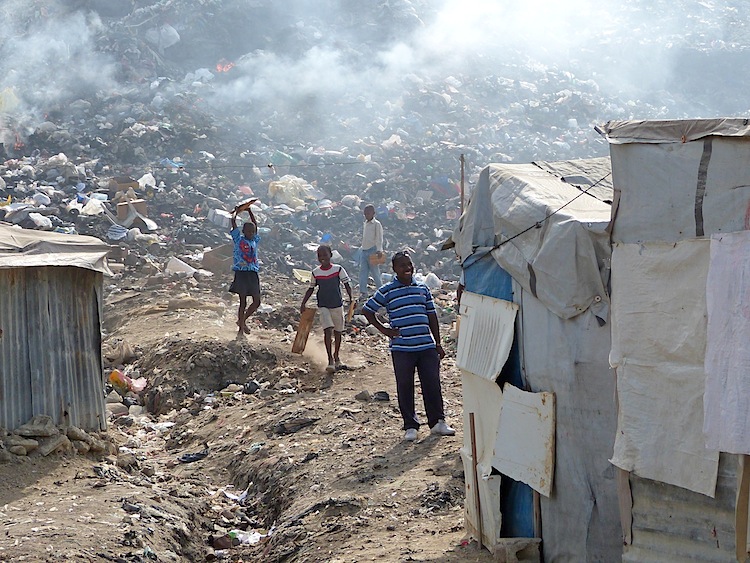
Orpha, one of the reporters, showed the impact the cholera epidemic had on the residents of a slum near the capital. For a radio series, Ralph, another journalist, reported from dozens of makeshift camps and invited their inhabitants to speak. He found many shared problems, including lack of clean water, starvation, floods, and security issues.
The film raises difficult questions on the role of NGOs during the reconstruction in Haiti and the impact of foreign aid on people’s lives. Eloge, another radio newsman, asked locals about their opinion on the work of the numerous international aid organizations that have descended on the country following the quake, and the outpouring of donations worldwide.
Eleven months after the quake he found much disappointment and apprehension regarding the NGOs and concluded that despite their work, “the living conditions in camps … have not changed … and Haiti is sinking deeper into poverty.”
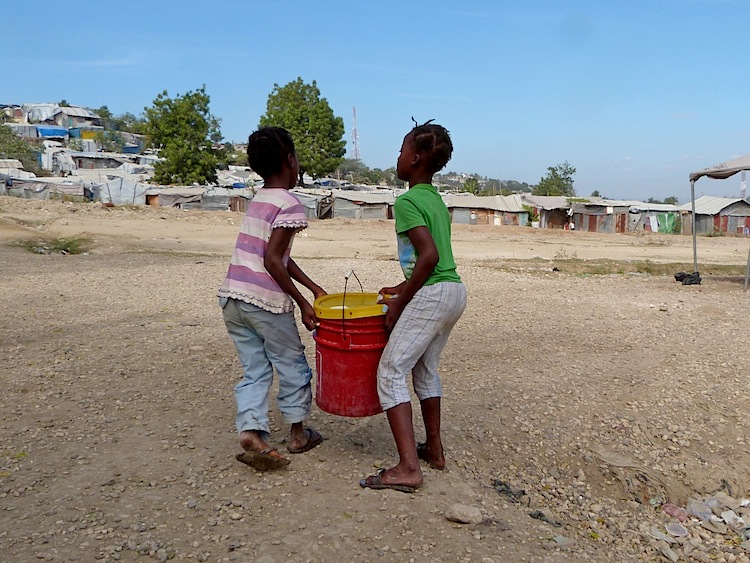
Eloge demonstrates problems resulting from a lack of coordination among the NGOs, and from programs that are “like badly tailored clothes” since they don’t take into consideration the needs of the local people. The reporter talked to a group of women who are being paid by an NGO to sweep a dirt road, while a toilet block for several thousand people nearby is falling apart. Instead of aid that is channeled into long-term sustainable action, like infrastructure and farming projects, he argues that many of the programs are not only inefficient and don’t really improve the situation, but also create economic dependence. “When you are overrun by NGOs, you remain in poverty,” is Eloge’s assessment.
Many of the realities portrayed in the film have not changed much since the earthquake, despite Americans having donated $1.4 billion to charities for relief work.
“Haiti has been largely forgotten. Most people in Europe think that most problems ‘must have been solved by now, with all the money that has been donated.’ Few realize that reconstruction has not really started,” commented Cossu on Wednesday.
Moreover, Cossu points out that cholera is still a major killer and over half a million people still live in camps.
The cholera epidemic is seen as the world’s worst existing case, and is still killing around 200 Haitians each month according to a statement by Brian Concannon, director of the Institute for Justice & Democracy in Haiti.
Political uncertainty and widespread poverty compound Haiti’s problems and some officials fear it has become an NGO state with up to 12,000 international nongovernmental organizations running key sectors in the country, such as education and health care.
The film, however, also shows some signs of hope.
Roberson, another radio journalist featured in the film, discovered an emerging wave of young artists who want to contribute, via art, to the rebuilding of their country.
And 21-year-old reporter Mc Haendel visited sites of demolition in Port-au-Prince and interviewed people making a living breaking up concrete to get at the valuable reinforcing iron hidden within it. He has found a new spirit of solidarity among the workers and concludes: “The reconstruction mustn’t only be physical. At the core there must be a change of mentality. … I want the best for you. You want the best for me. We help each other and here is the new Haiti.”
The film “Goudou Goudou” offers authentic perspectives on a country having survived a catastrophe, and provides fresh insights into many of the issues that persist in Haiti today.