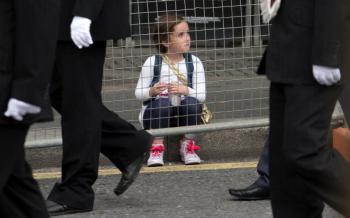

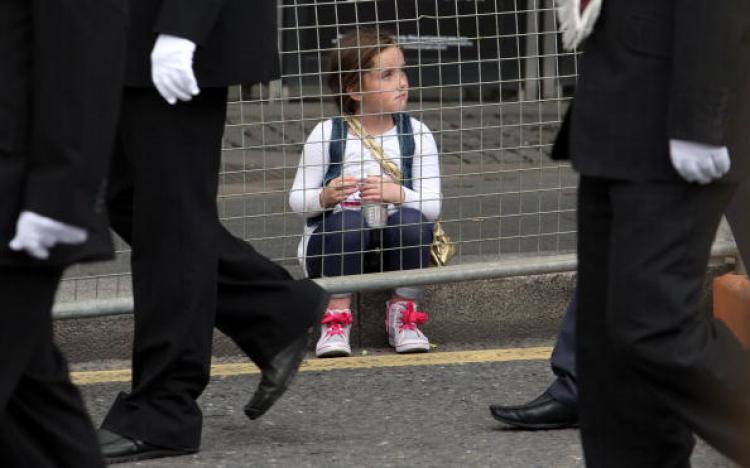
Brutal violence has often been sparked by Apprentice Boys and Orange Lodge marches through the city in the past.The second largest city in Northern Ireland, Derry was on the front line of the troubles between republican Catholics and unionist Protestants. Walls and physical barriers still segregate the two communities.
Saturday’s commemoration is the largest in the Protestant calendar and marks the end of the Siege of Derry in 1689, which began when 13 apprentice boys locked the door of the city to prevent the army of the Catholic King James II from advancing.
The ending of the siege has been celebrated by marches near the old city walls for over 300 years. The continuation of this tradition has inflamed Catholic/Republican sensibilities, especially since the 1970s.
On the Friday before the marches this year, it was known that Republican prisoners in Maghaberry jail were going to make a protest about their living conditions. To maximise the effect, they intended to hold the protest on the day of the Apprentice Boys march.
The Maghaberry dispute had been going on since Easter Sunday when 28 republican prisoners barricaded themselves in the prison canteen and smashed toilets in their cells. They complained of excessive strip-searching and controlled movement.
There have been a series of marches to highlight the prisoners' cause. According to the BBC, the previous weekend, about 100 protesters marched from west Belfast into the centre of the city.
However, a group consisting of the Irish Congress of Trade Unions, Creggan Enterprises in Derry, and the Dialogue Advisory Group helped the inmates air their grievances and believe something would be done. No details of the negotiations have been released but the prisoners called off their protest.
Tension remained as three children were slightly hurt and shocked as a bomb exploded a few streets from a school in Lurgan near the Northern Ireland capital, Belfast, on the day of the marches.
The bomb seems to have been intended to blast police officers who were to put barriers up to prevent the public from approaching another site nearer the school which they were led to believe harboured a bomb.
Later, in the evening, police studying the site had petrol bombs thrown at them by youths. No one was injured.
Twelth Anniversery of Omagh bombing
A car bomb was detonated outside a police station in Derry on August 3rd this year. Many shops on Strand Road still show the wreckage caused by the 200-pound bomb which also damaged the police station. The shops may have to be demolished and owners do not know when they can return and are disappointed at the custom they will lose.
One man has been arrested in connection with the bombing. Another man is also in custody, even though his arrest chart, according to the Irish Times, deals with events after the blast.
Dissident Republicans are thought to be responsible as the strategy of placing the device has parallels with the Omagh bomb of 1998. This bomb, on August 15th almost 12 years ago to the day, killed 29 people and the warning concerning the location of the car bomb was confused.
It is now believed that the 300 pounds of fertiliser-based explosive in Omagh was intended to be placed outside the courthouse, a symbol of British rule, and that the purpose was mainly to cause damage to property.
Parking a car in front of a courthouse would have been impossible in the years before the Good Friday agreement of 1998. With the help of the British and American governments, all political parties of Northern Ireland agreed an end to hostilities and a move towards democratic rule.