
Details of China’s catastrophic 1970 Yunnan earthquake have been kept hidden from the public for nearly two decades. A survivor shares his memories and personal investigation.
The magnitude 7.8 Tonghai earthquake in China’s southwestern Yunnan Province on Jan. 4, 1970 killed more than 15,000 people.
Yang Yang was seven years old when the earthquake hit. In August 1995 he started an independent investigation, traveling around the disaster area, trying to collect photos and historical materials, and interviewing many victims.
In his article “My Experience of the 1970 Tonghai Earthquake,” published in Southern Weekly on March 17, Yang Yang said seismologists observed strange phenomena before the earthquake, and during the earthquake villagers thought a nuclear war had been unleashed. They were warned by authorities to keep silent about the devastation, and, as a consequence, they did not receive any domestic disaster assistance or international aid.
The following are excerpts from Wang Wang’s article, presented in the first person:
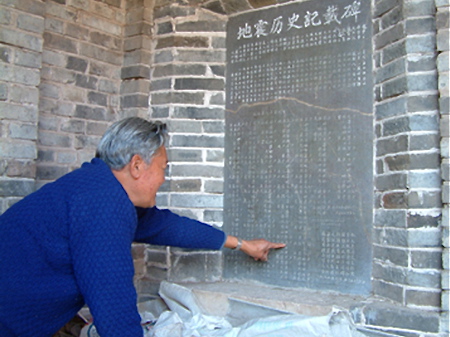
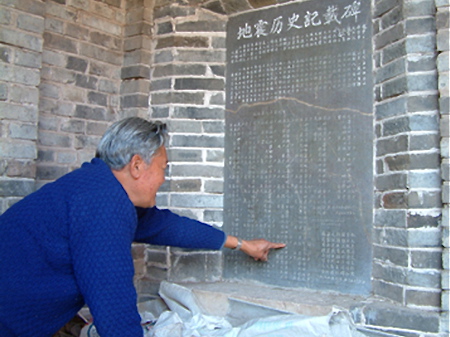
Chinese authorities consider the death toll of any natural disaster a state secret. The ban [on the Tonghai earthquake] was lifted in 2005, after which I read the statistics of the earthquake damage dated June 15, 1970 in the Yunnan Provincial Archives, and I saw the following figures:
The death toll was stated as 15,621. In 836 households, all family members were killed; 5,648 people were seriously injured; 166,117 houses had collapsed; 261 orphans and elderly were left [without kin].
The document and statistics had been classified as “top secret” for more than three decades.
I also found that although the scope of that earthquake was large, the area of devastation was only 8,881 square kilometers, with the most seriously affected area being just 2,400 square kilometers.
The quake epicenter was at the borders of Tonghai, Jianshui, and Ershan counties, the 824 square kilometers of the banks of the Qujiang River. The death toll in these three counties was 14,917—more than 95 percent of the total death toll.
Personal Account
I was seven years old at the time. During the earthquake it felt as if the whole world was shaking. There were loud sounds, and then complete silence. But the silence only lasted for a short time. Then there was the sound of people crying, dogs barking, and all kinds of other sounds. Everything was in chaos.
I still don’t know how my father rescued my mother, sisters, and brothers from the collapsed house. I only remember that we couldn’t find the main door and the way out. All familiar things were gone. My parents took us in the dark, climbing from roof to roof to escape and find refuge outside the village. There were many dead people among the debris we climbed over.
We gathered in the fields for the night. In the morning I found that everyone’s face, mouth, ears and noses were full of black dirt. Even our teeth were black.
My parents repeatedly told me not to go beyond the field, but I still snuck out. I saw dead bodies everywhere on the roads. More frightening was that people kept bringing more dead bodies and piling them up. There were about 80 or 90 bodies.
A few days later, the villagers received instructions from authorities not to talk or ask about the number of deaths.
The Epicenter
The earthquake hit at 1:00 a.m. on Jan. 5, 1970, with the epicenter in Wujie Village, Gaoda Town, Tonghai County.
More than 2,300 of Gaoda’s 8,000 residents perished.
Pucong, a village of 70 households, had a death toll of 613. In ten families, every member was killed.
Of the 597 people living in Wujie Village, the epicenter of the quake, 194 died, including a 2-hour-old infant.
There were 25 people in Caozi Village, of which 20 died. The only survivors were two old people, a woman, and two children.
Nearly 50 percent of the 150 some residents in Laomao Village died.
In Daiban Village, a woman had given birth to a boy three or four days before the quake. Both of them were thought to be among the dead. People dug them out and placed them together. After burying other bodies, they returned to bury the mother and baby, and they found that the baby was alive and sucking milk from his dead mother’s breast.
Blooming Trees in Winter
The Tonghai earthquake occurred along the Qujiang fault in Yunnan, which has been an area of relatively high, continuous seismic activity throughout recorded history.
Li Siguang, the founder of China’s geomechanics research, was aware of the earthquake risk in southwestern China. Li had formed the Southwest Seismic Geological Survey Team (SSGST) and stressed the importance of studying the fault zone in the Yunnan region because of its frequent seismic activity.
In December 1968, Li proposed a study of the geological structure of the southwest region to improve earthquake monitoring and prediction in the area. In late November 1969, Li directed SSGST teams on field trips. One such team went to Tonghai in early December 1969. One village they visited was just a 10-minute walk away from Wujie Village.
The geological team worked for more than a month in Tonghai. During that time, they witnessed some unusual phenomena. They saw the bamboo trees around their houses suddenly bloom. The peach and pear trees in the village also bloomed during the middle of winter. The more blooming flowers they witnessed, the more worried the researchers became. They concluded that the trees blooming in winter was the result of higher underground temperatures, which brought the plants out of their dormant state.
During the night [of Jan. 4], members of the geological team felt the air was too stuffy in their rooms, so they went outside and walked around in the streets. They noticed many rats scurrying about in groups. At 1:00 a.m., the earthquake happened.
Continued on the next page: Rumors of War …






