
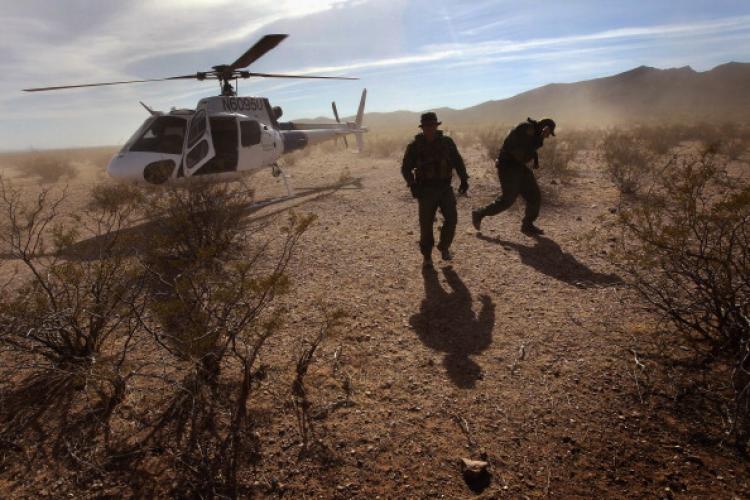
Ranks on both sides of the conflict are by no means small. The United States has more than 20,700 border patrol agents scanning for smugglers, while more than 7,000 Immigration and Customs Enforcement (ICE) special agents attempt to root out drug operations both within the United States and around the world.
The drug cartels on the other hand leverage the ambient glow of a multibillion-dollar industry to recruit on both sides of the border. For them, the war on drugs is a multipronged battle, as they vie over territory with rival gangs, attempt to fight and bribe the Mexican army, and duck U.S. agents armed with sophisticated equipment.
“Over the past two years, DHS [Department of Homeland Security] has dedicated historic levels of personnel, technology, and resources to the Southwest border,” said Donna Bucella, assistant commissioner of the office of Intelligence and Operations Coordination with U.S. Customs and Border Protection, in a transcript of a March 31 Senate hearing.
Facing growing opposition, the cartels are resorting to all means of keeping their operations moving.
Two massive, elaborate tunnels were found in November 2010, complete with railways, lighting, and ventilation systems. Smugglers use vehicles ranging from aircraft, to fishing vessels, to submarines. In January, agents even found smugglers using a medieval-style catapult to launch drugs over the border into Arizona.
According to Bucella, given to increased detection of land and air operations, “Trafficking organizations are increasingly turning to maritime smuggling routes to transport their illegal cargo into the United States.”
Operations at the border are only a fraction of the battle, however, as gangs based in the United States distribute the drugs, while growers around the world produce them.







