A Mountain Reflection: Greasy Burglars and Biofuels

By Jim Fogarty
Jim Fogarty
Jim Fogarty
October 6, 2010Updated: October 6, 2010

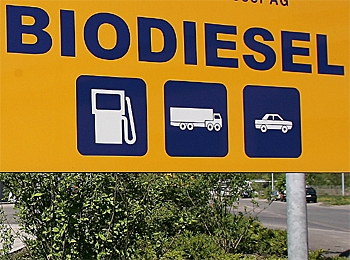
A sign advertises biodiesel at a Biofuel station on in Falkenhagen, Germany, May 6, 2008. It works there, it can work here. (Andreas Rentz/Getty Images)
A report on Denver's 7News caught my attention, and tickled my funny bone a little. I won't keep you in suspense.

It seems a group of thieves has targeted restaurants in the Mile-High city, and they're not going after equipment or money. They're stealing used cooking grease.

You heard me right. Enterprising crooks are taking the grease, converting it into fuel, and illegally selling it out of garages. Restaurant owners are losing money, and the thievery affects the income of legitimate companies who contract with the restaurants to remove waste oil.

"This really dips into our revenue, and it hurts us," said Aaron Perry, CEO of grease collector Rocky Mountain Sustainable Enterprises, as reported by 7News.

In one instance, the thieves posed as workers for a collection company, robbed the bin of its grease, and left without paying the restaurant owner.
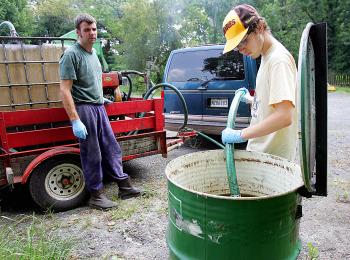
Matthew Geiger (L) and Cody Brockway pump used cooking oil from a holding barrel behind an Ashton, Maryland, restaurant July20, 2006. The two collect the cooking oil to be turned into biodiesel fuel for automobiles and buses. (Tim Sloan/AFP/Getty Images)
Companies will pay up to $100 a bin to recover the grease, which is processed, and sold to livestock/pet food companies, or biofuel companies. The restaurant owner, who used to pay to dispose of the byproduct, now earns income on it, and waste is recycled.

I have to admit to chuckling a little over this, and thinking “Boys, that's a lot of planning, effort, and energy spent on pulling off such a slick caper. Stealing grease? Don't you have something productive you could be doing?”

A thief's a thief, and taking money out of legitimate businessmen's pockets, who have families to take care of, is no good, gentlemen. What goes around comes around.

Biofuels
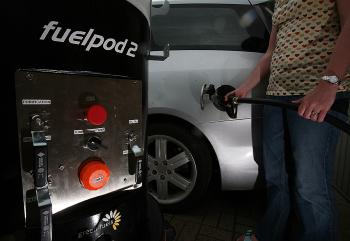
In England, the Green Fuels company sells its Fuelpod 2 for &#1632500 (US$ 3975.) The unit allows domestic drivers to make their own biodiesel from recycled cooking oil. The UK government permits drivers to make 2500 liters without paying fuel duty, so the biodiesel can cost as little as 15p a liter to make, compared with the average petroleum diesel pump price of 132p a liter. (Matt Cardy/Getty Images)
That being said, my curiosity is piqued about this recycled cooking grease thing, especially refining it into fuel and making a living at it. Sure, I've seen a car out here in the West, (driven by a rather eccentric fellow), with signs all over it saying “This car runs on cooking oil,” or something like that. But here we're talking large scale.

I learned about Green Grease in Atlanta, a company that goes around and collects “F.O.G.”—fats, oil, and grease—from area homes and apartment complexes, for recycling into alternative energy sources. The company partners with the EPA's Waste Wise program, aimed at stopping folks from pouring grease down sinks, or dumping it outdoors.

There's Oregon's Sequential Biofuels, a major producer of biodiesel, which produces 17 million gallons of fuel a year, according to its website. The company claims that biodiesel-burning vehicles experience better lubrication properties in the engine, and have much cleaner emissions.

Sequential Biofuels even has filling stations with a focus on sustainability, containing “passive solar mini-marts [that] feature living roofs and groundwater-cleaning bioswales.”

I like it. Independent, self-sustaining, and less wasteful equals responsible. This is the traditional American way, and a good thing.

Pres. Obama and Vice-Pres. Biden visited Pennsylvania Bio-Diesel Inc, a start-up company that will sell biodiesel fuel to tractor-trailers, while campaigning in 2008. Now that campaigning is over, the government needs to follow through with biodiesel programs to reduce waste and to reduce dependence on petroleum. (Saul Loeb/AFP/Getty Images)
We need more of this, frankly, and we can find political solutions. For those who seek government muscle to push alternative energy at any cost, there are others fed up with wasteful spending and unsustainable debt. Try to understand each other better, calmly sit down together and be diplomatic, as it will bring benefits to all.

Here's a suggestion: rather than subsidize, why not exempt these companies from paying federal taxes for a few years, so long as they invest back into the technology. The government will need to cut expenses to make up for it, and a new political trend develops: Do more, spend less, and find common ground.


Supreme Court to Consider Trump’s Asylum Restrictions at Southern Border
RELATED
Real Estate CEO Praises Shen Yun





