
TRUMP’S DUAL HEARINGS
Two hearings today will help set the course for former President Donald Trump’s criminal trials in Georgia and New York.
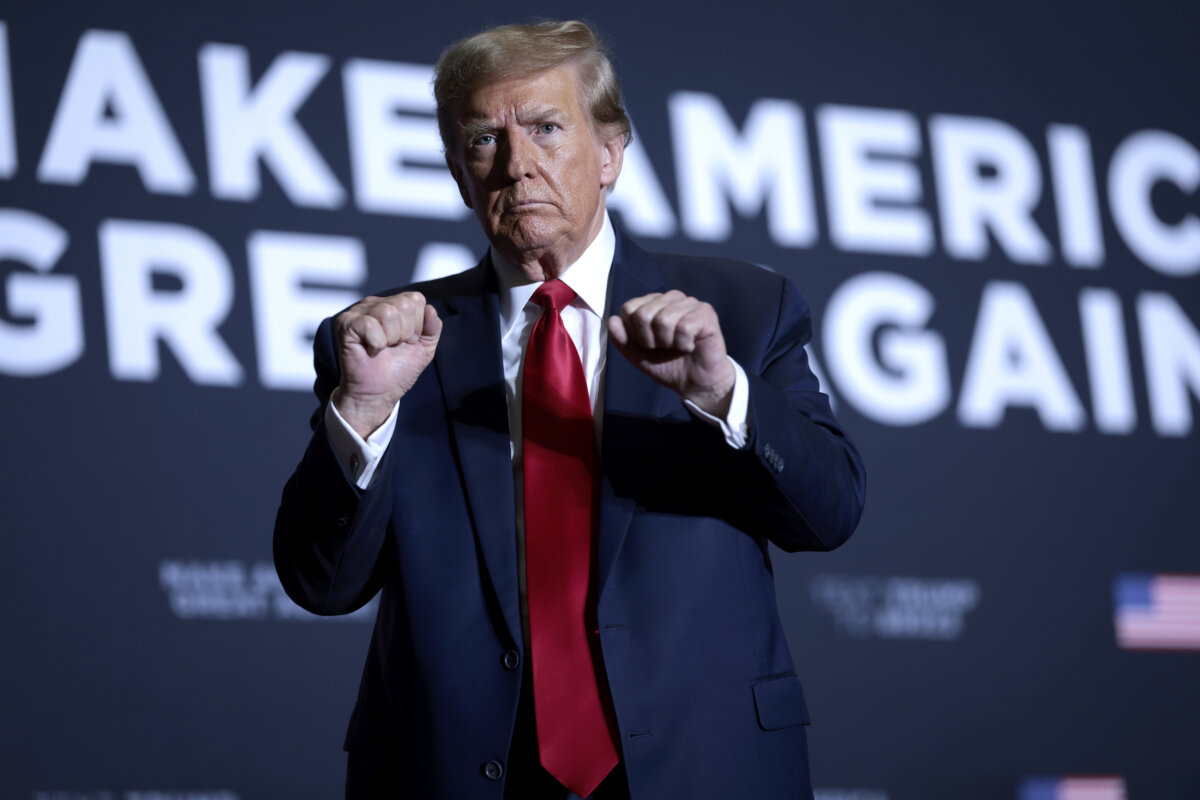
Trump will attend a hearing in New York where Supreme Court Judge Juan Merchan is expected to consider a timetable for the former president’s “hush money” trial, currently set for March 25. He’ll likely weigh Trump’s motion to dismiss the case.
Georgia prosecutor Fani Willis could take the stand as a judge considers her removal from the racketeering case accusing Trump of interference in the 2020 presidential election. Willis has faced several allegations in recent months but the Thursday hearing will focus on the extent and timeline of her relationship with special prosecutor Nathan Wade.
Allegedly improper payments surround both cases. Willis is accused of having a personal relationship, including alleged romantic involvement, with Wade before her office hired him to prosecute the case against Trump.
Manhattan DA Alvin Bragg has accused Trump of falsifying documents related to payments intended to silence two women—adult actress Stormy Daniels and former Playboy model Karen McDougal—over their alleged extramarital affairs with Trump before the 2016 presidential election.
Trump has denied wrongdoing in both cases, denied the alleged affairs, and suggested the prosecutions as politically motivated attacks on him.
Judge Scott McAfee could disqualify Willis, meaning the state board would have to appoint a new prosecutor while the case, currently with a proposed start date of Aug. 5, would likely be postponed.
Four criminal cases have been brought against Trump in Florida, Georgia, Washington, and New York. Collectively, they threaten to disrupt his campaign and put him in prison for decades.
—Sam Dorman and Catherine Yang
FISA BILL PULLED
In continued signs of turbulence for House Speaker Mike Johnson (R-La.), House Republicans yesterday dropped plans for a floor vote to reauthorize a controversial spying authority.
A bill to reform Section 702 of the Foreign Intelligence Surveillance Act (FISA) was released on Monday.
But a House Rules Committee meeting quickly revealed that divisions over the perpetually divisive spying authority remained too pronounced to bring the bill to the floor.
Leadership was quick to defend its decision to pull the proposed reform bill.
“In order to allow Congress more time to reach consensus on how best to reform FISA and Section 702 while maintaining the integrity of our critical national security programs, the House will consider the reform and reauthorization bill at a later date,” said Raj Shah, Johnson’s deputy communications director, in a post on X.
Under current law, Section 702 data—including Americans’ private data—can be “unmasked” by intelligence agencies if a superior rules that the unmasking is necessary for national security purposes.
The intelligence community’s use of Section 702 of FISA has drawn mounting criticism from both the left and right in recent years after damning reports on its use to surveil hundreds of thousands of Americans improperly.
Intel agencies, however, maintain that the tool is vital in combatting foreign threats, including Chinese communist espionage.
There have been widespread calls for reforms, and a few have even called for abolishing Section 702 altogether.
The largest divide has been between the House Judiciary Committee and House Intelligence Committee, where members have displayed vastly different views on Section 702.
Specifically, many on Judiciary have called for across-the-board requirements that warrants be used to “unmask” Americans’ data, while Intelligence members have called for less stringent reforms.
These divides were on full display during a House Rules Committee hearing on the legislation when, in an uncommon display of unity, both House Judiciary Committee Chairman Jim Jordan (R-Ohio) and Ranking Member Jerry Nadler (D-N.Y.) each spoke out against the bill, saying it didn’t go far enough.
The proposed reforms, Nadler told the Rules Committee, were so minor “that they would prove ineffective.”
“I cannot support this legislation unless the probable cause warrant amendment is adopted. I encourage my colleagues to join me in supporting real reform,” Nadler said.
Jordan argued that the bill “still relies on the FBI to oversee itself—the same FBI who we know has done all kinds of things that they shouldn’t have done.”
Due to this opposition, the bill remains in congressional limbo.
If lawmakers don’t reauthorize it by April of this year, it will expire, an outcome that supporters of Section 702 have warned would be catastrophic for U.S. intelligence.
—Joseph Lord and Jackson Richman
WHAT’S HAPPENING
- Trump will attend a hearing before a New York judge to consider pre-trial motions in DA Bragg’s criminal case against the former president over alleged falsification of business records.
- A Georgia judge will hear testimony in a motion to disqualify DA Fani Willis in her election case against Trump.
- A House subcommittee on the coronavirus pandemic holds a hearing assessing the U.S. vaccine safety system.
BOOKMARKS
Many Americans became significantly less trusting of federal intelligence and law enforcement on and after the events of Jan. 6, 2021. One of many strange and disturbing events that day was the placement of a pipe bomb outside the Democratic National Committee’s offices. No suspect has been identified in the case, though the Federal Bureau of Investigation still has a $500,000 reward available for an individual who provides data that results in an arrest and conviction.
In an exclusive report, The Epoch Times’ Joseph Hanneman adds a new wrinkle to the story. Multiple U.S. Capitol Police security cameras were remotely directed away from the front of the DNC’s offices, missing critical portions of the bomb squad’s response.
Drawing heavily on interviews with unnamed sources, journalists Michael Shellenberger, Matt Taibbi, and Alex Gutentag allege that the U.S. intelligence community asked its Five Eyes allies (Australia, New Zealand, the United Kingdom, and Canada) and other foreign partners to spy on 26 associates of Trump.
“They were sending people around the UK, Australia, Italy—the Mossad in Italy,” a source reportedly said, according to a post on X by Shellenberger.
Writing in The American Conservative, Helen Andrews delves into one factor that has driven mass immigration from south of the U.S. border—the North American Free Trade Agreement, or NAFTA: “On the 30th anniversary of NAFTA, its opponents stand vindicated and its defenders are chastened—or at least they should be.”
Idaho’s House of Representatives has passed a bill that could see convicted pedophiles—more specifically, individuals found to have engaged in lewd conduct with children under 12—sentenced to death. It must now clear the Senate.
As in so many things, Florida did it first.
—Nathan Worcester