
I’ve been negotiating with “Ruth,” one of my patients, largely unsuccessfully, for the last several weeks. She’s been refusing my efforts to get her to come to therapy sessions. It’s not just a me thing—she’s done the same thing to all of the other therapists, too. The reason for her steadfast refusals has been consistent: Her hips hurt when she gets up and walks, and she’d rather stay in bed than hurt.
Many adults—young and old, active or sedentary—experience hip pain. Weakness in the muscles around your hips can lead to alignment issues that can cause pain and can just plain hurt in general.
Let’s get those hip muscles powered up.
5 Excellent Exercises to Hone Your Hips
The following exercises and stretches can help tune up your hips and reduce your chances of experiencing pain throughout the day. They focus mainly on muscle, tendon, and ligament weakness and tightness rather than joint diseases. While these exercises work well for my patients, I recommend consulting with your medical practitioner to see if they are right for you.
1. Supine Butterfly Stretch
The classic sitting butterfly stretch is an excellent hip opener exercise, but it can be a little intense for some people. The supine butterfly stretch is also highly effective and one that some people find more tolerable.
Step 1: Sit on a firm surface with the soles of your feet together, then gently recline back. Alternatively, you can begin lying down.
Step 2: Slowly relax your leg muscles, allowing your knees to sink toward the surface.
Step 3: Let your knees lower as far as they can comfortably, then rest in the position for 30 seconds. Then, return your knees to center.
Step 4: Holding the stretch for 30 seconds counts as one repetition. Try to perform the stretch twice.
Modifications: Only allow the knees to open as far as you are comfortable. There’s no need to push any further, because your legs naturally relax more as you maintain the stretch. If you find yourself feeling the need to hold your knees up due to hip or groin discomfort, you can place support underneath—just low enough to allow them to continue relaxing and stretching.
Why I Like It: The supine butterfly stretch is a deep, full-thickness hip stretch that’s also very accessible for most people. Why push and pull when you can let gravity help?
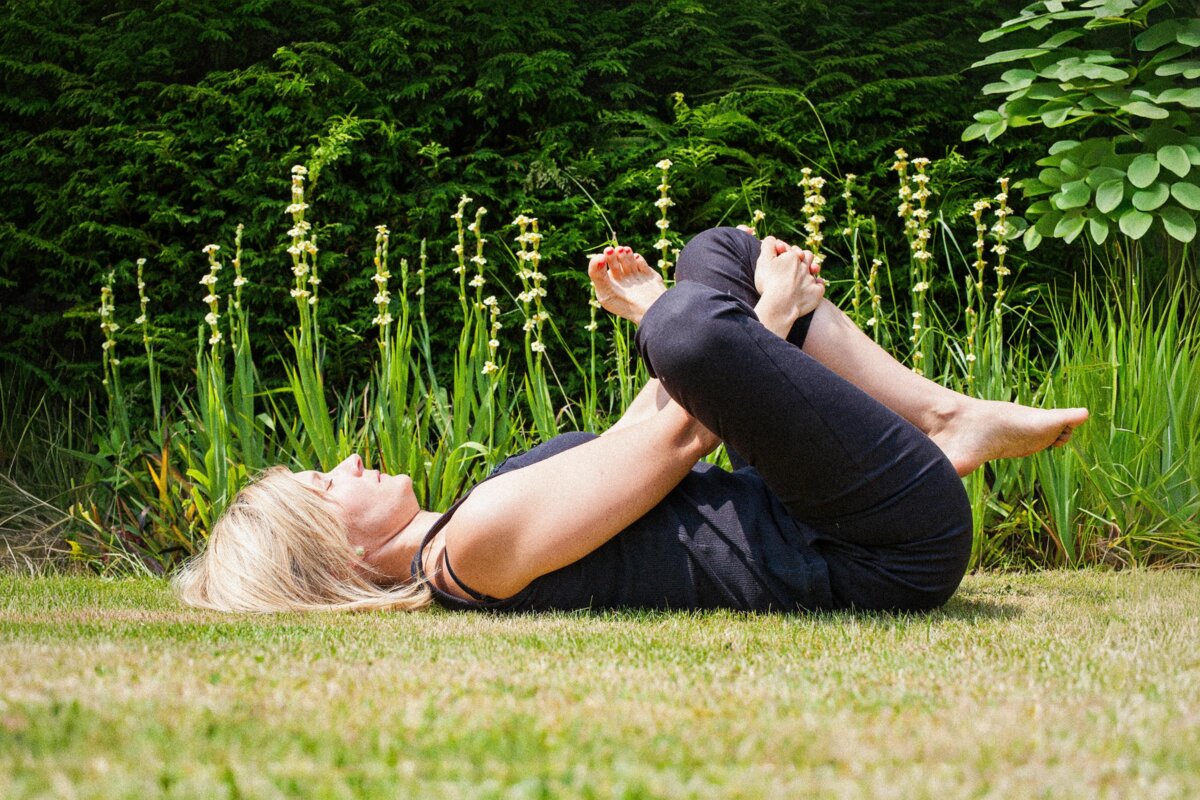
2. Supine Piriformis Stretch
I recommend the supine piriformis stretch for anybody with tight, painful piriformis muscles—which, if you’re unfamiliar with the term, lie deep within the gluteal region, in the buttocks. Performed supine, there are no balance issues to deal with in this exercise, and thus, you can control the movements carefully.
Step 1: Lie on a firm, supportive surface and cross your right ankle over your left leg above the knee.
Step 2: Keeping your right ankle in place, reach behind your left knee with both hands and hold your thigh just below the knee. Slowly pull your knee in the direction of your left shoulder, placing a nice stretch in your right piriformis muscle—you will feel it, guaranteed.
Step 3: Hold the stretch for approximately 30 seconds, allowing the inner muscles of the glute to soften and relax, before lowering your foot back to the starting position.
Step 4: Each 30-second hold counts as one repetition. Try to perform three repetitions per side, preferably alternating sides.
Modifications: There’s no need to push yourself into pain—instead, move into a position that provides a great stretch, relax into it, then move deeper into the stretch as your aching muscles allow.
Why I Like It: Without a doubt, this exercise provides laser focus on the piriformis muscles in a position that’s easy to achieve.
[epoch_component type=”related_posts” position=”column-left” section_title=”” width=”” items=””][/epoch_component]
3. Glute Bridge
The glute bridge is a classic exercise with a well-proven history. It serves as a great hip mobilizer and also as a means of strengthening your core muscles, including the gluteus maximus and hamstring muscles.
Step 1: Lie on a firm, supportive surface with your arms by your sides, your knees bent and aiming straight up, and your feet flat on the floor.
Step 2: Slowly lift your body off the floor until it is in a straight line between your knees and shoulders. Hold the position for 30 seconds before lowering down to the starting position.
Step 3: Raising and lowering counts as one repetition. Try to perform three sets of five repetitions.
Modifications: Can’t come all the way up? Move only as far as you can. You’ll definitely get stronger over time. To make the exercise more challenging, increase the “up” time, but don’t push so far that the activity breaks up. Move into the resting position before then.
Why I Like It: Glute bridges offer a powerful benefit from a relatively stationary position.
4. Chair Squats
Chair squats are a highly controllable, yet high-intensity exercise. They are great for strengthening your quadriceps and gluteal muscles, and can serve as the basis for many chair-based exercises.
Step 1: Sit at the front of a chair, holding your arms straight out in front of you and with your feet hip-width apart.
Step 2: Lean slightly forward and slowly stand up, lowering your arms to your sides as you rise to a standing position.
Step 3: As soon as you stand up all the way, sit back toward the chair, but not quite all the way down. Move slowly to avoid landing hard on the chair, which can place stress on your back.
Step 4: Standing up and sitting back down counts as one repetition. Try to perform three sets of 12 repetitions.
Modifications: Find it too challenging to sit all the way down before rising back up? Only squat down partially before moving back up, which decreases the level of difficulty. Want to add a little more challenge? You can keep your arms up and add repetitions or slow your movement to half speed.
Why I Like It: With chair squats, you always have the option of moving into a sitting position if you run out of steam.
5. Lying Hip Rotation
Lying hip rotations operate as a universal lubricant for your hip joints, and performing them on joints that aren’t actively bearing weight allows you to safely and comfortably explore their limits.
Step 1: Lie on a firm, supportive surface, bend your knees, and place your feet flat on the floor, approximately shoulder-width apart.
Step 2: Move your knees to the right until the right leg touches or nearly touches the surface. Be sure to keep your legs far enough apart that you have the space to rotate both knees down.
Step 3: Hold the side position for 10 seconds before returning to the starting position. Then, repeat the movement on the other side.
Step 4: Moving your legs down to the floor on one side counts as one repetition. Try to perform three sets of 12 repetitions per side.
Modifications: If you can’t move your joints very far, don’t fret. Start with what you can do at first. You can add a cushion, bolster, or block on each side to essentially raise the floor level, allowing you to relax during the 10-second hold.
Why I Like It: The internal and external rotation movements of lying hip rotations complement the hip flexion, extension, abduction, and adduction movements of other exercises, and they also warm the joints considerably as the exercise progresses.
For strong and supportive hip muscles, I recommend performing this routine at least three times a week, and ideally, five. Regular practice can help alleviate aching hips and reduce mobility-related pain. That being said, several factors can contribute to hip, knee, or ankle and foot pain while walking, including joint disease.
If you experience persistent joint pain while moving, I recommend consulting a health care professional to determine if further action is necessary. Trying to work around persistent joint issues has led many people, like Ruth, to even more problems, and eventually, surgery and therapeutic rehabilitation. You can choose to be proactive for happy hips.
About the Fitness Model: Aerowenn Hunter is a health editor and fitness model for The Epoch Times. Vibrant in her 60s, she’s an accredited yoga therapist who has dedicated three decades to teaching yoga.
Views expressed in this article are the opinions of the author and do not necessarily reflect the views of The Epoch Times. Epoch Health welcomes professional discussion and friendly debate. To submit an opinion piece, please follow these guidelines and submit through our form here.