
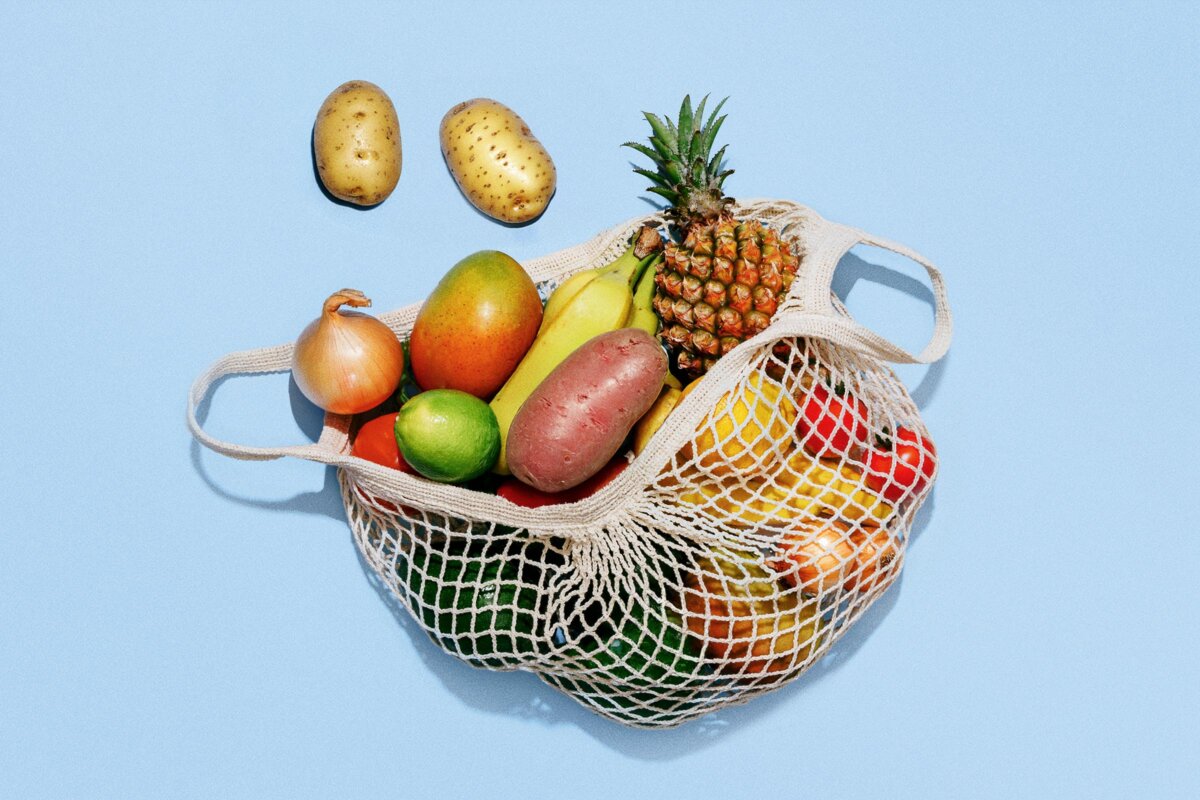
Throughout history, humans have had to find creative ways to keep food from spoiling using whatever resources were available—from holes in the ground to cold water in nearby lakes and rivers. Although artificial refrigeration began in the mid-1700s, it wasn’t until the early 20th century that what we now know as refrigerators gained traction and started appearing in homes across the United States.
Now that refrigerators are a staple appliance in every home, many of us tend to store as much as possible—especially fruits and vegetables—within them, believing it will retain freshness and preserve quality, texture, and taste.
However, some produce thrives on the counter or in the pantry and shouldn’t be stored in the fridge. Others should wait on the counter until they’re ripe, at which point the fridge can maintain them at peak freshness until they’re ready to eat.
The trick is knowing which produce is suitable for the counter and which should go in the fridge, and when.
The Role of the Fridge
The fridge is a helpful tool, provided you know how and when to use it.
Refrigeration slows down how quickly fruits and vegetables breathe and ripen, said Macarena Farcuh, an assistant professor of plant science who received her doctorate in horticulture and agronomy at the University of California–Davis.
Plant respiration is the way plants use stored sugar and oxygen and convert it into usable energy needed for cellular processes.
Refrigeration also reduces enzyme activity that causes softening and spoilage, prevents moisture loss that leads to shriveling, and slows the growth of microbes that can cause rot, she told The Epoch Times.
However, keeping produce in the fridge can also change its nutrient content.
Research has shown that the antioxidant vitamin C declines steadily in most fruits and vegetables kept in the refrigerator, with a greater decline in vegetables. Antioxidant activity significantly decreases the longer produce sits in the fridge, and pigments and flavor compounds such as anthocyanins and flavonoids decline during extended cold storage.
With this in mind, eat more delicate, vitamin C-rich foods first, such as citrus fruits and leafy green vegetables such as spinach, kale, and broccoli, as this will help you maximize their nutrients. It’s also a good idea to save hardier produce for later, as it retains its nutrients longer.
Below are some foods that experts recommend keeping out of the fridge—some always, and others at least until they are ripe and ready for eating.
‘Chilling Sensitive’
Tomatoes are one fruit that should ripen on the counter rather than being kept in the fridge, as they are especially sensitive to cold temperatures.
“Some crops are chilling-sensitive, meaning that cold damages their texture or flavor,” Lynette Johnston, an assistant professor and food safety extension specialist at North Carolina State University, told The Epoch Times.
She said foods best stored outside the fridge until ripe and ready to use include:
- Bananas
- Mangoes
- Pineapples
- Papayas
- Tomatoes
- Cucumbers
- Eggplants
- Potatoes
Avocados
Avocados, which are actually giant berries, are best stored at room temperature until you are ready to eat them. They are best kept away from direct sunlight and other heat sources, which can accelerate ripening and hasten spoilage.
If your avocados ripen before you are ready to eat them, they can be placed in the fridge to slow down the ripening process and keep them at their peak until you have a hankering for that spicy guacamole or avocado toast.
Refrigerating ripe avocados will cause a gradual loss of sensitive vitamins C and E, but the levels of monounsaturated fats remain relatively stable.
Antioxidants such as carotenoids degrade more quickly when the avocado is cut and exposed to light and air, even when stored in the fridge. The best way to keep cut avocados fresh is to store them in the fridge, keeping the pit in. Wrap it tightly with plastic wrap or put it in an airtight container, and sprinkle it with lemon or lime juice, which slows oxidation and prevents browning.
Ripe avocados can be mashed or cut into chunks and kept in the freezer for up to three months.
To learn more about the awesome avocado, see our food guide, and explore “7 Things You Might Not Know About Avocados.”
Bananas
Keep bananas on the counter and out of direct sunlight until they are ready to eat or become part of your next smoothie. Bananas are also sensitive to cold and, as a result, should be kept out of the fridge. The fridge will cause a gradual loss of vitamin C over time, and one study found that bananas lose significant antioxidant activity when refrigerated.
If you have overripe bananas that you would like to save for making muffins or banana bread at a later date, they can be refrigerated or frozen—note that this will cause the skins to turn brown.
You can freeze bananas with the peel, which reduces the risk of freezer burn. However, it makes it harder to extract the fruit when you’re ready to use it, which can make it a messy affair. To make things easier, freeze whole peeled bananas or cut them into slices before freezing.
Freezing changes the texture of bananas, making them mushy—a consistency that makes them ideal for recipes such as breads, muffins, or smoothies—although less suitable for eating on their own.
Bananas are also prolific producers of ethylene, a gas and plant hormone released by many fruits and vegetables that controls ripening. When placing bananas on the counter, be aware that any fruit nearby will ripen more quickly in response to the abundant ethylene they emit. For fruits you want to ripen more rapidly, you can place them next to your bananas. Otherwise, keep bananas separated from other fruits.
If you want to learn more about bananas, our food guide can help! You can also read about what a banana’s color and spots reveal.
Mangoes
Mangoes and other tropical fruit, such as pineapple, papaya, and the abovementioned bananas, should ripen at room temperature, and out of direct sunlight. Mangoes are sensitive to cold, and putting them in the fridge can adversely affect their taste and texture.
Allowing mangoes to ripen naturally and eating them at their perfect state of ripeness means that many of their abundant nutrients, such as fiber, carotenoids, and certain polyphenols, are at their peak and most available to us.
Mangoes can be stored in the fridge once ripe if you are not ready to eat them. Whole, ripe fruit can last for up to five days, and cut mangoes, when kept in an airtight container, can last in the fridge for up to a week.
To learn more about this delicious tropical fruit, including optimal storage and professional tips for cutting and peeling, check out our mango food guide.
Stone Fruits
Stone fruits, such as peaches, plums, nectarines, and apricots, should be stored in a cool, dry place on the counter where their sweetness and flavor can naturally develop. Keeping them in the fridge can cause them to lose their flavor and juiciness and to develop a mealy texture.
Although stone fruits may lose some nutrients, such as vitamin C and antioxidants, when stored in the fridge, the most significant setbacks are the loss of flavor and changes in texture.
Stone fruits are also susceptible to cold, so a counter or pantry is the best option until they are ready for eating. Once ripe, they can be stored in the fridge to prolong their shelf life if necessary. Remember to handle these fruits with care, as they bruise easily, which can cause them to spoil more quickly.
Potatoes, Onions, and Garlic
Fresh root vegetables such as potatoes—which are tubers; garlic—which are bulbs; and onions should never go in the fridge. They are happiest in a cool, dry, well-ventilated area, such as a pantry, root cellar, or basement, where they can be stored year-round to maximize their freshness and longevity.
The cold temperature of the fridge can cause the starch in potatoes to break down into sugars, altering their flavor and texture. Vitamin C also decreases significantly due to cold storage.
Once cooked, however, potatoes should go in the fridge, and research suggests that cooling after cooking increases their resistant starch—which is beneficial for digestion, blood sugar control, and insulin sensitivity. Once cooked, potatoes can last a few days in the fridge.
When placed in the fridge, onions tend to absorb moisture and spoil quickly. The cold temperatures in the fridge also significantly degrade their vitamin C. Keeping onions cool with plenty of airflow maximizes their lifespan and prevents mold.
Exposure to moisture can cause onions to sprout. Although sprouting onions are still safe to eat, the process can alter their taste and texture. Be sure to check for mold or decay before eating an onion that has sprouted.
A cool, dark pantry is ideal for storing onions—however, they should not be stored with potatoes. Onions release ethylene, which can cause potatoes to sprout prematurely and spoil more quickly.
Once onions are peeled or cut, however, they should be stored in the fridge to prevent contamination, where they will last seven to 10 days if kept in an airtight container. Cooked onions should also be refrigerated and can last up to four days.
Whole garlic cloves should be kept out of the fridge, as the cold and humidity can cause them to sprout, become bitter, rubbery, and spoil more quickly. Like their root vegetable brethren, garlic cloves should be kept in a cool, dry, well-ventilated spot until needed.
Research has found that organosulfur compounds in garlic are lost after extended periods in refrigerated temperatures, although they initially increase. Organosulfur compounds are natural chemicals that contain sulfur and give garlic its characteristic taste and smell, and include allicin, which is responsible for many of garlic’s health benefits. However, refrigeration maintained garlic’s antioxidant activity, and sometimes caused it to increase.
While the fridge plays an essential role in keeping many of our foods fresh, it shouldn’t be the default when it comes to produce.
According to Farcuh, storing fruits and vegetables at the wrong temperature is one of the most common things people do at home that accelerates food spoilage.
With grocery prices soaring, we want to make every dollar count. How and where we store produce matters—it keeps food fresh, preserves nutrients, and perhaps most importantly, ensures it tastes great.