
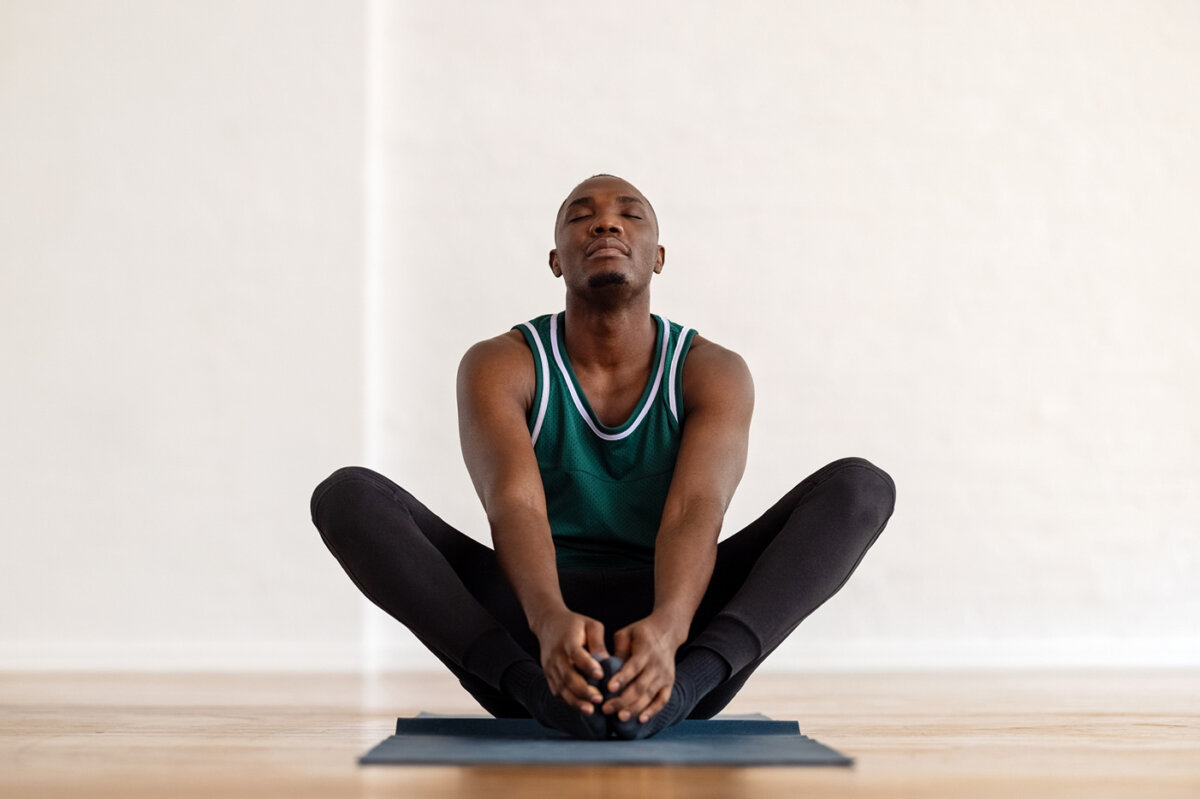
Jen Schuler Schappel did something out of the ordinary when her dining room table broke in 2018—she put coffee table legs on it, cushions around it, and ushered in an era of floor sitting.
Being able to get on and off the floor was especially reassuring two years later when she experienced a spontaneous carotid artery dissection—a carotid tear that can cause stroke—at age 34 and became severely anemic from her treatment.
“I didn’t have the energy to participate in structured exercise,” Schappel told The Epoch Times. “The fact that I was able to build that extra movement into my daily life was kind of comforting.”
She’s among a group of people who think the health mantra “sitting is the new smoking”—the belief that too much time on our derrières can harm us as much as cigarettes—is oversensationalized. Experts say there’s nuance to sitting, in that excessive chair sitting is harmful while strategic floor sitting can improve mobility and balance, prevent falls, and extend quality of life.
Juliet Starrett, mobility expert and co-author with husband Kelly Starrett of “Built to Move,” tells audiences at her speaking engagements to get off their chairs and sit on the floor. Moving from a standard chair to the floor can prevent a static, overly supportive posture that can lead to lower back pain, lost core muscle strength, and inhibited flexibility.
“People are moaning and groaning, and some people just have to lie down on the ground because they have lost this very basic ability to sit cross-legged on the ground comfortably,” she told The Epoch Times.
Sitting Isn’t All Bad
Our affinity for chairs in the West has potentially created a cultural bias in research that further confounds sitting behavior. Researchers of a floor sitting study published in Heliyon noted that sitting posture research rarely makes the distinction on where one sits, with a bias toward chair sitting.
They studied the effects of sitting cross-legged, kneeling, and “mother’s leg” (one leg cross-legged and the other with the foot on the ground and knee straight up) in 40 men without back pain. Subjects maintained each posture for 10 minutes on the floor and with variable cushioning and spinal alignments, while spinal stability was measured.
The investigators found that sitting cross-legged, kneeling, and avoiding swayback or lordosis postures all resulted in improved balance and trunk muscle fatigue.
“Proper cushion thickness is also crucial; too thin, padding, or too thick can cause instability and misalignment of the pelvis and spine,” the authors wrote.
Cushions thicker than 5 centimeters increased discomfort and spinal stiffness.
A separate study published in Applied Sciences found that 20 minutes of cross-legged sitting activated hip, knee, and ankle muscles and improved balance.
Thirty healthy volunteers—15 men and 15 women—aged 18 to 40 sat cross-legged for 20 minutes, then had their before and after gaits compared. After sitting, the subjects’ walking cadence and speed increased. Almost all ranges of motion for lower limbs increased after cross-legged sitting, and all hip, knee, and ankle powers increased.
The authors concluded that cross-legged sitting in short durations could be used as part of a daily routine and in the rehabilitation of the lower extremities. However, longer durations of sitting may not have the same results, they noted.
Master Floor Sitting
Sitting on the floor is a skill. While it begins quite naturally in youth, it loses its value in an aging culture that exults chairs for sitting. While the effects of swapping the floor for chairs are more profound in the elderly, Starrett said that repeatedly choosing chairs can slow us down in every season of adulthood.
Older folks often end up in nursing homes not so much because of fall risk but because they cannot get off the floor, she said. Falls are the leading cause of injury and death by injury in adults 65 and older, with one person falling every 2.25 seconds.
Falls could be prevented with better mobility, which Starrett defines as being able to move freely through your environment without pain and do what you want with your body.
“It’s hard to get a 28-year-old to care about their mobility when you tell them they’re preventing fall risk when they’re 70. But mobility has a huge component in athletic performance, and having full range of motion can be injury protective,” she said. “There’s a ton of reasons why you should care about mobility.”
For one person, mobility is vital to triathlon performance, and for another, it’s being able to keep up with children or grandchildren at an amusement park for a day.
For Galen Cranz, who has scoliosis, mobility has been both personal and integral to her career. She is certified in the Alexander technique, which emphasizes mobility as a core component of better posture. She established the new field of “body conscious design” as a professor at the University of California–Berkeley’s architecture department.
A major revelation for her was observing the perfect posture of two men in photos of her friend’s trip to Africa. It turned out the men—whom she described as having shoulders that draped off the midline on both sides with deep and well-developed chests—grew up going to a school where they had to stand or sit on the floor instead of sitting on chairs.
“That was the birth of a hypothesis. I knew there was something wrong with chair sitting, and I had to figure out what it was,” she told The Epoch Times. “What are the health problems associated with chair sitting? The list of studies got very, very long. I came to the conclusion, it’s the right angle between the thigh and the spine.”
The Problem With the 90-Degree Angle
Starrett and Cranz say the sitting message needs refining. What we need, they say, is less sitting in the way Americans are accustomed to—with our hips and knees at a 90-degree angle.
Twenty years ago, as she conducted research for her book “The Chair: Rethinking Culture, Body, and Design,” Cranz discovered that ergonomic experts often contradicted one another—whether there should be lumbar support and arm rests, and how far a chair should be off the ground.
One systematic review published in Heliyon revealed 32 methods or techniques on furniture ergonomic assessment, yet limited published research on furniture ergonomics and a lack of consideration for gender and cultural differences. Two decades after Cranz’s book was published, we’re no more informed about the ideal chair.
Common sense is sufficient to realize that when sitting constantly in a chair, there’s a risk of losing key ranges of motion that may contribute to low back, hip, and knee pain, Starrett said. It can be helpful to think of chair sitting as a bit like wearing a shoe—the body begins to stiffen to the mold we’re in—and longer exposures can exacerbate problems.
“Imagine if you spend 12 hours a day with all your joints at 90-degree angles, especially your hips. People just start to get stiff,” she said. “In cultures where people sit on the floor a lot, eat on the floor, toilet on the floor, like Japan and a lot of South Asian countries, the rates of orthopedic injuries, low back pain, and joint replacements are significantly less.”
A study published in Lancet Rheumatology found that low back pain affected 619 million people worldwide in 2020 and projected that more than 800 million people globally will have low back pain in 2050. East Asia had the lowest age-standardized rates of low back pain prevalence.
How the Experts Sit
Starrett aims for 30 minutes of floor sitting per day—hard as it may be to fit another thing into her daily schedule.
She said the key has been doing it alongside other activities, such as watching television or attending a sporting event. A basket of foam rollers and a massage gun on the living room floor help lure her to the floor at home.
She can also be found taking phone calls while on a walk and working from a stool that she perches on while doing more intense computer work.
“Really the goal is more movement and changing positions as often as possible, and not demonizing sitting,” Starrett said. “Sitting in and of itself is not bad—if I have a crazy busy day at work, I am so excited to sit, but I’m also going to spend part of that time sitting on the floor—but sitting for too many cumulative hours without moving is not great for you. I always say your next position is your best position.”
Cranz eats at her kitchen island, rather than at a dining room table, because taller seating allows her to eliminate the 90-degree angle in her body.
Her house is also full of free space to allow for what she calls constructive rest, while still being pleasant, beautiful, and inviting.
“My house is a testimony to body-conscious design,” Cranz said. “I have enough space on my living room floor to have carpets to lie down and lengthen my spine. I have a rocking chair so that when I do sit, at least I’m mobilizing my hip joints and internal organs.”
What she has learned is that there is no one perfect chair that solves body problems. However, an environment that allows you to change positions frequently is what matters most. Every house should offer space to sit on the floor, perch on a tall chair or stool, kneel, lounge, stand, move, and sit in a conventional seat.