

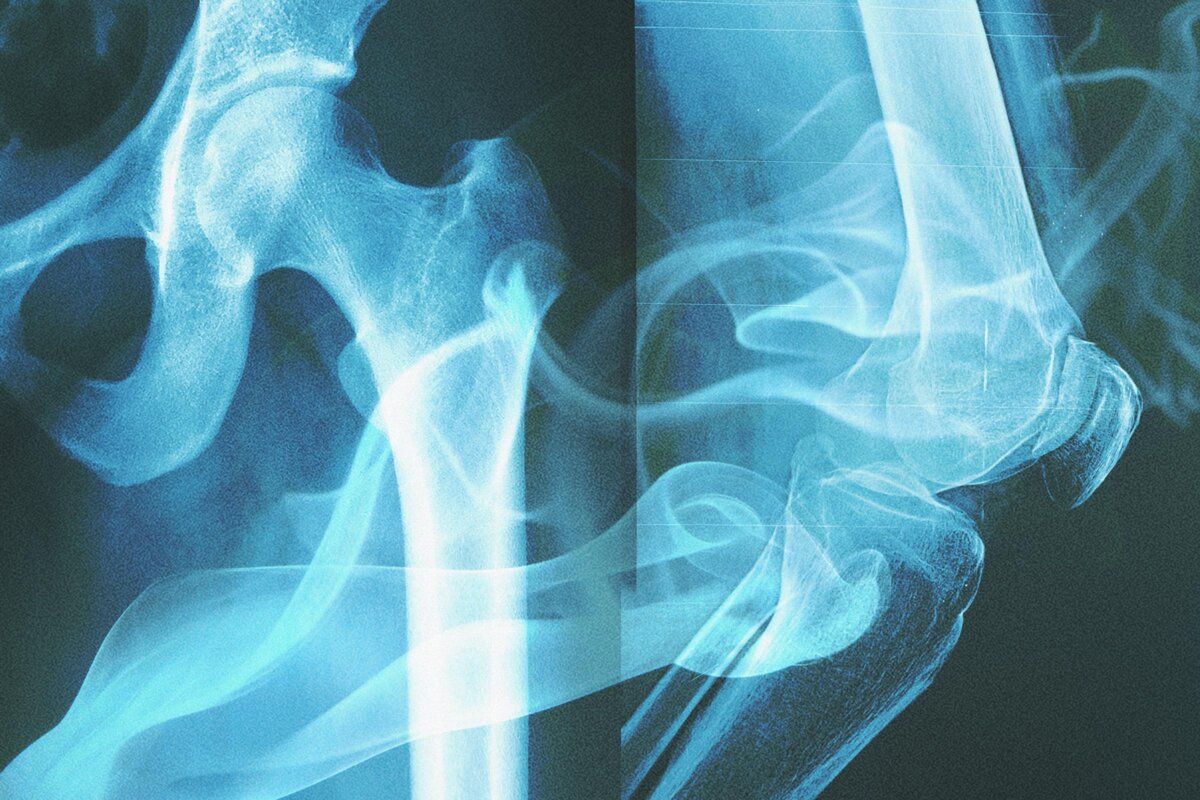
Imagine this: Hundreds of years ago, a man lit a cigarette, and the smoke drifted away with the wind. Centuries later, scientists can still find that “smoking memory” preserved in his bones.
A research team from the University of Leicester in the UK published their findings in the journal Science Advances, reporting that smokers leave unique molecular signatures in their bones that, even after centuries of burial, can still reveal their smoking habits.
A Journey Through Time
The research team analyzed 323 ancient remains spanning the 12th to 19th centuries, covering the period before and after tobacco’s introduction in Europe and its widespread popularity in Britain.
The samples included 177 people from St. James’s Garden Cemetery in London, dating from the 18th and 19th centuries—a time when the deceased lived in an industrialized urban environment thick with coal smoke and chemical fumes. The remaining 146 people came from a rural churchyard in Barton-upon-Humber, North Lincolnshire. Of these, 45 lived between 1150 and 1500, before tobacco ever reached European shores, while the remaining 101 lived between 1500 and 1855, after tobacco’s arrival.
This timeframe was ingeniously designed: the pre-tobacco population served as a “zero-smoking control group” to verify the validity of the testing method.
When Teeth Aren’t Enough
Traditionally, archaeologists relied on teeth to identify smokers. Long-term pipe smoking leaves distinctive wear marks on teeth, and tobacco leaves brown stains on the tooth enamel. However, this method has significant limitations.
In the study, only 90 people (28 percent) could be confirmed as smokers based on their teeth, while 68 (21 percent) with intact teeth were confirmed as nonsmokers. A total of 153 people (47 percent) could not be fully identified due to missing or damaged teeth. Even more problematic, occasional smokers, snuff users, and passive smokers leave no dental traces at all. So scientists turned to bones for answers.
Uncovering a ‘Smoking Profile’
The research team extracted approximately 40 milligrams of cortical bone from each person’s femur (thigh bone)—about the weight of a grain of rice—and analyzed it using liquid chromatography-high-resolution mass spectrometry, a technique that separates and precisely identifies chemical compounds within a sample based on their mass and structure.
After rigorous data screening—refining 125 reliable biological signatures from the initial 3,083 detected molecular features—the researchers discovered 45 “signature chemicals” that clearly distinguished smokers from nonsmokers.
Smokers’ bones showed significantly higher concentrations of 15 specific chemicals, while nonsmokers’ bones contained significantly higher concentrations of 17 completely different chemicals. Thirteen additional chemicals also showed significant differences between the two groups.
To put it in perspective, just as fingerprints identify a person, the combination of these chemical concentrations forms a “chemical fingerprint.” Smokers carry one distinct pattern, nonsmokers another—and the two don’t overlap.
These differences are stable and distinct. When researchers used statistical models to analyze the data, smokers and nonsmokers formed two clearly distinct groups on the graph, with little overlap—as separate as two parallel lines.
Why Does Smoking History Hide in Bones?
Bone is not a static tissue—it continuously remodels throughout a person’s life. The metabolic information from bone cells becomes sealed within the bone structure. When someone smokes tobacco, chemicals enter the bloodstream, affecting metabolism throughout the body, including bone cells. These metabolic changes form “chemical fossils” recorded permanently in the bones.
The study focused on cortical bone, the dense outer layer of the bone tissue, which is less susceptible to external environmental disturbances. Even if the bone’s surface changes color due to soil composition or humidity, its internal chemical signature remains intact.
Traces of Environmental Pollution Exist
Bones from rural and urban areas also showed distinctive characteristics. In rural samples, the distinction between smokers and nonsmokers was noticeably clear. However, in samples from industrialized London, the distinction was relatively blurred.
During the Industrial Revolution, London’s air was filled with pollutants such as soot and chemical exhaust. These pollutants appear to affect bone metabolism in ways similar to tobacco, muddying the smoking signal. The finding aligns with other research showing that air pollution reduces bone density and increases fracture risk.
Effect of Smoking on Bones and Health
While this study did not directly examine disease, modern medicine clearly shows tobacco’s harmful effects on skeletal health. Smoking reduces bone density, accelerates osteoporosis, increases fracture risk, and delays healing when breaks occur. It also heightens the risk of periodontitis, a serious gum disease that can lead to bone loss in the jaw.
Furthermore, researchers believe that pipe smoking has the most significant effect on bones, while chewing tobacco has relatively minimal effects.
This study demonstrates that the harmful effects of smoking are not an exaggeration—and that environmental pollution also affects bone health. For people living today, the most direct message it presents is clear: quit smoking as soon as possible.
