
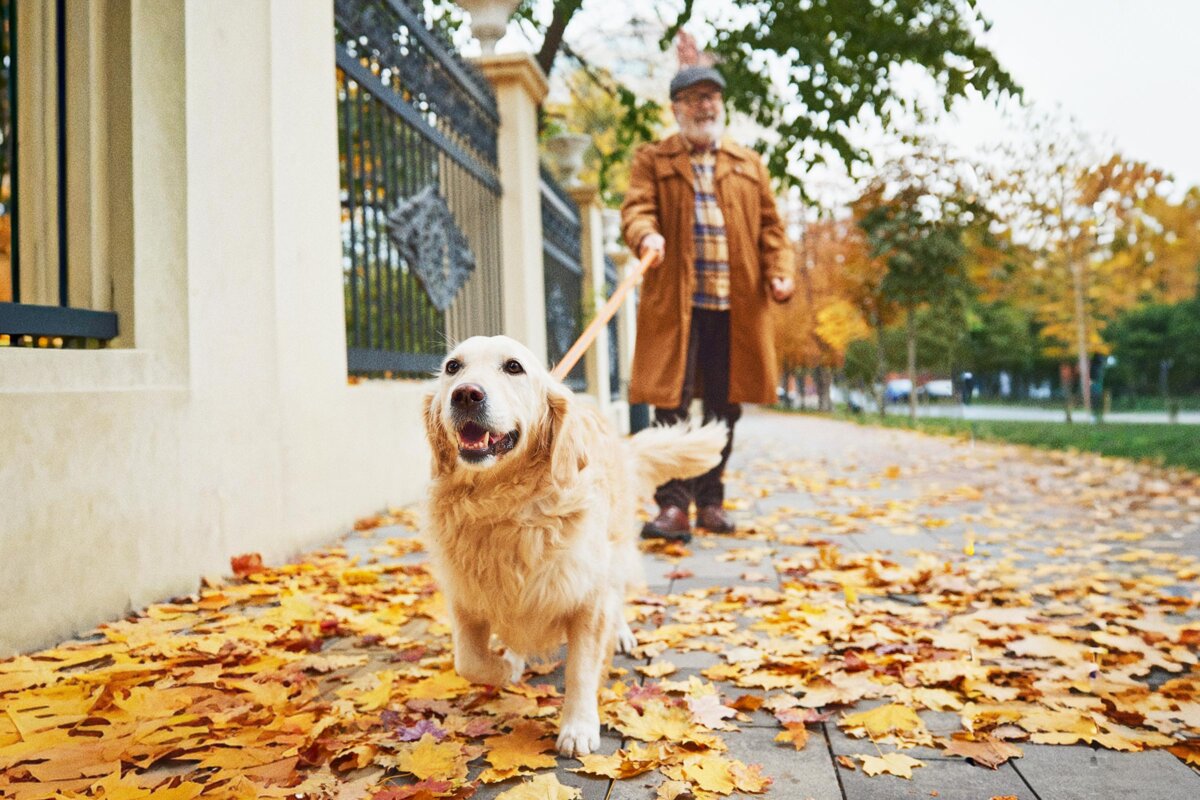
One of Marcia Martin’s clients recently paid her to fly two states over to train her 75-year-old parents’ hyper 80-pound golden retriever—and considered the expense worthwhile.
Her client was thinking ahead to how costly and inconvenient an accident caused by the dog could be for her aging parents—potential hospital bills, surgery, therapy, and immobility.
Taking dogs for walks and certain types of leashes are a common cause of injury among adults, Martin, owner of Marcia’s Best Dogs, told The Epoch Times. Accidents usually prompt people to reach out to her for help, though often times bumps, bruises, and broken bones can be prevented.
Older women are especially at risk, often from being pulled to the ground by leashed dogs or getting wound up in tethers on walks. While not all accidents can be prevented, dog training could reverse the growing trend of older folks landing in emergency rooms after a walk with Fido.
That is not to say there are no benefits to dog walking. In fact, dog walking—but not dog ownership—is associated with lower body mass index and fewer doctor visits, among other benefits, according to a study in Gerontologist.
Surprising and Growing Risk
Emergency room visits for dog-walking injuries among adults quadrupled from 2001 to 2020, according to a study initiated by Johns Hopkins University shoulder surgeon Dr. Edward McFarland.
[epoch_component type=”photo_gallery” position=”center” section_title=”” width=”600″ items=”5937040,” image_stays=”false” stays_for_paragraphs=””][/epoch_component]
“Most surprising to me was the number of people who had head injuries,” McFarland told The Epoch Times. “When dogs pull you, you don’t have much time to react, and you’re usually on a hard surface.”
Overall, finger fractures were the most common injury during the timeframe studied, accounting for 7 percent of injuries. Traumatic brain injuries (TBIs) represented the second-most common type of injury, with 23,669 cases, representing approximately 6 percent. Hip fractures as a whole represented 3 percent of the injuries.
[epoch_component type=”photo_gallery” position=”left” section_title=”” width=”600″ items=”” image_stays=”false” stays_for_paragraphs=””][/epoch_component]
However, when adults 65 and older were isolated in the statistics, TBIs jumped to 9 percent among women and 11 percent among men, and hip fractures also rose to 9 percent among women and 7 percent among men.
“Relatively low energy trauma can cause a more severe injury like a fracture in older adults whose bone health isn’t what it used to be,” Dr. Ridge Maxson, study co-author and surgical resident at Johns Hopkins University, told The Epoch Times.
He recounted the story of a beloved 51-year-old dog walker in his hometown of Atlanta who suffered a head injury and died while walking two dogs not long after the study was published in Medicine & Science in Sports & Exercise. Maxson has since heard stories that are “shockingly severe for something that’s seemingly so benign as dog walking.”
Lead Type Matters
Among the most accident-prone leads, Maxson said, are retractable leashes because they can easily become entangled around legs and feet.
“What would have been a small tug now becomes a major yank, and you go to the ground that way,” he said.
Martin said the best walking tool is a gentle leader, a type of collar that slides over the dog’s snout and lets you steer the dog like a horse’s bridle. Pressure on the head and nose helps control the dog’s focus and cadence.
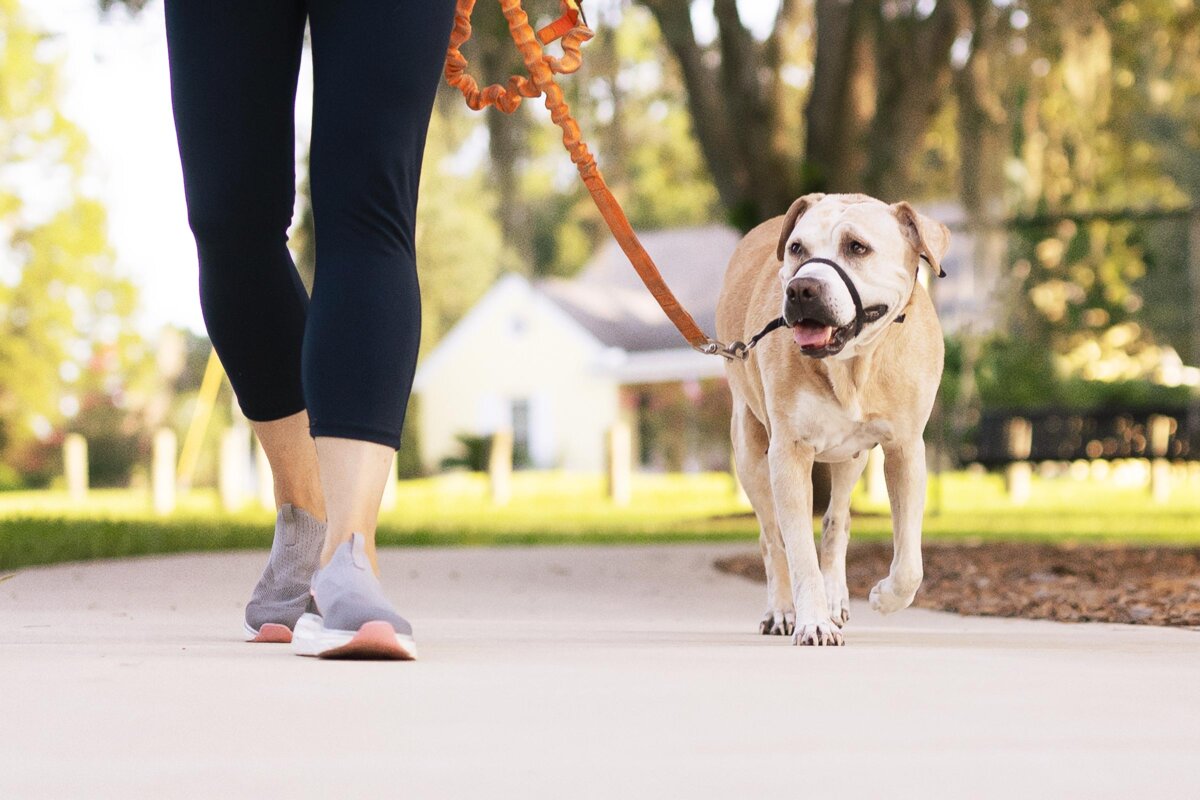
“For people that are older, I think that is a wonderful solution,” she said. “It used to be very hard for me to convince clients to use the gentle leader because they think it looks like a muzzle. It’s not a muzzle.”
Pampered Pets
Many dog owners resist tools and training that might make their pets uncomfortable, even temporarily—a trend Martin said sets up bad-mannered dogs.
One example of this is harnesses, which have become almost ubiquitous with dog walking. However, she noted that harnesses allow the dog’s weight to be more evenly distributed, giving the animal extreme pulling force across their chest and shoulders. It may prevent choking, discomfort, and injury for dogs—but increases the risk of injury for humans.
“Your safety comes before the dog’s comfort, always,” Martin said.
The pandemic didn’t help matters. McFarland noted a spike in dog-related injuries beginning in 2020 when human loneliness bred a rush for furry companions. At the time, Martin added, most dog training facilities weren’t open to accommodate puppy training.
“I don’t think I’ve ever seen so many dogs that are not well-behaved as much as now. We’re taking dogs everywhere, because we can and think they’re having fun.”
Safer Dog Walking
Martin’s training focuses on the relationship between dogs and their owners. The more people know their own dogs—how they react and what makes them nervous, for instance—the more prepared they can be for safe walking.
One of her clients, Alina Spaulding, 51, took a spill recently while walking her two dogs, despite using correct equipment and techniques. Something spooked her older, calmer, smaller dog, and in an instant, the dogs’ leashes were tied in a knot, and she was on her knees.
“I didn’t tell anyone because I was kind of embarrassed that it happened,” she told The Epoch Times. “I felt so clumsy.”
She walked away with a limp that lingered for a couple of days. Spaulding thinks wearing earbuds might have prevented her from hearing clues—an animal rustling in the leaves or her dog growling at something.
Strategies that can help make dog walks safer include:
- Wearing safe, comfortable shoes.
- Picking a lightweight, soft leash you can comfortably hold for 20 to 30 minutes.
- Avoiding distractions such as using your phone and being aware of your surroundings.
- Avoiding overstimulating your dog.
- Walking in familiar places. For people who are vulnerable, sticking to walking only on your block, even if it means you’re doing 20 laps, increases safety. Habitual walking patterns create predictable experiences for your dog while staying close to home in case of an accident.
In your spare time, Martin also suggests weightlifting to improve your strength and balance.
Small dogs are always a better bet for older people, she added, because even if they bark a lot, they’re much easier to control on a leash. She recommends dogs no larger than 25 pounds for those over 50.
However, traffic, crowds, and exhaustion can make even the best-behaved dogs feel overwhelmed and increase the risk of walking injuries.
If you already have a large dog, a nervous dog, or personal limitations, it might be better to skip dog walking altogether, she said.
“Hire a dog walker, because it will be cheaper than if you fall and end up in the hospital.”